
Ponding beside the foundation
Water that remains near the perimeter after rainfall may indicate a low area, limited outlet, or concentrated discharge.
Foundation service
Property-specific grading and runoff planning where surface water may be collecting near a foundation or moving poorly across a site.
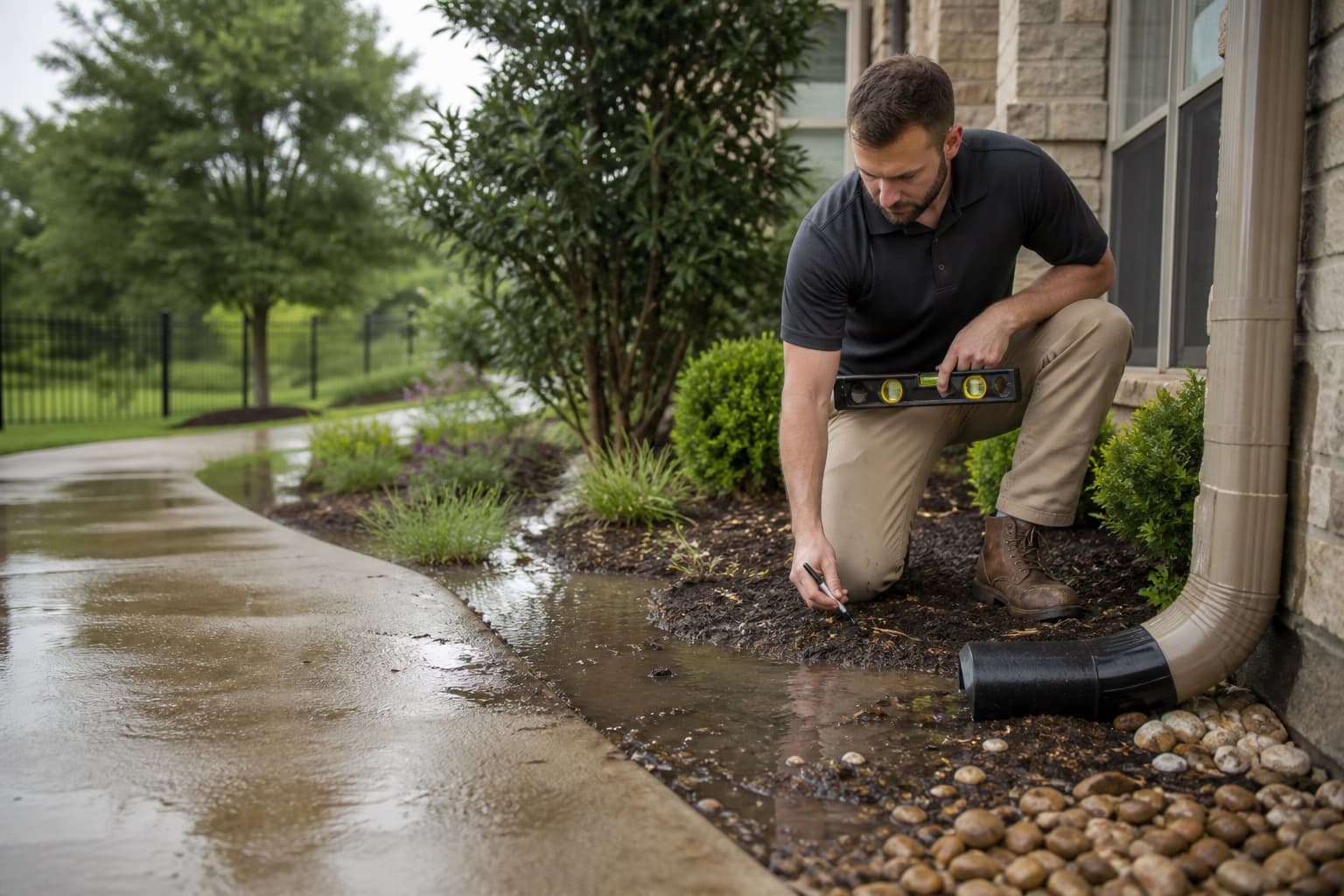
Drainage correction focuses on how rain and roof runoff move across a property. Water that ponds beside a foundation, crosses a walkway, erodes a bed, or discharges into a low area may call for changes—but the appropriate approach depends on elevation, available outlet, neighboring grades, utilities, and the source of the water.
A useful drainage plan begins by observing the full route, not by choosing a drain product first. Grading, downspouts, hardscape, soil, planting beds, and any connection to foundation concerns should be reviewed together before work is scoped.
The inspection should account for the property’s construction, observed changes, drainage, grading, and surrounding site conditions before a service path is selected.
Warning signs
These observations can have more than one explanation. Look for patterns, progression, and multiple signs in the same part of the property.
Water that remains near the perimeter after rainfall may indicate a low area, limited outlet, or concentrated discharge.
Moved mulch, exposed soil, or channels can show where runoff gains speed or follows an unintended route.
Roof water can become concentrated when extensions are short, disconnected, blocked, or directed toward poor grading.
Persistent moisture deserves evaluation for surface drainage, plumbing, irrigation, or other water sources.
Possible contributors
North Texas soil and weather can be relevant, but construction, drainage, plumbing, and property history also belong in the evaluation.
Settled soil or landscape changes may direct runoff toward the building instead of away from it.
Large roof areas and downspout locations can place substantial water into a narrow part of the yard during a storm.
Driveways, patios, fences, retaining edges, and adjacent lots can limit the routes available for surface water.
Compaction, erosion, root zones, new beds, and accumulated mulch can alter drainage around an established property.
Inspection process
Roof areas, downspouts, irrigation, neighboring runoff, and low spots are reviewed to understand where water begins.
The evaluation considers grade direction, hardscape, utilities, property edges, and potential discharge locations.
Regrading, downspout changes, surface collection, subsurface drainage, or combined measures are considered only where they fit the observed conditions.
If service is recommended
01 / Confirm route and outlet
The planned drainage path, collection points, elevations, access, and discharge area are established before excavation or grading.
02 / Complete selected corrections
Work may involve targeted grading, downspout routing, collection components, or drainage lines according to the approved scope.
03 / Review flow and maintenance needs
The completed layout is reviewed along with practical notes about inlets, outlets, debris, soil settlement, and future observation.
Keep exploring
Related services
Questions
No. Surface grading, downspout routing, collection, discharge constraints, and subsurface conditions should be evaluated before selecting a drainage method.
Drainage work manages identified water conditions; it cannot promise how a foundation or supporting soil will respond. Foundation concerns need their own property-specific evaluation.
That depends on site elevation, available lawful outlets, neighboring property, hardscape, and local requirements. A route should be established before work begins.
Rainfall observations can be useful, but photos and videos taken safely during a storm can also help document sources, flow paths, and ponding for an on-site review.
Property-specific next steps
Describe where water starts, where it collects, and how long it remains so a free contractor inspection can review the site before a correction is selected.