
Reasonable price We noticed doors sticking and cracks developing around our Richardson home. TX Foundation Pros diagnosed the foundation problem and took care of the repairs.
Foundation service
Foundation Repair in Dallas-Fort Worth, TX
Property-specific evaluation and repair planning for signs of foundation movement across the Dallas-Fort Worth area.
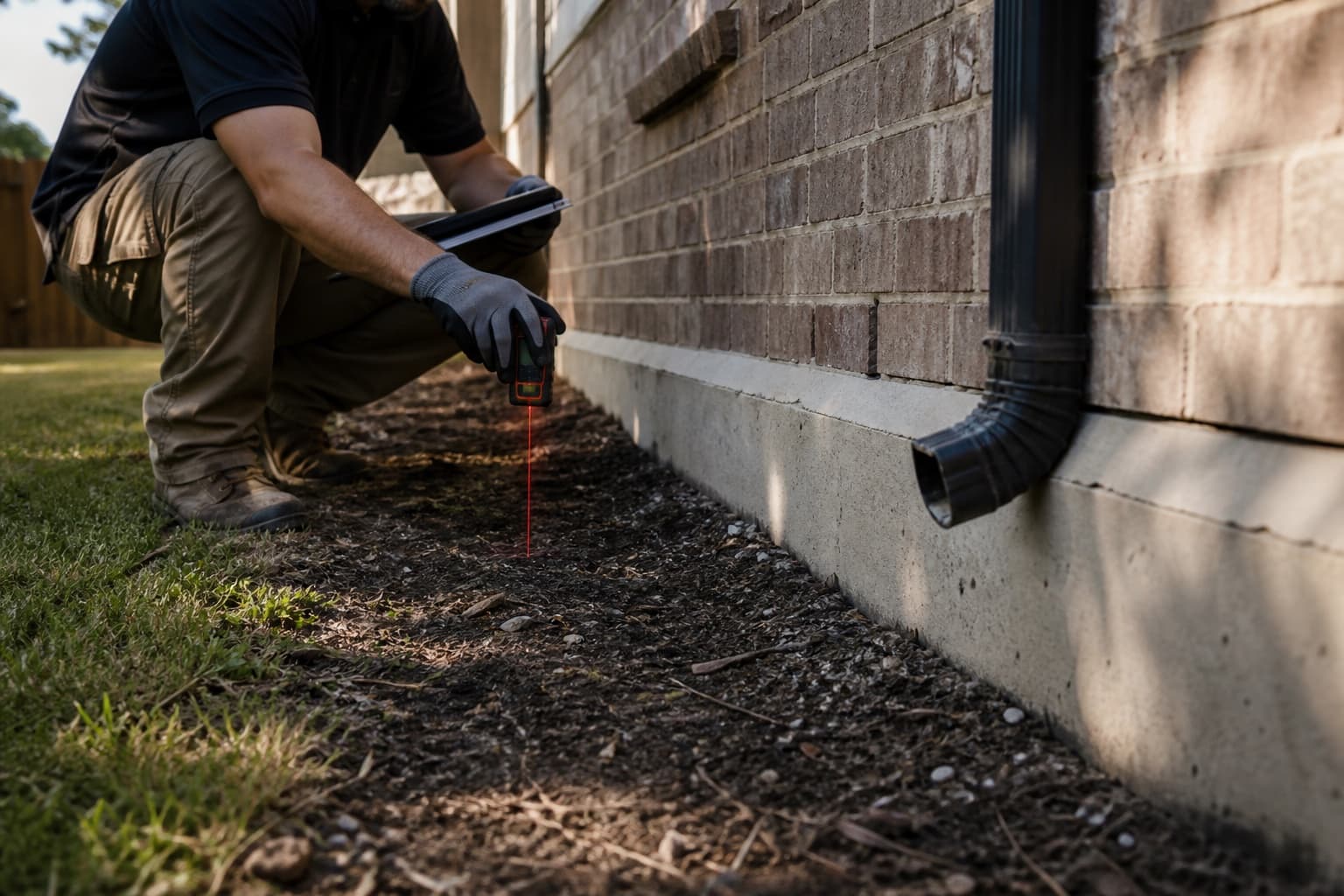
Foundation movement can show up in many ways, from drywall cracks and sticking doors to floor changes and gaps around exterior finishes. Those observations are useful starting points, but they do not identify the cause by themselves.
TX Foundation Pros begins with the property. The construction type, visible movement pattern, drainage, grading, plumbing concerns, and surrounding conditions all help shape the evaluation. Recommendations should follow that inspection—not a one-size-fits-all repair assumption.
The inspection should account for the property’s construction, observed changes, drainage, grading, and surrounding site conditions before a service path is selected.
Verified customer feedback
What Customers Say About Foundation Repair
These Google reviews are shown in their original wording and selected for their relevance to this service.
Reasonable price Great experience with TX Foundation Pros in Grapevine. They inspected our slab and walked us through the foundation repair options without any pressure.
The company was professional and had expertise knowledge. Very reliable. I definitely recommend this company.
Great company to work with for foundation repair in Colleyville. They were responsive, knowledgeable, and easy to communicate with.
Warning signs
Signs that may justify a foundation repair evaluation
These observations can have more than one explanation. Look for patterns, progression, and multiple signs in the same part of the property.
Changing wall or ceiling cracks
Cracks that widen, return after repair, or appear around openings may warrant documentation and an on-site evaluation.
Doors and windows that bind
Openings can shift for several reasons. Multiple sticking doors or windows may be part of a broader movement pattern.
Uneven or sloping floors
A noticeable change underfoot can relate to framing, supports, subfloor conditions, or foundation movement and should be evaluated in context.
Exterior separation
Gaps at brick, trim, windows, rooflines, or wall intersections can help an inspector understand where movement may be occurring.
Possible contributors
Conditions that can influence foundation movement
North Texas soil and weather can be relevant, but construction, drainage, plumbing, and property history also belong in the evaluation.
Moisture variation in supporting soils
Some North Texas soils expand when wet and contract when dry. Uneven moisture around a structure can contribute to differential movement.
Drainage and grading conditions
Water collecting near a foundation or flowing unevenly around the property may influence soil conditions over time.
Plumbing or irrigation leaks
Water introduced below or near the structure can alter localized soil moisture. Leak testing may be appropriate when evidence points that direction.
Construction and site variables
Foundation type, fill conditions, framing, drainage design, trees, and past alterations can all affect how a property behaves.
Inspection process
Build the repair decision from property evidence
- 1
Discuss what has changed
We start with the signs you have noticed, when they appeared, and whether they have progressed.
- 2
Review the property
The on-site evaluation considers accessible interior and exterior conditions, movement indicators, foundation type, and drainage context.
- 3
Explain the observations
You receive a plain-language review of what was observed, what remains uncertain, and which next steps may be appropriate.
If service is recommended
A foundation repair scope tied to the findings
01 / Confirm the scope
If repair is recommended, the proposed approach should identify the affected areas and account for the property’s construction.
02 / Prepare and perform the work
Access, protection, repair sequence, and site conditions are reviewed before work begins. Methods vary by structure and findings.
03 / Review the completed work
The final walkthrough covers the work performed, site cleanup, and practical monitoring or maintenance notes.
Useful outcomes
- A repair plan tied to observed property conditions
- Clearer understanding of warning signs and contributing factors
- Coordination between foundation, drainage, and plumbing considerations when relevant
- A documented scope before repair work begins
Property types
- Single-family homes
- Townhomes and duplexes
- Small multifamily properties
- Light commercial properties
When to request help
- Several movement signs appear in the same area
- Cracks, gaps, or floor changes are progressing
- Doors or windows changed after a dry or wet season
- You are planning a purchase, sale, or significant renovation
- Drainage or plumbing concerns may be affecting the structure
Keep exploring
Related services, nearby DFW communities, and homeowner guides
Related services
Foundation Services in Nearby DFW Communities
Questions
Foundation Repair FAQs
Does every foundation crack require repair?
No. Cracks vary in material, location, pattern, age, and significance. An inspection can help place a crack within the broader condition of the property.
What repair method will be used?
That depends on the foundation type, movement pattern, access, soil and drainage context, and inspection findings. No single method is appropriate for every property.
Should drainage be reviewed before foundation repair?
Drainage is an important part of many evaluations because surface water and moisture distribution can influence supporting soils. Its relevance must be determined on site.
Can an online guide diagnose foundation movement?
No. Educational content can help you recognize questions to ask, but a property-specific recommendation requires an on-site evaluation.
Property-specific next steps
Start with a free foundation inspection
Tell us what you have noticed. We will help arrange a free contractor evaluation for property-specific next steps.