
01
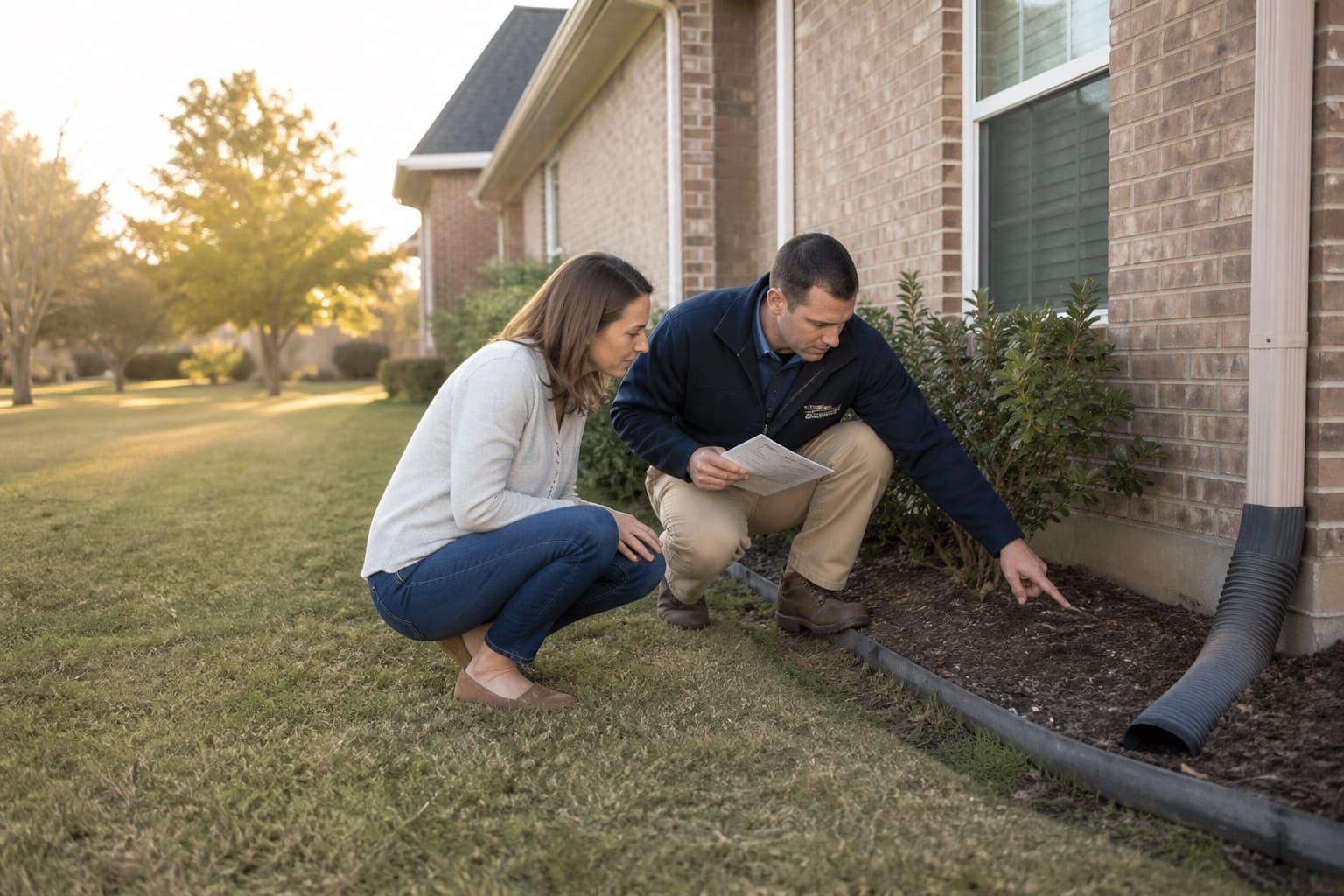
Drainage or water problems
Standing water, poor runoff, or concentrated discharge can affect conditions near a foundation and should be evaluated.
Learn what to look for
Denton County · Tarrant County
Flower Mound foundation repair planning considers warning signs alongside larger lots, mature trees, extensive roof runoff, hardscape, grading, and drainage routes, with inspection findings guiding whether structural, water-management, or monitoring steps make sense.
Free contractor inspections consider measurements, foundation type, drainage, plumbing indicators, construction, access, and site conditions before next steps are discussed.
Flower Mound is part of the Denton County & Northwest DFW service area.
Explore foundation services throughout Denton County & Northwest DFWKnow what to watch for
A single change does not confirm that a Flower Mound property needs foundation repair. An inspection can compare what you have noticed with measurements, the foundation system, drainage, and surrounding conditions.
Read the foundation warning-sign guide01
Standing water, poor runoff, or concentrated discharge can affect conditions near a foundation and should be evaluated.
Learn what to look for02
New, widening, or recurring cracks are worth documenting. Their location and pattern can help guide an inspection.
Learn what to look for03
Openings that suddenly drag, bind, or no longer latch can be reviewed alongside floor and wall conditions.
Learn what to look for04
A floor that feels different underfoot may call for measurements and a closer look at the foundation system.
Learn what to look for05
Separation near doors, windows, cabinets, or trim can be compared with other changes around the property.
06
Changes where brick, siding, walls, or rooflines meet may be useful clues during an exterior review.
A practical first step
Cracks, uneven floors, and sticking doors can have different causes. Start with a free foundation inspection so the conditions at your Flower Mound property can be evaluated together.
Foundation and property solutions
Available options include inspection, structural support, leveling, drainage, and concrete services. The appropriate starting point depends on the foundation system and what is observed at the property.
Property-specific review
Flower Mound homes with extended footprints, multiple roof planes, pools, patios, or rolling lots require a broad view of the site. An inspection compares foundation measurements and distress with uphill and downhill moisture, irrigation coverage, mature trees, and the full route from collection to discharge.
Floor elevations, slopes, cracks, door and window changes, additions, and exterior finishes are compared across distant sections where conditions may not be uniform.
Property-wide foundation inspection methodsEach major discharge point, swale, low area, retaining edge, and outlet is considered because water may change direction several times before leaving a broad lot.
Planning drainage correction across larger sitesPool areas, patios, detached structures, mature roots, irrigation zones, and surrounding flatwork are observed separately from the main foundation while noting relevant transitions.

Straightforward help
Foundation concerns rarely fit a one-size-fits-all answer. We focus on making the inspection findings and available choices easier to understand.
We explain what we observed, what it may mean, and which next steps fit the property.
The right direction may involve structural support, leveling, drainage, concrete work, monitoring, or additional evaluation.
We evaluate concerns involving both major residential foundation systems found across Dallas-Fort Worth.
Foundation inspection and repair services are available throughout the Dallas-Fort Worth Metroplex.
Simple from the start
Tell us what you have noticed and choose a time to evaluate the property.
We review visible warning signs, measurements, foundation type, drainage, and other relevant conditions.
We explain the findings and discuss whether repair, leveling, drainage, additional evaluation, or monitoring makes sense.
Flower Mound's whole-lot perspective
Foundation repair in Flower Mound should follow a whole-property inspection. Floor changes and cracks are evaluated with the foundation system, lot slope, roof runoff, drainage features, irrigation, trees, hardscape, plumbing indicators, and additions before a structural recommendation is made.
A Flower Mound foundation inspection may involve a long building footprint and several distinct outdoor systems. One side of a home can face mature trees and shade while another borders a drive, patio, pool area, open grade, or concentrated roof discharge.
Those features should be mapped rather than grouped into a single explanation. Interior floor elevations, openings, finishes, construction transitions, and foundation type establish the movement pattern; exterior drainage, irrigation, hardscape, vegetation, plumbing clues, and site slope provide supporting context.
Flower Mound neighborhood context
Conditions can vary between nearby streets and neighboring lots, so area context helps frame useful inspection questions without determining what is happening at one property.
A Denton and Tarrant County community with established neighborhoods, newer residential areas, mature trees, broad and compact lots, rolling grades, and properties near Grapevine Lake and major regional corridors.
Established homes and mature landscaping can combine additions, long rooflines, patios, and drainage changes made over several years.
Properties near varied terrain and Grapevine Lake still require lot-level evaluation rather than assumptions based on geographic proximity.
Broader lots, open drainage routes, tree cover, and changing grades can create different inspection access and moisture patterns.
Later subdivisions and mixed-use edges may include planned swales, retaining features, slab construction, and extensive paving.
Flower Mound property context
The relevance of each condition depends on the building, measurements, drainage, grading, and changes observed at the property.
Large or complex rooflines can concentrate rainfall in several separate beds or side yards that need individual observation.
Pool decks, patios, walks, and drives may move independently, affect drainage, or limit access without diagnosing the house foundation.
Water may cross several grades and materials before leaving a property, so each transition can affect a proposed drainage route.
Species, distance, canopy, roots, irrigation, and soil moisture all matter when considering whether a tree belongs in the property discussion.
Soil, water, and weather
Dry weather, heavy rain, runoff, leaks, and landscaping can influence a property differently depending on its construction and lot.
Grade, exposure, shade, and drainage can vary around a sloped lot and should be compared with the measured building pattern.
Separate zones, leaks, landscaping needs, and seasonal settings may create localized moisture that requires property-specific review.
Nearby geography does not establish conditions beneath a structure; construction, fill, drainage, and observed movement remain site-specific.
Helpful next steps
Continue with a relevant service, learn more about common foundation concerns, or view service coverage in nearby DFW communities.
Related services
Local questions
These answers provide general context. A free contractor inspection can evaluate conditions at an individual property; engineering, plumbing, or other third-party services may be separate when needed.
Foundation design and support cannot be inferred from square footage or footprint alone. Construction documents, visible conditions, measurements, and project-specific evaluation determine relevant questions.
Pool flatwork can move independently. Its elevation and drainage may provide context, while the pool structure, plumbing, and home foundation each require appropriate evaluation.
Slope changes runoff, access, and foundation exposure, so uphill and downhill conditions should be documented alongside interior measurements and construction type.
Do not change normal operation solely for the visit unless directed by an appropriate professional. Known leaks, zone issues, or recent changes should be shared with the inspector.
Water and grading conditions away from the wall can influence what reaches the foundation. Following the wider route provides context for localized movement.
Maintenance addresses controllable site conditions but does not reverse every structural change. The inspection determines whether maintenance, monitoring, repair, or a combination is justified.
Flower Mound free inspection request
Share which wing or area has changed and the surrounding slope, trees, hardscape, or water sources so the full property can be reviewed efficiently.