
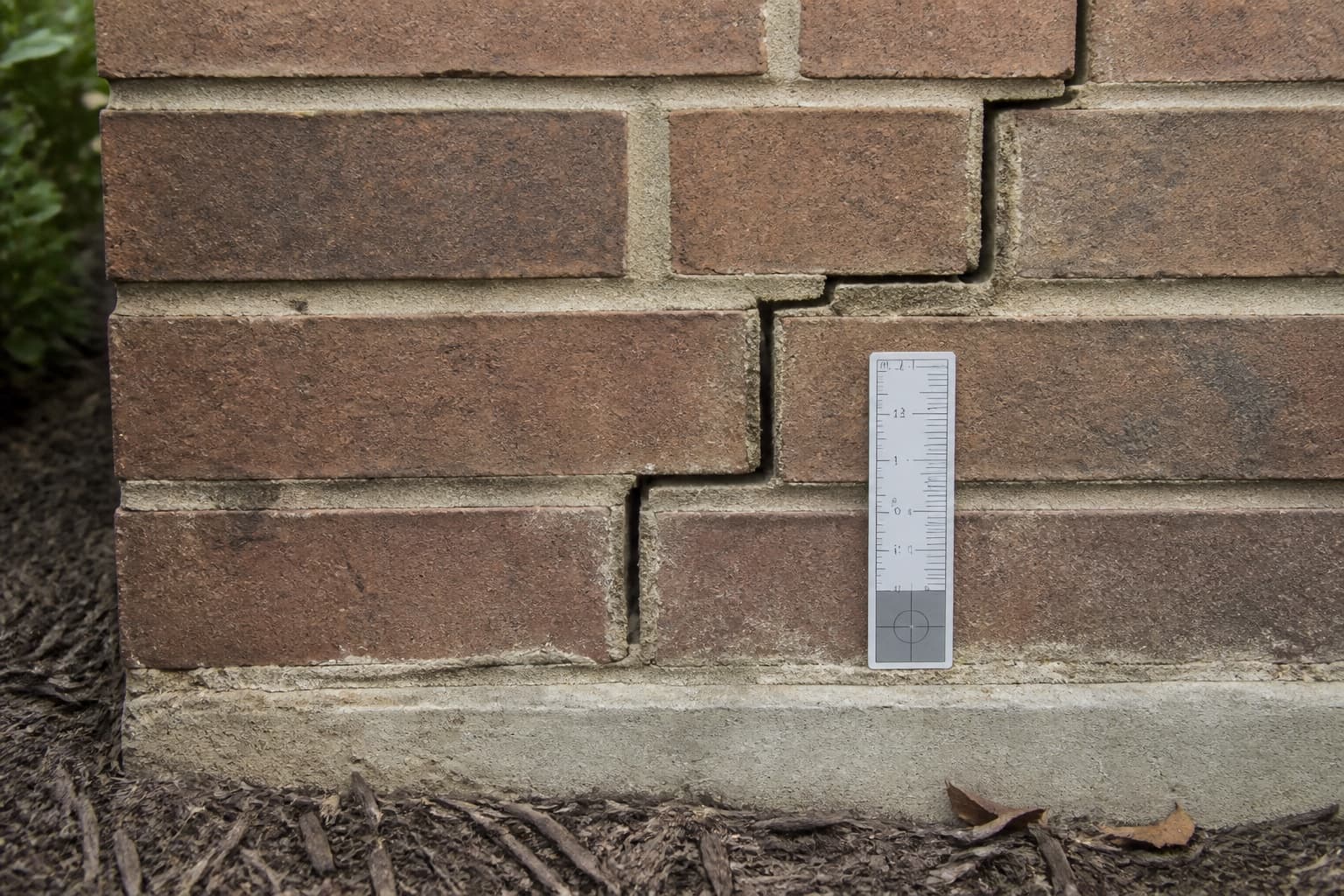
No. A crack does not automatically prove structural damage, and its width alone does not provide a diagnosis. Concrete can shrink, drywall joints can move, mortar can weather, and masonry veneer can respond differently from the supporting structure. A crack becomes more useful when it is considered with its location, direction, age, rate of change, nearby floor measurements, sticking openings, drainage, and construction details.
The safest approach is to document the condition and look for a pattern rather than assigning a cause from one photograph. A foundation crack repair evaluation should separate the visible surface from any underlying support question. The broader foundation warning-sign guide explains how several observations can be organized before an inspection.
Start with where the crack appears
A crack in exposed concrete, interior drywall, ceiling texture, brick veneer, mortar, tile, or exterior trim involves different materials and connections. Note the exact surface before comparing it with an online example.
Concrete shrinkage can create narrow cracks as material cures. Drywall seams and fasteners can show through after normal finish movement. Mortar can deteriorate at joints while individual brick units remain intact. Tile can crack because of installation, impact, subfloor behavior, or movement below it. None of these possibilities should be assumed without looking at the property.
Photograph the crack from far enough away to show its room or wall location, then take a closer image with a consistent reference. Record the date rather than relying on memory.
Direction and continuity add context
Horizontal, vertical, diagonal, and stair-step cracks can each occur for more than one reason. What matters is how the line travels through materials and whether it aligns with other changes.
Questions worth recording include:
- Does the crack continue through several materials or stop at a joint?
- Is it concentrated near a window, door, addition, fireplace, or change in foundation type?
- Does a similar change appear on the opposite side of the wall?
- Are nearby floors measurably different?
- Has the crack reopened after a cosmetic repair?
A stair-step mortar crack may deserve attention when it accompanies opening distortion or exterior separation, but the pattern still needs to be compared with the veneer support, lintels, joints, drainage, and foundation measurements.
Vertical and horizontal cracks need material context
A vertical line in exposed concrete may relate to shrinkage, a construction joint, localized stress, or movement. A horizontal line can follow a material transition, form near reinforcement or a cold joint, or reflect pressure and displacement that deserves closer review. Direction helps describe a crack; it does not assign the cause.
Record whether the crack is only at the surface, whether the two sides remain in the same plane, and whether the line continues around a corner or through another material. Active water, measurable displacement, corrosion staining, or a rapidly changing condition can change which specialist should evaluate it and how quickly.
Slab cracks and floor-finish cracks are different observations
A crack visible in an exposed slab is not the same as a line in tile, grout, wood flooring, or a surface overlay. Floor finishes can crack because of installation, joints, impact, moisture, or movement in the material below. The actual concrete may be concealed.
Before assuming slab movement, compare the finish line with room transitions, control joints, plumbing routes, floor elevations, exterior observations, and other changes. Removing flooring solely to investigate a crack should not occur without a clear property-specific reason and an agreed scope.
Brick cracks and mortar cracks are not interchangeable
Mortar is intended to join masonry units, and its condition can differ from the condition of the brick. A line that follows mortar joints may reflect joint movement or weathering. Cracks through brick units can indicate a different stress path. Veneer also has ties, openings, control details, and support conditions that affect how it behaves.
Do not assume that repointing mortar resolves the source of a changing pattern. Likewise, do not assume every masonry crack requires foundation repair. An exterior review should compare the crack with wall planes, openings, slab or beam edges, grade, roof runoff, and nearby hardscape.
Drywall and ceiling cracks need surrounding evidence
Interior finish cracks are common observations because drywall is relatively brittle at seams, corners, and openings. Note whether the line is at a taped joint, where a wall meets a ceiling, above a doorway, or across an uninterrupted surface.
Also look for related changes: a door that recently began rubbing, trim gaps, cabinet separation, floor slope, or exterior distress in the same area. The guide to sticking doors and windows explains why opening behavior should be checked before it is attributed to foundation movement.
Cracks above doors and windows often attract attention because openings interrupt the wall and change how finishes are framed. Note whether the line starts at a corner, follows a taped joint, appears on both sides of the opening, or corresponds with exterior masonry. A ceiling crack can likewise follow a drywall seam, framing change, roof condition, or movement elsewhere in the structure.
Normal settling and foundation settlement are not photo labels
Homeowners often hear “normal settling” used for almost any crack. The phrase can describe harmless material adjustment, but it can also become a vague substitute for measurement. Foundation settlement refers to movement of supporting elements or soils; determining whether it is present requires more than crack appearance.
Ask what evidence supports the explanation. Useful evidence can include relative floor elevations, change over time, the location of other distress, foundation construction, accessible supports, additions, drainage, plumbing indicators, and prior work.
Change over time matters more than a one-day impression
A dated record can show whether a crack is stable, seasonal, gradually changing, or associated with a specific event such as a plumbing leak or heavy rain. Avoid drawing marks directly on finished surfaces if that could damage them. Repeat photographs from the same angle and note any repair, weather event, or door adjustment between observations.
The guide to monitoring foundation changes provides a repeatable recordkeeping method. Monitoring is not a substitute for prompt evaluation when changes are progressing quickly or other safety concerns are present.
When a crack deserves an inspection
Consider a professional foundation inspection when a crack is changing, appears with uneven floors or sticking openings, crosses multiple materials, follows a broader movement pattern, or raises questions before a sale or renovation. Sudden displacement, active water intrusion, damaged utilities, or a potentially unsafe condition can require the appropriate specialist without waiting for routine monitoring.
During an inspection, the crack should be treated as one observation among many. Relative floor measurements, foundation type, additions, prior repairs, drainage, grading, plumbing indicators, and accessible supports help determine whether the next step may involve repair, maintenance, drainage work, specialist evaluation, or continued observation. Review what happens during a foundation inspection before scheduling so you can provide a useful history.
If structural movement is supported by the full pattern, a foundation repair scope should explain the affected support areas and intended objective. Masonry, drywall, concrete sealing, painting, or flooring work remains a separate finish scope. Treating cosmetic filling as structural repair—or structural support as guaranteed cosmetic restoration—confuses two different decisions.