
01
Gaps around trim or openings
Separation near doors, windows, cabinets, or trim can be compared with other changes around the property.
Dallas County
Foundation inspections for Farmers Branch homes relate cracks, opening changes, floor elevations, additions, compact drainage routes, and plumbing clues before property-specific foundation repair or monitoring options are considered.
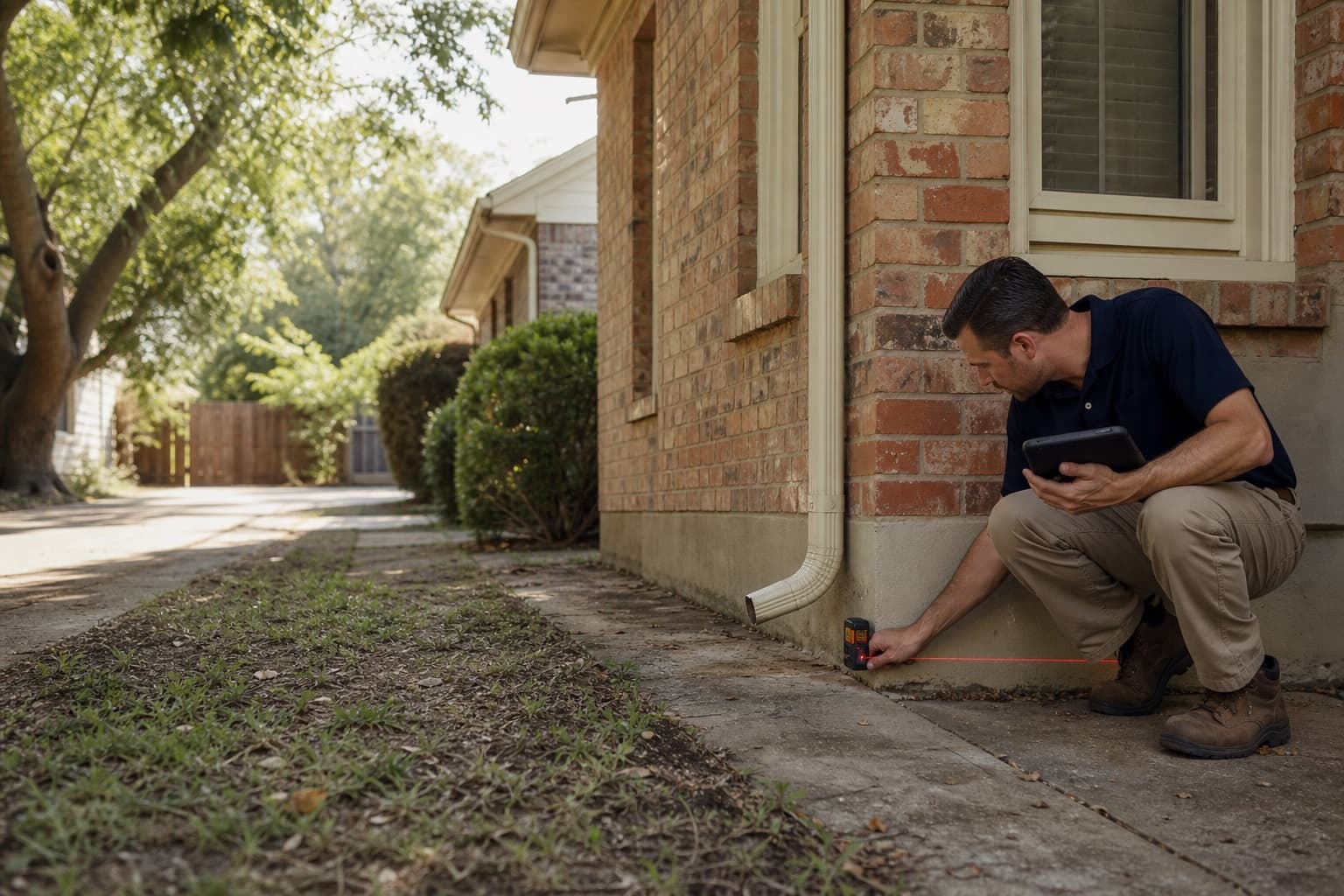
Free contractor inspections consider measurements, foundation type, drainage, plumbing indicators, construction, access, and site conditions before next steps are discussed.
Farmers Branch is part of the Dallas & Park Cities service area.
Explore foundation services throughout Dallas & Park CitiesKnow what to watch for
A single change does not confirm that a Farmers Branch property needs foundation repair. An inspection can compare what you have noticed with measurements, the foundation system, drainage, and surrounding conditions.
Read the foundation warning-sign guide01
Separation near doors, windows, cabinets, or trim can be compared with other changes around the property.
02
Changes where brick, siding, walls, or rooflines meet may be useful clues during an exterior review.
03
Standing water, poor runoff, or concentrated discharge can affect conditions near a foundation and should be evaluated.
Learn what to look for04
New, widening, or recurring cracks are worth documenting. Their location and pattern can help guide an inspection.
Learn what to look forA practical first step
Cracks, uneven floors, and sticking doors can have different causes. Start with a free foundation inspection so the conditions at your Farmers Branch property can be evaluated together.
Foundation and property solutions
Available options include inspection, structural support, leveling, drainage, and concrete services. The appropriate starting point depends on the foundation system and what is observed at the property.
Property-specific review
A Farmers Branch evaluation may need to work around alleys, rear paving, infill construction, narrow side access, or active commercial use. Measurements and visible warning signs are interpreted alongside those constraints, mature shade, additions, utilities, and stormwater routes at the specific property.
Floor readings, cracks, openings, additions, and exterior transitions are documented to separate movement within the subject building from conditions at newer adjacent improvements.
Slab movement and repair evaluationAlleys, rear drives, downspouts, fence lines, low areas, and neighboring elevations are followed to determine where concentrated water enters and leaves the private lot.
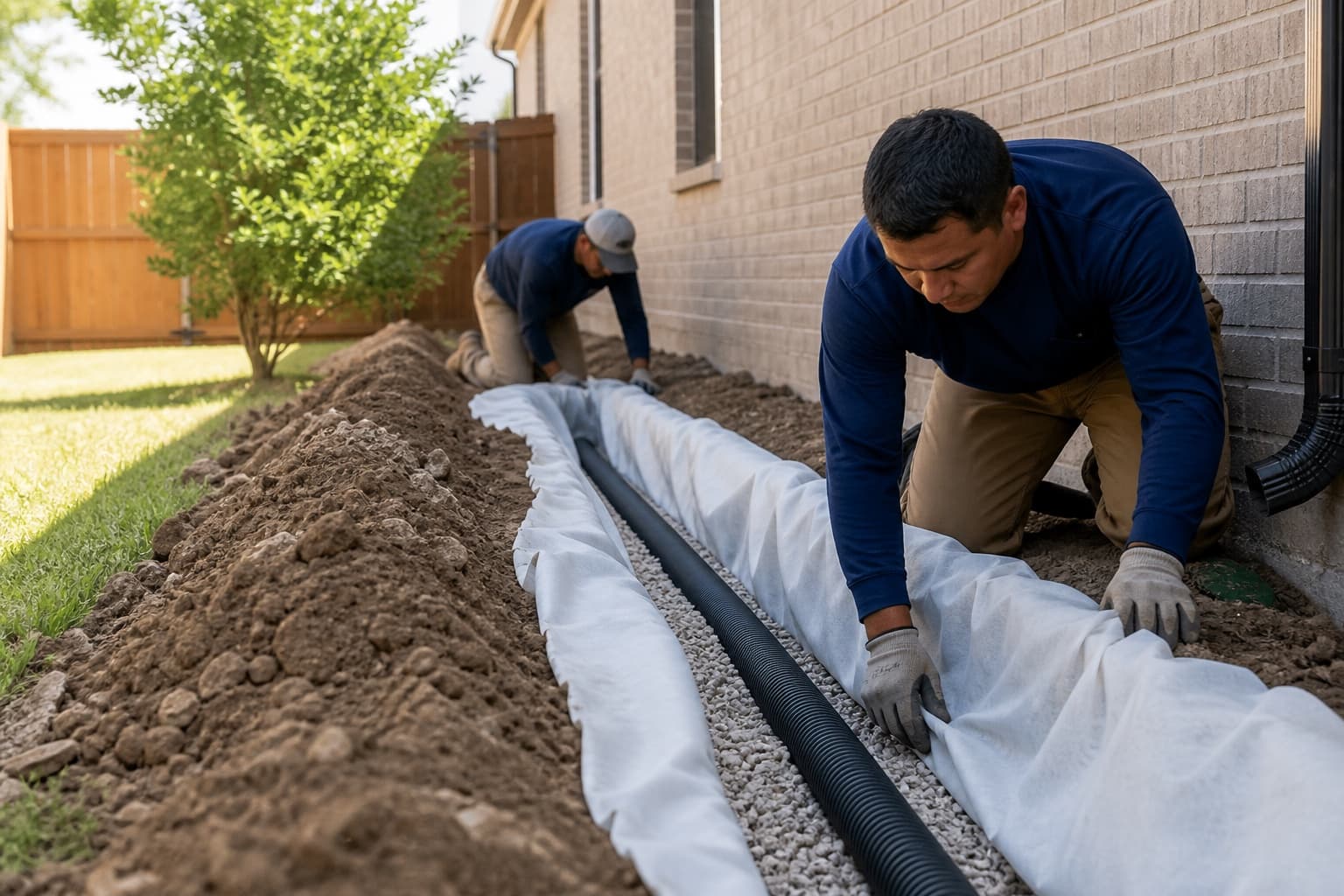
When a French drain may be consideredLimited side yards, buried utilities, landscaping, multifamily access, and business operations can affect what is observable and how any future work would need to be coordinated.
Straightforward help
Foundation concerns rarely fit a one-size-fits-all answer. We focus on making the inspection findings and available choices easier to understand.
We explain what we observed, what it may mean, and which next steps fit the property.
The right direction may involve structural support, leveling, drainage, concrete work, monitoring, or additional evaluation.
We evaluate concerns involving both major residential foundation systems found across Dallas-Fort Worth.
Foundation inspection and repair services are available throughout the Dallas-Fort Worth Metroplex.
Simple from the start
Tell us what you have noticed and choose a time to evaluate the property.
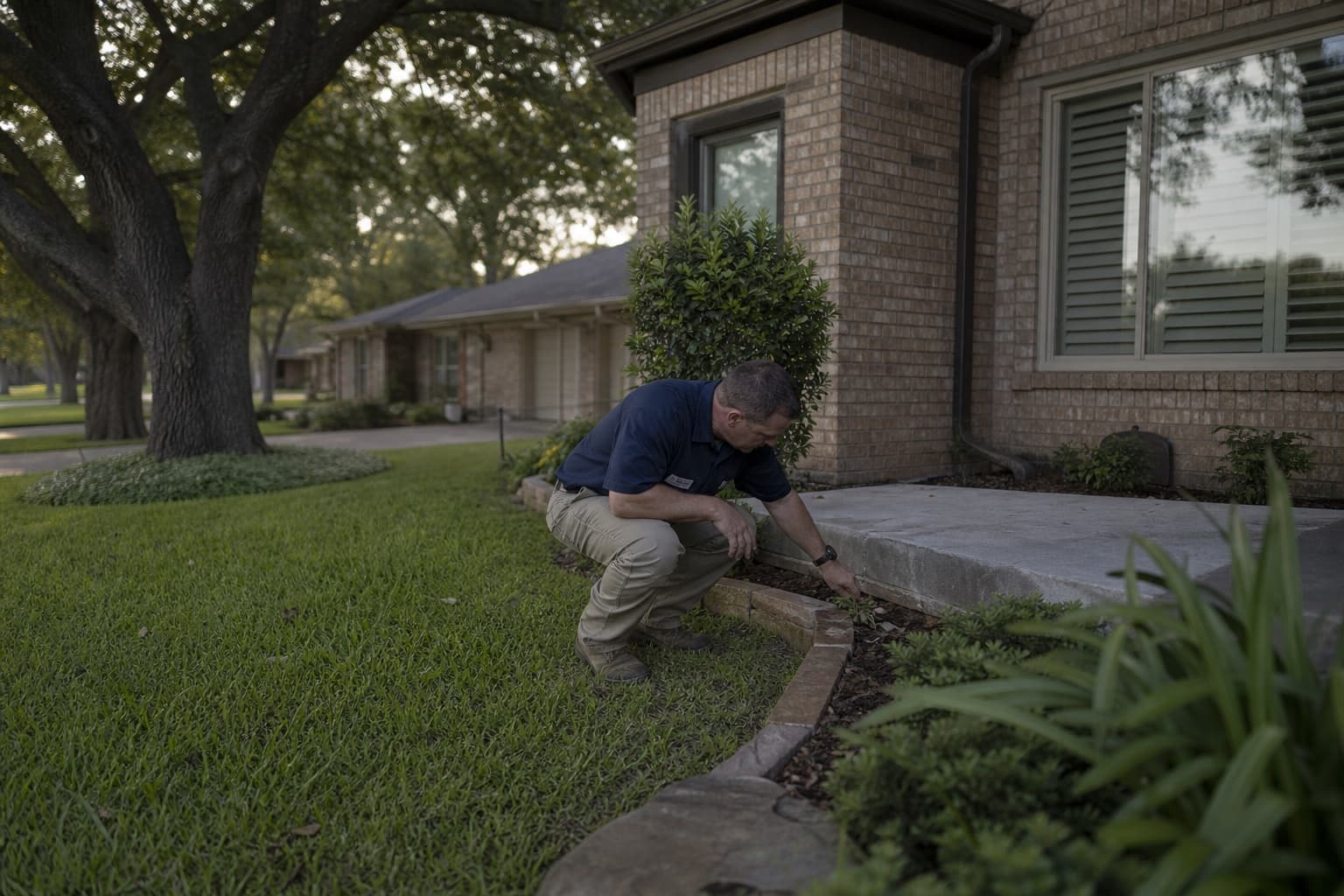
We review visible warning signs, measurements, foundation type, drainage, and other relevant conditions.
We explain the findings and discuss whether repair, leveling, drainage, additional evaluation, or monitoring makes sense.
Farmers Branch infill and drainage context
Foundation repair in Farmers Branch begins with an inspection that separates structural evidence from surface symptoms. Cracks, doors, floor levels, slab edges, mature landscaping, compact drainage routes, grading, plumbing clues, and past alterations are compared before a repair or water-management plan is outlined.
Farmers Branch foundation concerns often sit within a developed block where neighboring grades, alley paving, fences, patios, and several downspouts shape a limited drainage area. A crack or sticking door may be the reason for the visit, but the inspection should also determine how the property fits within that surrounding water route.
Older central homes, Brookhaven-area properties, and later development toward the city's western edge can differ in foundation type, additions, landscaping, and access. Interior measurements and visible movement are considered first, followed by grading, roof runoff, flatwork, plumbing clues, and prior property changes.
Farmers Branch neighborhood context
Conditions can vary between nearby streets and neighboring lots, so area context helps frame useful inspection questions without determining what is happening at one property.
An established Dallas County community bordering Dallas and Carrollton, with mature residential streets, compact lots, alleys and rear drives, office and industrial corridors, and ongoing infill around existing development.
Established homes and incremental updates can create a layered mix of older paving, mature trees, additions, and changed drainage details.
Broad rooflines, mature landscaping, patios, and varied lot elevations may place several moisture conditions around one structure.
Residential, commercial, and industrial edges can differ in hardscape coverage, utility access, runoff volume, and building foundation systems.
Later development near existing corridors may involve planned drainage, newer slabs, retaining features, and transitions to neighboring construction.
Farmers Branch property context
The relevance of each condition depends on the building, measurements, drainage, grading, and changes observed at the property.
Rear drives and alleys can direct water toward garages, fences, patios, or lower planting areas depending on elevation and condition.
New buildings, walls, paving, and landscape work may change surrounding runoff context without proving the cause of movement at the subject property.
Utilities, fences, mechanical equipment, walks, and neighboring structures can affect inspection access and possible drainage routes.
Slab homes, attached housing, offices, and light industrial buildings require different measurement, access, and repair-planning questions.
Soil, water, and weather
Dry weather, heavy rain, runoff, leaks, and landscaping can influence a property differently depending on its construction and lot.
Roofs and paved surfaces reduce infiltration and may send rainfall toward a small number of collection or discharge points.
Tree canopy, irrigation, building shadows, and limited airflow can cause one side of a property to remain damp longer than another.
A localized wet area may relate to drainage, plumbing, irrigation, or multiple sources and should not be diagnosed by appearance alone.
Helpful next steps
Continue with a relevant service, learn more about common foundation concerns, or view service coverage in nearby DFW communities.
Related services
Local questions
These answers provide general context. A free contractor inspection can evaluate conditions at an individual property; engineering, plumbing, or other third-party services may be separate when needed.
It may alter grades, paving, walls, or runoff routes, but an inspection must document the current subject property before connecting any neighboring change to a foundation concern.
Garage slabs, rear transitions, paving, and drainage can provide useful context. Their relationship to the main structure depends on construction and observed movement.
No, but slope, utilities, access, neighboring grades, collection points, maintenance, and a suitable outlet determine which options are practical.
Building use, affected areas, access limits, known utility events, maintenance records, and observed floor or opening changes can help focus the visit.
Trees, beds, irrigation, and hardscape can influence moisture and access. Their relevance depends on distance, drainage, soil exposure, and the observed movement pattern.
It can be appropriate for certain subsurface or low-area water problems when adequate slope and discharge exist. Surface runoff may require a different collection method.
Farmers Branch free inspection request
Describe the building changes and surrounding alley, paving, or drainage conditions so the property can be reviewed before a service scope is selected.