
Saturated soil along a repeatable path
A consistently wet strip may suggest subsurface water movement, but irrigation and plumbing sources should also be considered.
Foundation service
Site-specific planning and installation for subsurface drainage where soil water needs a defined collection route and suitable outlet.
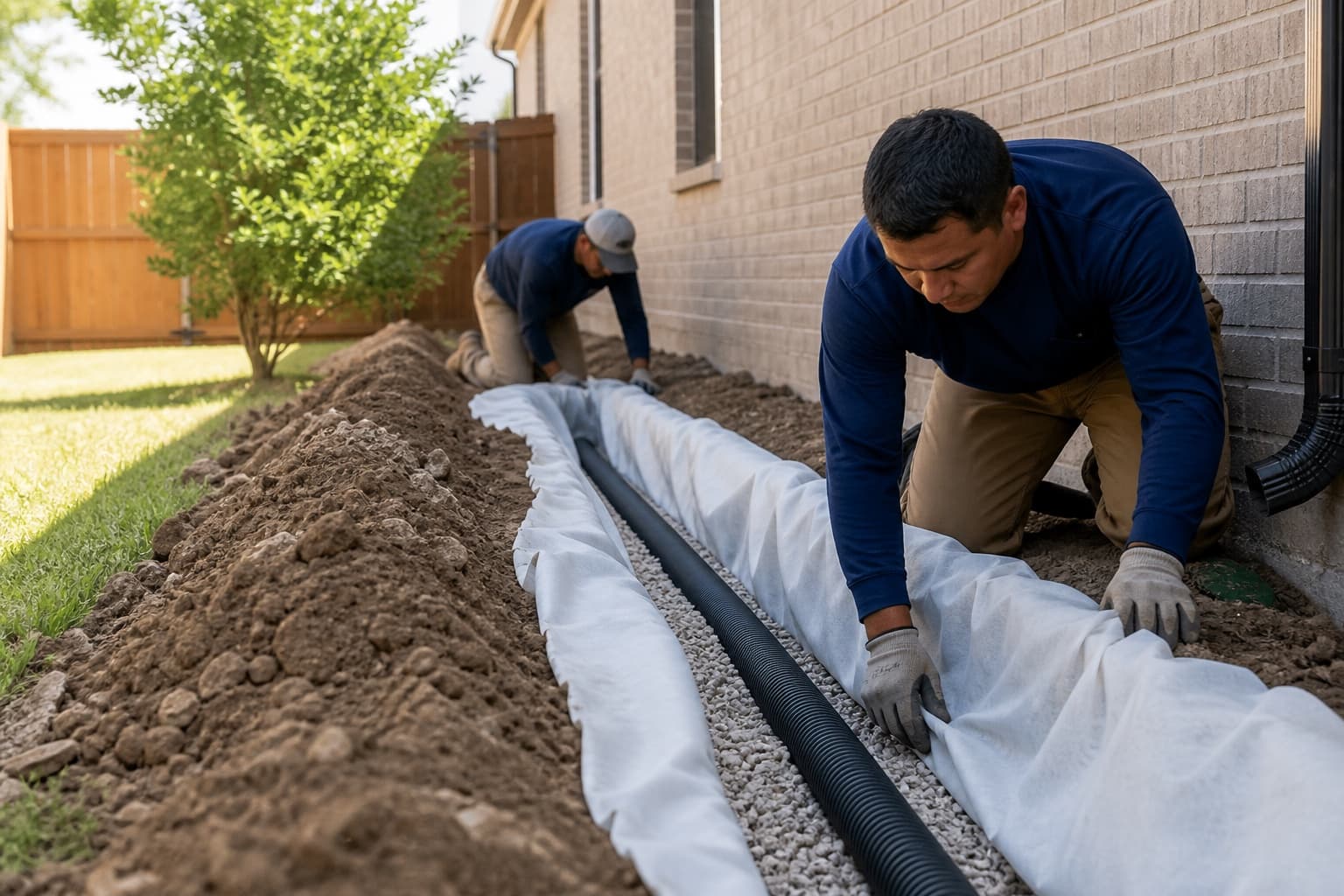
A French drain is a gravel-filled trench with a perforated pipe intended to collect and redirect water moving through soil. It can be useful in the right setting, but it is not a universal answer for roof runoff, every low spot, or water with no workable discharge destination.
Installation planning should establish what water the drain is meant to intercept, how the trench can maintain slope, where utilities and hardscape limit access, and where water can leave the system. Those details determine whether a French drain—or a different drainage measure—fits the property.
The inspection should account for the property’s construction, observed changes, drainage, grading, and surrounding site conditions before a service path is selected.
Warning signs
These observations can have more than one explanation. Look for patterns, progression, and multiple signs in the same part of the property.
A consistently wet strip may suggest subsurface water movement, but irrigation and plumbing sources should also be considered.
A drain may be considered where soil water moves toward a crawlspace, foundation perimeter, or low landscape area.
Narrow side yards, fences, patios, or neighboring grades may restrict practical surface-flow changes.
Unknown outlets, sediment, root intrusion, collapsed pipe, or poor slope can make an existing system worth tracing before replacement.
Possible contributors
North Texas soil and weather can be relevant, but construction, drainage, plumbing, and property history also belong in the evaluation.
Water may travel through more permeable soil layers or along backfilled trenches and emerge in lower areas.
Tight side yards and hardscape can reduce options for broad regrading and influence trench placement.
A drain cannot rely on gravity unless the route reaches a suitable point lower than the collection area.
Roof runoff, surface flow, irrigation, and soil water may require different collection components rather than one trench serving every source.
Inspection process
The review distinguishes surface runoff, roof discharge, recurring soil saturation, and possible non-drainage sources.
Potential trench alignment, elevation, utilities, roots, hardscape, and discharge constraints are considered together.
Pipe, washed aggregate, filter fabric, collection features, and outlet protection should match the intended function and site.
If service is recommended
01 / Lay out and protect the work area
The approved alignment is marked and access, utilities, landscaping, and excavated soil are accounted for before trenching.
02 / Install the specified drain assembly
The trench, fabric, aggregate, perforated pipe, connections, and slope follow the agreed site-specific plan.
03 / Finish the route and review upkeep
The surface and outlet are completed according to scope, with maintenance notes for accessible inlets or discharge points.
Keep exploring
Questions
A French drain primarily collects water moving through surrounding soil, while a surface drain captures water at an inlet. Some properties may use both for different sources.
Gravity drainage needs a suitable elevation difference and discharge location. Where that is unavailable, a French drain may not be the appropriate standalone approach.
Roof water and subsurface collection have different flow characteristics. If they share a route, the design and connections should account for capacity, debris, and maintenance.
Utility-location and site-access steps should be addressed before excavation. Private lines and irrigation may require additional property-specific review.
Property-specific next steps
Share where the soil stays wet and where water could discharge so the property can be reviewed before trenching is planned.