
Firewheel-area communities
Planned neighborhoods may include compact side yards, alleys, walls, community-facing landscapes, and newer hardscape. Private routes still need verified ownership, utility clearance, and an appropriate outlet.
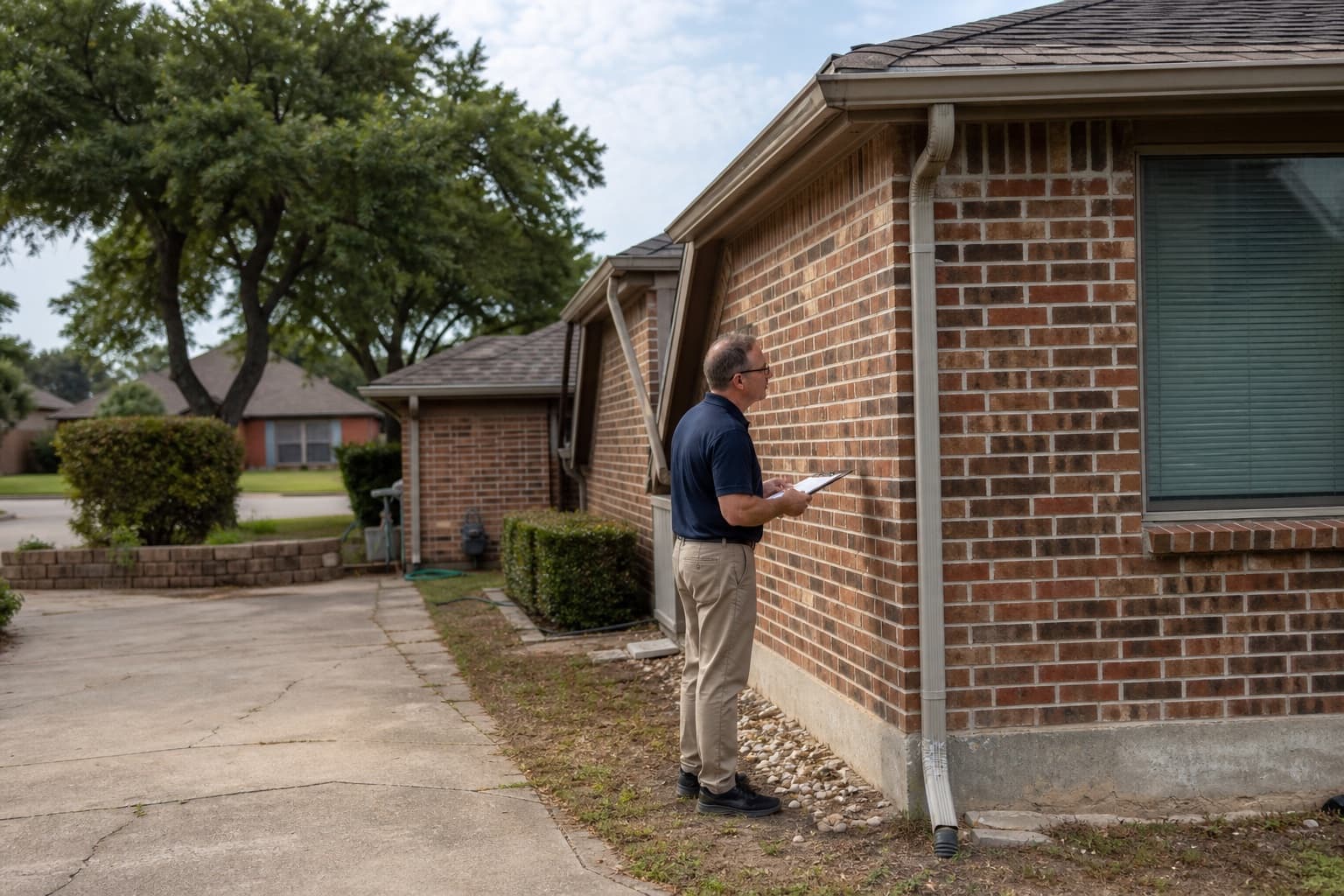
Garland drainage evaluation for established and growing areas
Consult a drainage company in Garland for yard ponding, runoff, erosion, grading, and French drain installation decisions that follow water from its source to a suitable outlet. Schedule a free drainage evaluation.
Free contractor drainage evaluation
Source-to-outlet planning
Property-specific recommendations
Garland drainage conditions vary across established neighborhoods, newer development around Firewheel, properties near Duck Creek, and lots shaped by alleys, mature landscaping, slopes, or later hardscape. Water may be visible beside a foundation even though its source is a roof valley, uphill pavement, irrigation, a blocked swale, or a low patio several yards away.
A drainage company should trace that connection before recommending French drain installation or another system. The free drainage evaluation examines water timing, surface grades, soil saturation, utilities, hardscape, route access, outlet stability, and responsibility boundaries. Recommendations remain conditional on the actual property rather than citywide assumptions about soil or storm behavior.
City-specific context
Firewheel, Duck Creek, Historic Downtown-area streets, and other residential parts of Garland illustrate why lot shape and surrounding development matter to drainage planning.
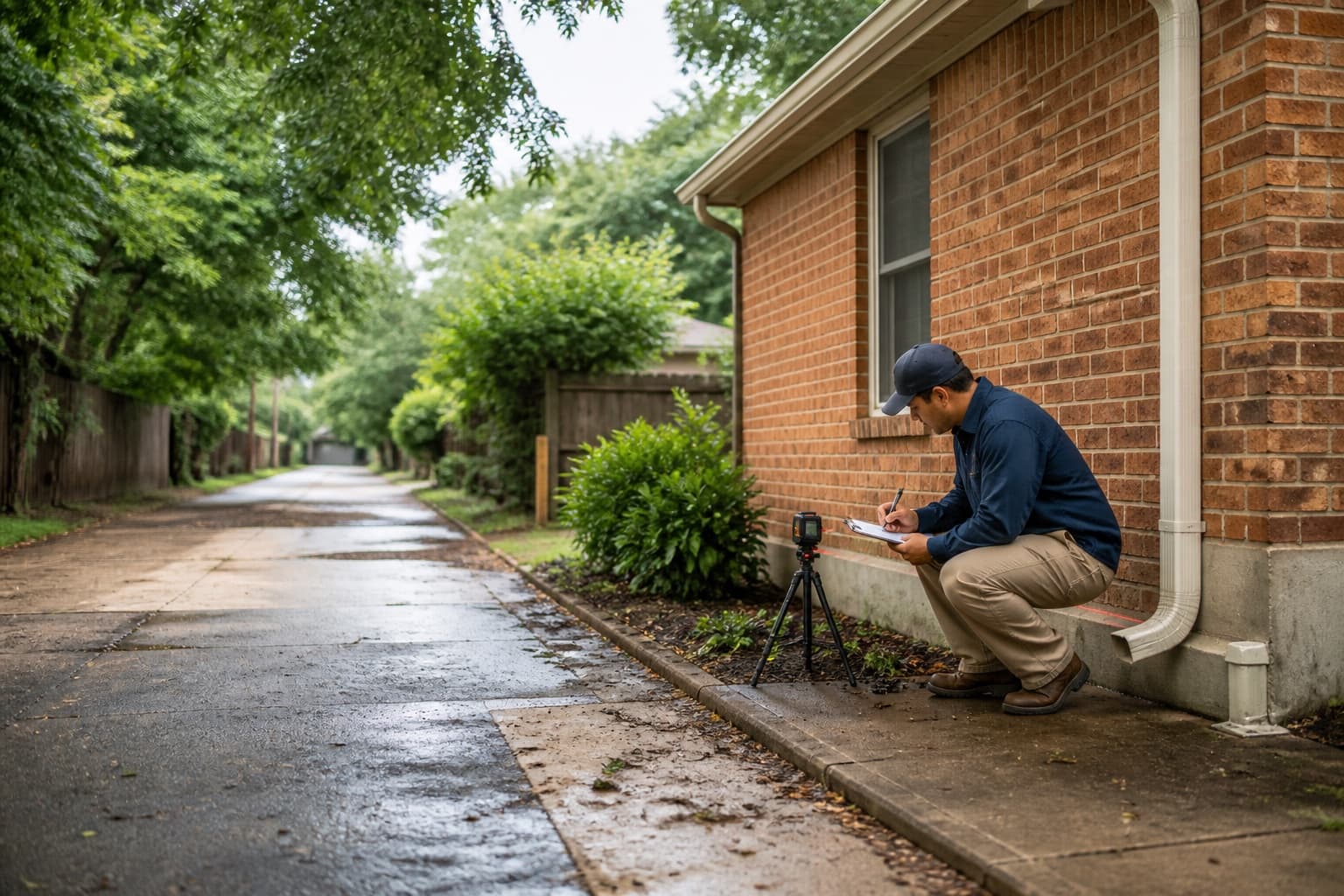
Planned neighborhoods may include compact side yards, alleys, walls, community-facing landscapes, and newer hardscape. Private routes still need verified ownership, utility clearance, and an appropriate outlet.
Properties near natural and constructed drainage corridors can have sloped grades or concentrated neighborhood flow. Proximity to a creek does not authorize discharge or explain a specific wet area without site review.
Established homes may have mature trees, detached structures, older paving, alley conditions, and additions installed over decades. Current elevations should be measured instead of inferred from property age.
Large paved areas can collect substantial runoff and direct it toward garages, gates, side yards, or streets. Drainage and concrete movement may need coordinated but separate evaluation.
Method follows the water path
The right plan manages the identified water source, respects property boundaries, and preserves access for inspection and maintenance.
A coordinated plan may include grading, surface or subsurface collection, solid conveyance, outlet stabilization, and sequencing with related flatwork.
Review drainage correctionFrench drains may intercept subsurface water along a defined trench when filtering, fall, utilities, maintenance, and discharge have been addressed.
Explore French drain installationInlets or channel drains can collect visible runoff from lawns, patios, drives, or outdoor areas where the low point and pipe route are practical.
Compare French and surface drainsSolid piping can carry roof discharge toward a verified outlet while keeping concentrated flow separate from aggregate intended to collect soil moisture.
Plan roof-water conveyanceDrainage conditions can be documented alongside structural concerns, but foundation conclusions require their own floor measurements, visible evidence, and construction context.
Review foundation repair in GarlandSubsurface drainage, evaluated in context
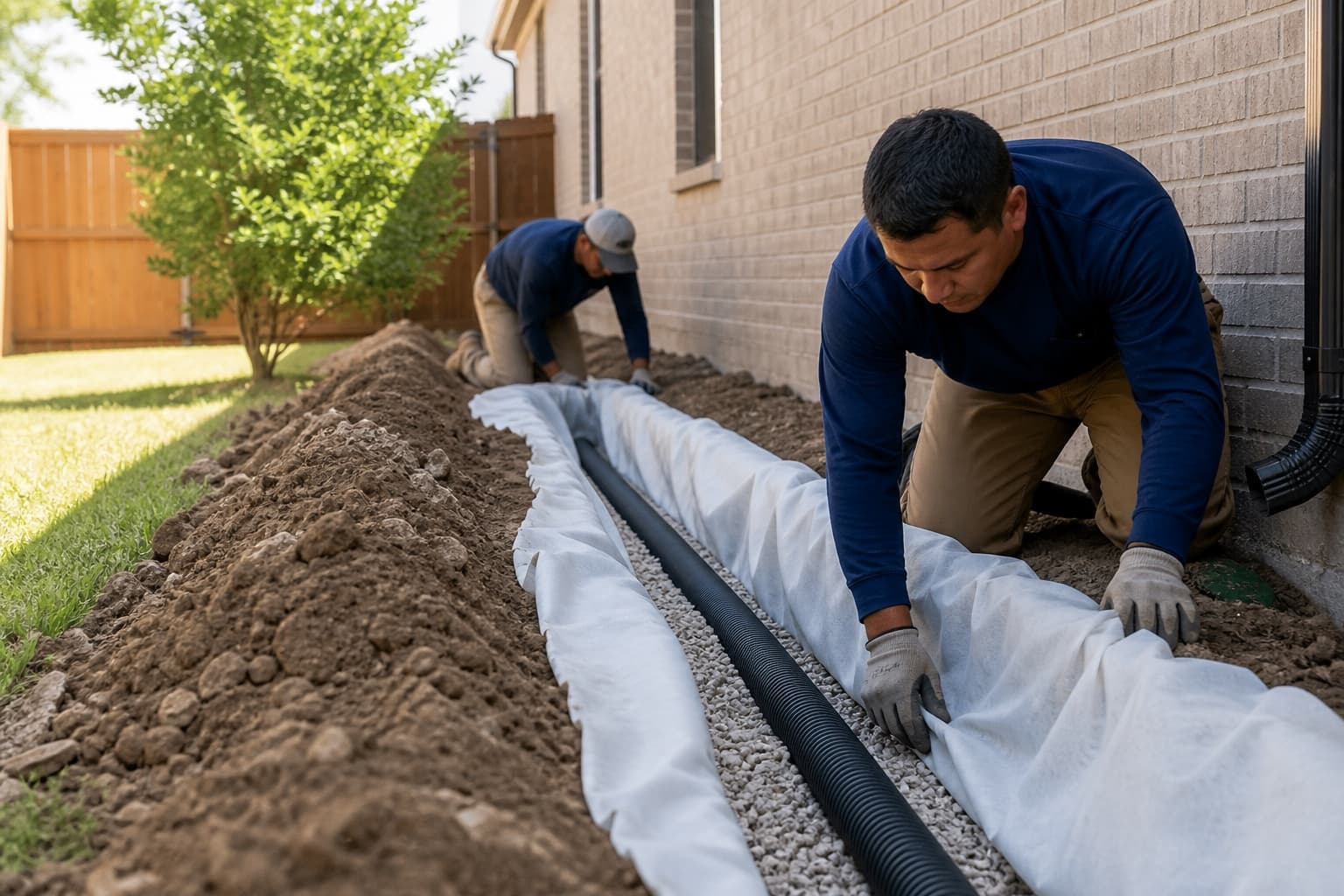
A French drain collects certain subsurface water through a filtered aggregate trench. It should not be selected merely because an area is wet; the design must explain which water enters, how sediment is controlled, how the pipe reaches an outlet, and how the system can be maintained.
Persistent saturation or seepage along a route may support subsurface collection. Rapid storm flow, roof discharge, irrigation failure, or a shallow low point often needs another first-line solution.
Filter design should consider native soil, imported fill, roots, surface sediment, aggregate, and future landscape work. Generic fabric and gravel details are not interchangeable on every site.
Gas, electric, communications, water, sewer, irrigation, mature trees, pools, and other buried systems can alter the route or require separate verification.
The final outlet should support gravity flow, resist erosion, avoid prohibited impacts, and remain accessible enough to observe whether the system is operating.
Installation cost, landscape restoration, cleanouts, debris management, outlet care, and future access should be compared with grading, surface drains, or solid-pipe alternatives.
What homeowners observe
Ponding, erosion, and wet soil show where water is affecting the property, but the inspection must identify what feeds the condition and what outlet is available.
Roof valleys, multiple downspouts, drive runoff, and landscape grade can converge at one point. The source area and downstream path should be mapped before collection is added.
Concentrated surface flow may create channels or expose roots and utilities. Slowing, redirecting, collecting, or stabilizing the route depends on elevation and boundary conditions.
Low concrete, alley elevation, roof discharge, or a blocked path may contribute. The driveway and drainage scopes should be separated while their final elevations are coordinated.
Edging, soil buildup, irrigation, shade, and subsurface flow can keep beds wet. A French drain is only one possible response and may not address an active irrigation or plumbing source.
An existing pipe or emitter may move water but release it onto an eroding slope, walkway, street edge, or neighboring direction. The destination is part of the system.
Related, not interchangeable
Drainage, foundation condition, and flatwork elevation can affect the same area while still requiring separate diagnoses and scopes.
Roof and surface water should be directed responsibly, but moisture at the edge does not establish the need for foundation repair or identify a movement cause.
Sunken exterior concrete can create low points or redirect runoff. Slab integrity, support, fixed edges, and use determine whether leveling or replacement is appropriate.
Porches, additions, and raised areas may involve ventilation, clearance, supports, plumbing, and water-entry paths that are not resolved by yard drainage alone.
Drainage performance should be observed during rain, while cracks, floors, doors, and exterior slabs are monitored separately according to the evidence and repair scope.
Source-to-outlet inspection
The evaluation connects observed symptoms with water source, route, collection method, outlet, and maintenance before excavation or pricing is finalized.
Storm intensity, irrigation, roof areas, dry-weather moisture, seasonal shade, and recent property changes help distinguish recurring sources.
Foundations, drives, walks, patios, beds, edging, walls, fences, alleys, and neighboring elevations show where water moves or stops.
Existing pipes, emitters, cleanouts, utility routes, irrigation, plumbing, and pool equipment are considered before a new trench overlaps unknown infrastructure.
Grading, surface inlets, channels, solid pipe, and French drains are compared according to whether the water is flowing visibly, concentrated from a roof, or moving through soil.
The written scope identifies pipe, fall, outlet, erosion control, cleanouts, restoration, exclusions, and any approval or specialist question that remains.
Property-specific scope
Cost is based on the full source-to-outlet design. Linear footage is only one part of a project that may include several collection points, crossings, utility coordination, deep excavation, outlet protection, and landscape restoration.
Request a Free EvaluationGrading, catch basins, channel drains, French drain aggregate, solid pipe, cleanouts, emitters, and erosion controls carry different material and installation requirements.
Fences, gates, roots, utilities, mature landscaping, walls, patios, drives, and detached structures can affect labor and restoration.
Limited fall, deep runs, outlet construction, pumps, electrical service, or multiple drainage zones can change both initial and ongoing costs.
Surveys, engineering, plumbing tests, utility work, permits, public connections, and association or municipal approvals are outside the base contractor evaluation when required.
Before the visit
A clear record of water timing, route, and past site changes helps the inspection focus on the real source instead of the most visible puddle.
Take safe storm photos that include roof outlets, paved flow, low landscape areas, erosion, and the final point where water disappears or leaves.
Note irrigation schedules, plumbing concerns, pool operation, condensate, and other dry-weather water sources.
Gather surveys, known easements, prior drainage plans, and records of concrete, landscape, fence, or addition work.
Identify existing drains, buried pipes, emitters, cleanouts, utility routes, irrigation valves, and areas that have stopped draining.
Describe any shared, alley, street, creek-adjacent, or neighboring condition without assuming it can receive private discharge.
Continue your research
Use educational resources to prepare questions, then rely on property observations and measurements for the recommendation.
Questions from homeowners
Not automatically. Ponding may result from surface grade, roof runoff, edging, a blocked outlet, irrigation, or subsurface saturation. Collection should match the verified source and available discharge route.
Do not assume a nearby drainage feature is an approved outlet. Property boundaries, easements, elevation, erosion, public requirements, environmental constraints, and receiving conditions need verification.
A French drain is generally designed to collect water through aggregate along a trench. Solid pipe conveys water already captured at a downspout or inlet without intentionally collecting surrounding soil moisture.
Drainage can address an identified water route, but a settled driveway needs its own concrete evaluation. Final slab elevations and drainage should be coordinated when both scopes are justified.
No. Performance depends on source control, capacity, grade, filter condition, outlet stability, maintenance, and future site changes. Surface runoff may continue outside the trench's collection area.
Ask which source the system addresses, how elevations were confirmed, what pipe and collection details are included, where water discharges, how maintenance works, and which approvals or restoration items are excluded.
The contractor review considers visible water sources, grading, hardscape, route constraints, existing drainage features, and outlet possibilities. Engineering, plumbing tests, surveys, permits, approvals, and installation are separate.
Free drainage evaluation
Tell us where water appears, which roof, yard, alley, or paved areas may feed it, and what you observe at the current outlet.