
Comprehensive drainage correction
Drainage correction can coordinate grading, roof-water routing, surface collection, subsurface interception, and outlet protection under one property-specific plan.
Review drainage correction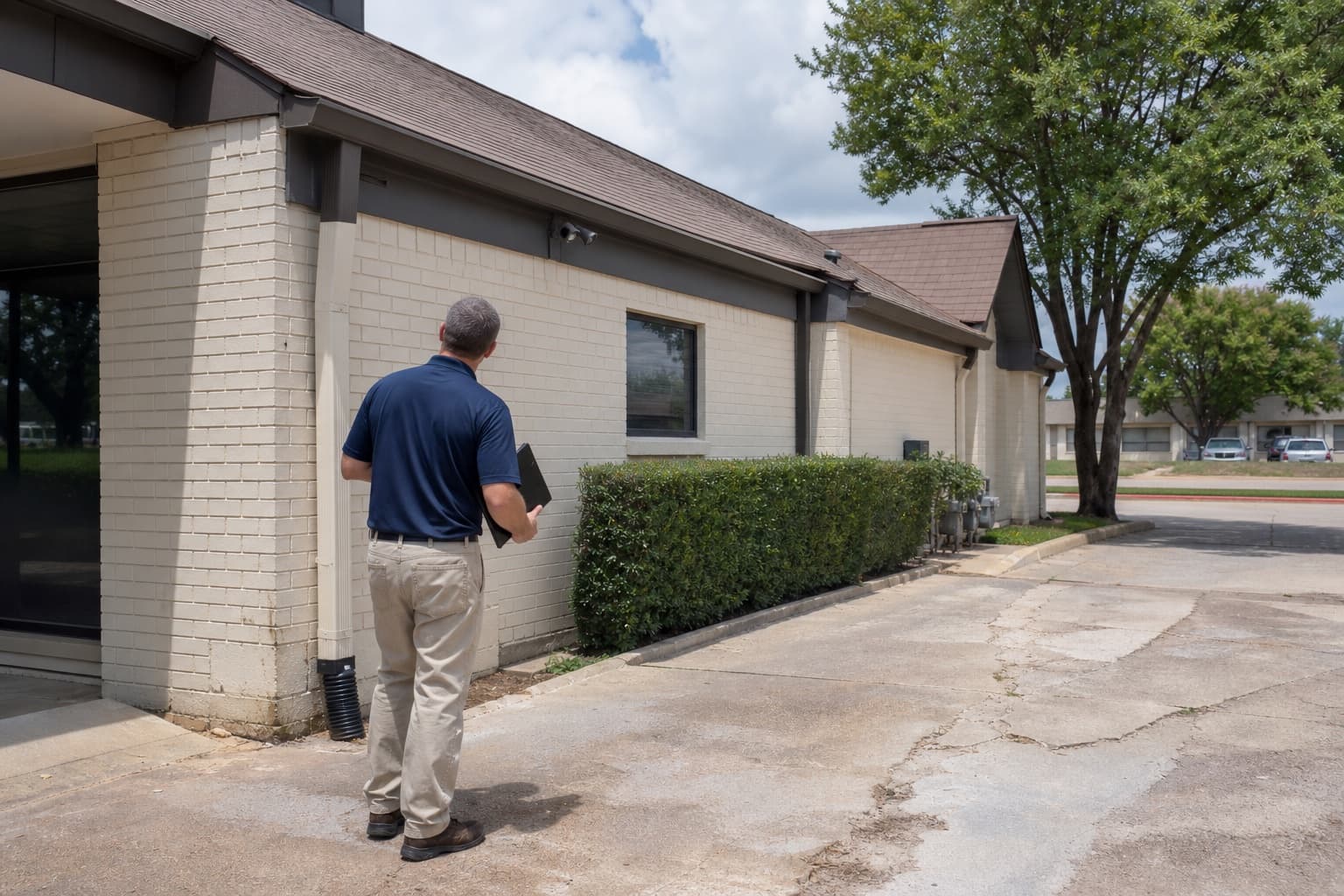
Irving drainage planning for roofs, alleys, and connected paving
Work with a drainage company in Irving to trace roof runoff, alley flow, yard low points, and hardscape before French drain installation or another drainage repair is selected. Request a free drainage evaluation.
Free contractor drainage evaluation
Source-to-outlet planning
Property-specific recommendations
Irving properties can combine dense development, broad commercial-adjacent paving, established residential streets, alleys, planned communities, and outdoor improvements that move water quickly. In Las Colinas, Valley Ranch, South Irving, and other parts of the city, the visible wet area may be several steps removed from the roof, pavement, or neighboring grade that feeds it.
A drainage company evaluation should connect those steps. The free visit reviews the source, surface and subsurface behavior, elevations, utilities, maintenance access, and final outlet before French drain installation, a surface inlet, solid conveyance, grading, or another yard drainage solution is proposed. The city area adds context; the individual property provides the evidence.
Method follows the water path
The system should address the identified source while fitting physical, ownership, and maintenance constraints along the entire route.
Drainage correction can coordinate grading, roof-water routing, surface collection, subsurface interception, and outlet protection under one property-specific plan.
Review drainage correctionA French drain may collect water moving through saturated soil when a filtered trench, adequate fall, serviceable route, and stable outlet are feasible.
Explore French drain installationCatch basins and channel drains can intercept water moving across patios, drives, or defined low areas when inlet placement and debris maintenance are addressed.
Compare surface and subsurface drainsDownspout extensions or solid underground conveyance can move concentrated roof water separately from surrounding soil-water collection.
Review roof-water routesIf drainage concerns accompany structural warning signs, the foundation should be measured and evaluated independently rather than diagnosed from moisture alone.
Review foundation repair in IrvingCity-specific context
Las Colinas, Valley Ranch, South Irving, and established central neighborhoods each present different combinations of paving, setbacks, alleys, landscapes, and shared boundaries.

Planned development, walls, water features, compact landscape zones, structured paving, and association or commercial-adjacent boundaries can limit private routes. Ownership and outlet permissions should be clear before work begins.
Residential areas may combine alleys, connected walks, mature landscaping, community features, and narrow side yards. A private solution should not assume access to shared systems or spaces.
Established lots can include older grading, detached structures, drive additions, patios, and alley drainage. Current elevations and modifications need direct observation rather than generalized assumptions about age.
Mature trees, varied roof forms, short setbacks, and multiple paved surfaces can concentrate runoff. Roots, plumbing, and irrigation remain possible constraints, not automatic causes.
Subsurface drainage, evaluated in context
A French drain is a subsurface collection tool, not a generic pipe for every drainage complaint. Its effectiveness depends on intercepting the right water, maintaining filter performance, preserving slope, and reaching a dependable discharge location.
Water moving through wet soil may be suited to aggregate collection, while roof or pavement flow usually needs a surface inlet or solid pipe sized and positioned for concentrated water.
Fences, air-conditioning equipment, utilities, trees, patios, pools, alleys, and neighboring walls can restrict trench width, depth, equipment, and restoration.
Filter materials, surrounding soil, surface runoff, aggregate, cleanouts, and exposed openings should be selected and maintained as a system rather than treated as interchangeable parts.
A low destination can prevent gravity flow, while an unprotected outlet can erode soil. Pumps introduce power, alarm, maintenance, and failure questions that should be explicit.
Cost reflects collection length, depth, access, utility coordination, crossings, filter materials, outlet construction, and restoration. Alternatives should be compared against the same water source and destination.
What homeowners observe
The point where water collects is not always the point where it begins, especially when roofs, drives, walks, patios, and alleys form a connected route.
Water can move between public or shared-facing pavement and a private garage approach. Elevation, responsibility, inlet capacity, and downstream discharge should be verified before modifying the edge.
Roof water may cross a walk or drive and collect at a lower joint, bed, or side yard. A solid connection can be considered when the outlet route is practical and maintainable.
Hard edges can block shallow surface flow, while a settled slab may direct runoff toward the same point. Grade, slab condition, and collection need coordinated review.
Limited sunlight, several water sources, utilities, fences, and small elevation differences can keep soil wet. The review should separate saturation from visible storm runoff.
A concentrated discharge may need stabilization, a different elevation, or distribution. An outlet that damages the destination is not a complete solution.
Related, not interchangeable
Water, structural movement, and exterior-slab settlement can appear together, but each requires evidence appropriate to that system.
Standing water should be evaluated and managed, yet it does not prove a foundation diagnosis or establish that a structural repair is needed.
A low garage approach may collect alley or roof water. Concrete leveling, drainage correction, and alley responsibility remain separate questions that may need coordination.
Settled or poorly sloped flatwork can redirect runoff, while the slab's integrity and support determine whether lifting, replacement, or monitoring fits.
Persistent water without rainfall can point toward irrigation, plumbing, pool, or condensate sources that require testing outside a storm-drainage recommendation.
Source-to-outlet inspection
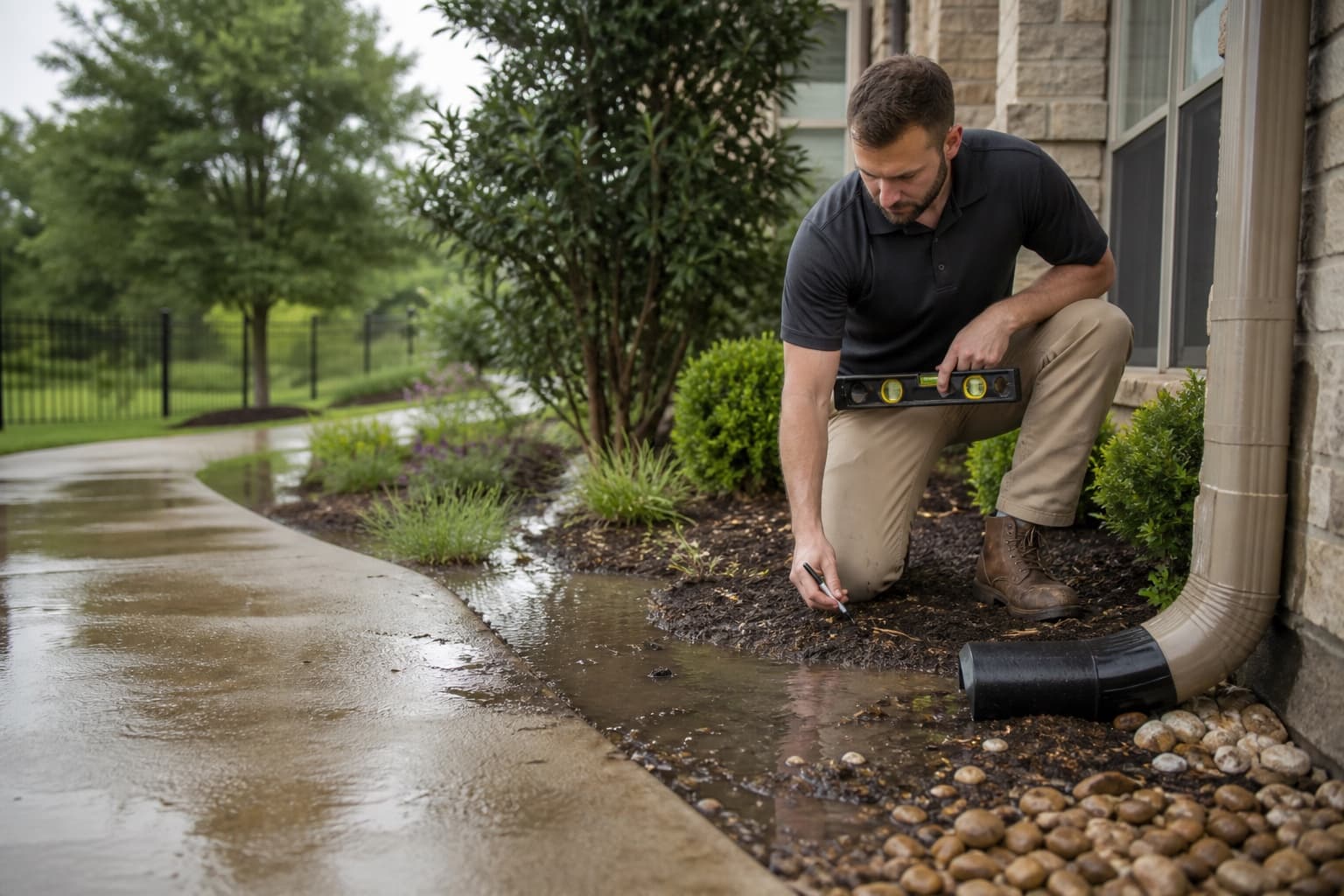
The evaluation follows connected surfaces and concealed routes far enough to avoid solving the visible low point while missing the source or outlet.
Alleys, streets, association areas, easements, neighboring grades, and private flatwork are distinguished before responsibility or access is assumed.
Downspouts, valleys, drives, walks, patios, walls, and landscape grades are followed from high areas toward visible low points.
Irrigation, condensate, pool equipment, and plumbing indicators are considered when moisture does not match rainfall timing.
Grading, surface inlets, channel drains, solid pipe, and French drain concepts are matched to the type and volume of water they would manage.
The proposed route should state discharge, erosion control, cleanouts, surface restoration, exclusions, and any approvals or specialist work still needed.
Property-specific scope
A reliable estimate depends on the designed route, not a generic drain label. Collection points, trench conditions, crossings, utilities, outlet work, access, and restoration can change the project substantially.
Request a Free EvaluationDrives, patios, walls, steps, alleys, foundations, and pool areas may require rerouting, removal, boring, or specialized restoration.
Narrow gates, fences, equipment, utilities, roots, and neighboring improvements can affect excavation methods and material handling.
Multiple downspouts, surface inlets, or drainage areas may require separate branches, larger conveyance, and more maintenance access.
Erosion protection, pumps, electrical service, shared features, permitting questions, or public-system connections should be identified as separate scope elements.
Before the visit
Information about alleys, roofs, hardscape, and dry-weather water can help the evaluator distinguish overlapping sources.
Photograph water moving from downspouts, drives, patios, alleys, and neighboring grades during a safe rainfall event.
Note irrigation, pool, condensate, and plumbing conditions that could explain moisture between storms.
Identify prior drainage lines, emitters, cleanouts, inlets, or outlets and whether their flow has changed.
Gather surveys, easement information, association guidance, or records of patios, walls, additions, and landscape changes.
Mark known utilities and describe access limits involving fences, gates, equipment, pets, or occupied outdoor areas.
Continue your research
Use educational resources to prepare questions, then rely on property observations and measurements for the recommendation.
Questions from homeowners
Do not assume that it can. Elevation, ownership, easements, public requirements, nuisance-flow concerns, and the specific receiving condition should be verified before a private pipe is routed toward an alley.
Not necessarily. Fast surface runoff may be better intercepted by grading, a channel drain, or a surface inlet. A French drain generally addresses water moving through saturated soil along its trench.
The wall, patio slope, landscape grade, roof discharge, and outlet may combine to hold water. Measurements should identify whether the route needs surface correction, collection, conveyance, or slab work.
Yes, when both scopes are supported by the site evidence. The intended driveway elevation and final water route should be planned together, while each repair remains clearly described.
No. Standing water is a drainage observation, not a structural diagnosis. Foundation condition should be evaluated through measurements, visible distress, construction details, and other property-specific evidence.
Inspect visible inlets and outlets periodically and after significant storms, landscape work, or signs of reduced flow. The installed system's written maintenance guidance should control.
The contractor review covers reported water behavior, visible sources, grades, hardscape, route constraints, and outlet possibilities. Testing, engineering, surveys, permits, approvals, and completed installation are separate.
Free drainage evaluation
Tell us how roof water, alleys, driveways, patios, side yards, and outlets connect around the area where water collects.