
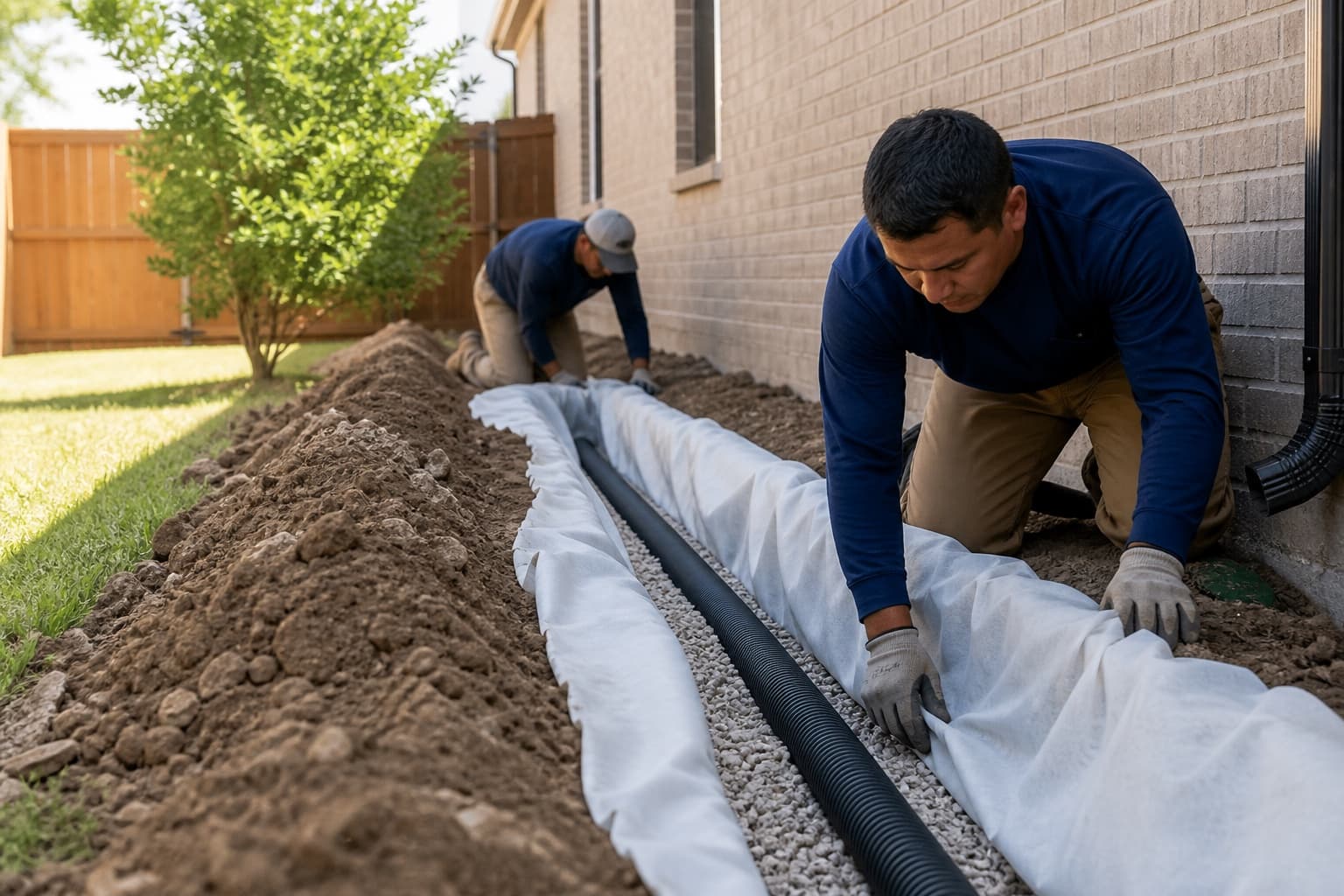
A surface drain collects water that reaches a visible inlet, such as runoff crossing a low area. A French drain generally intercepts water moving through saturated soil or a gravel trench. They solve different collection problems, and either system can perform poorly when the source, elevation, pipe slope, soil, utilities, maintenance, or outlet is misunderstood.
Start by observing where the water comes from and how it travels during rain. Choosing a drain before tracing the route can move water to the wrong place or leave the main source unchanged.
Surface drains collect visible flow
Catch basins, area drains, channel drains, and other inlets collect water at the surface. They are commonly considered where runoff concentrates at a low spot, crosses paving, leaves a downspout, or needs an intentional entry point.
The inlet must be placed where water can reach it. Surrounding grades, hardscape, debris, inlet elevation, pipe capacity, and outlet conditions all affect performance. A drain set above the low point will not collect water that remains below it.
French drains intercept water within the trench zone
A French drain typically uses a perforated pipe surrounded by appropriate drainage aggregate and filter materials. Water enters through the trench and pipe rather than only through one surface opening.
This approach may be considered where soil remains wet, seepage moves through a slope, or a defined subsurface path can be intercepted. It is not an automatic solution for every puddle. Fine soil, sediment, roots, limited slope, shallow utilities, and an unsuitable outlet can reduce performance or complicate maintenance.
Identify the water source first
Possible sources include roof runoff, downspouts, uphill property, irrigation, leaking water lines, low grading, paving, retaining features, groundwater or seepage, and shared drainage routes.
The foundation drainage guide explains how to trace collection, conveyance, and discharge as one system. A plumbing leak needs plumbing evaluation rather than a drain intended for rainwater.
Elevation controls whether water can move
Gravity systems need a workable path from collection point to outlet. A low area may not have enough fall to reach a desired discharge point. Pumps add equipment, power, controls, maintenance, and failure considerations.
Ask for relevant elevations and a clear route. The plan should avoid directing water toward the foundation, neighboring property, an unsafe walking area, or a location where it simply returns.
Downspouts may need direct conveyance
Roof water is often better managed by correcting gutters, extending downspouts, or using a solid conveyance pipe than by asking a perforated French drain to absorb concentrated discharge. The guide to downspouts and roof runoff explains why roof collection should be evaluated separately.
Connections should allow cleaning and should not combine incompatible sources without adequate planning.
Utilities and access shape the route
Before trenching, locate public and private utilities as appropriate. Irrigation, lighting, pool lines, low-voltage cables, gas, water, sewer, and prior drainage can cross a proposed path.
Fences, gates, trees, roots, patios, driveways, pools, retaining walls, easements, and neighboring grades can limit installation and future cleaning. The shortest route is not always the safest or maintainable route.
Outlets need equal attention
A drain is incomplete without a lawful, stable, and maintainable discharge. Ask where the water exits, how erosion is controlled, whether the outlet can back up, and how it will be inspected.
Requirements vary by property and jurisdiction. Do not assume a curb, alley, channel, street, or neighboring low area is an approved outlet without verification.
Maintenance differs by system
Surface inlets need debris removal and may collect leaves, soil, mulch, or trash. French drains can be difficult to clean when fine sediment or roots enter the trench. Both systems benefit from accessible cleanouts, observable outlets, and a maintenance plan.
Document performance during rain and after landscaping changes. The monitoring guide can help record water behavior alongside building observations.
Choose after a site-specific drainage review
A drainage correction evaluation should identify the source, low points, foundation relationship, proposed collection method, pipe route, utilities, outlet, erosion protection, and maintenance access. French drain installation is appropriate only when the observed water problem and site constraints support that type of interception.
The answer may involve surface collection, a French drain, downspout conveyance, grading, swales, pumps, plumbing work, or a combination. The system name should follow the water path—not lead the diagnosis.