
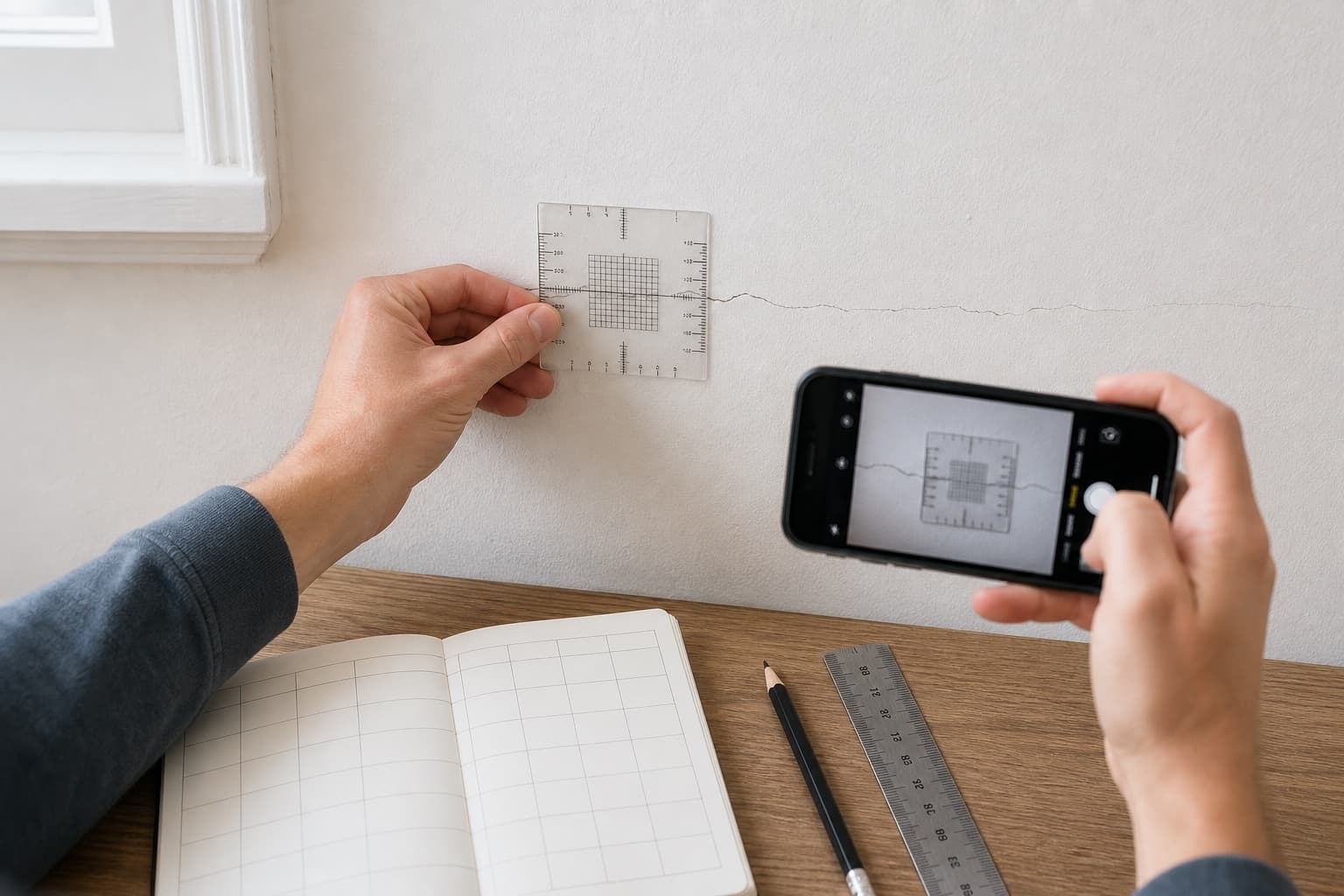
Monitor foundation concerns by recording the same locations in the same way over time. Use dated photographs, notes about doors and windows, floor observations, drainage and weather events, plumbing history, repairs, and professional measurements when available. The goal is to improve the property history—not to diagnose movement with a ruler or phone app.
Monitoring can be useful when changes are limited or uncertain. Sudden displacement, unsafe conditions, active leaks, damaged utilities, or rapidly progressing distress can require prompt professional evaluation instead.
Create a property observation map
Sketch a simple floor plan and exterior outline. Number the rooms, walls, openings, cracks, drainage areas, and exterior points you plan to revisit. The drawing does not need to be precise; it needs to help you photograph the same location later.
Include additions, garages, porches, fireplaces, patios, crawlspace access, downspouts, low areas, large trees, irrigation zones, and known repair locations.
Photograph cracks consistently
Take one wide photograph that identifies the wall or room and one close photograph that shows the crack. Use a safe, non-damaging reference for scale and record the date.
Do not rely on different camera angles or zoom levels to judge change. Avoid patching before documentation when an inspection is planned. The guide to foundation cracks and structural damage explains which surrounding observations add context.
Record opening behavior without forcing it
For a sticking door or window, note the contact point, latch alignment, reveal, season, and whether hardware was adjusted. Photograph the frame rather than repeatedly forcing the opening.
Hardware, humidity, paint, and installation can affect openings independently. Monitoring should capture the condition, not assume the foundation caused it.
Describe floors carefully
Record where a floor feels sloped, soft, bouncy, sagged, or different at a transition. Note flooring changes, remodels, water events, and whether nearby doors or finishes changed.
Consumer levels and phone apps are not substitutes for a professional elevation map. If you take informal readings, label the tool and reference point and avoid comparing them with a different method later. Review what uneven floors can mean before interpreting the sensation.
Track water and weather events
Note prolonged dry periods, heavy rain, irrigation changes, gutter cleaning, downspout extensions, standing water, erosion, soil gaps, and drainage work. Photograph where water comes from, where it collects, and where it exits.
The North Texas drought guide and drainage movement guide explain why moisture distribution matters more than a general weather label.
Keep plumbing information with the log
Record suspected leaks, meter concerns, plumbing tests, repairs, reroutes, and dates. Keep plumber reports and invoices. A damp area should be evaluated by the appropriate professional rather than monitored indefinitely.
Plumbing and foundation observations can be compared, but one trade should not claim the other condition without proper testing.
Document property changes
Additions, remodels, new floors, removed walls, landscaping, trees, irrigation, patios, pools, drainage systems, and prior foundation work can change how later observations are interpreted.
Keep proposals, repair maps, warranties, surveys, engineering documents, permits, photographs, and completion records together. Note whether a cosmetic repair covered an existing crack.
Use a consistent review schedule
Choose intervals appropriate to the concern and professional guidance. Consistency matters more than checking daily. Repeat after a meaningful event such as a leak, major storm, drainage change, repair, or renovation.
Do not create a universal threshold for action from an online guide. Escalate sooner when several signs progress together or when safety, utilities, active water, or a transaction deadline is involved.
Know when monitoring should stop
Request a foundation inspection when the record shows progression, multiple related changes, uncertainty before repair or a transaction, or a condition you cannot observe safely. A professional baseline can make future comparisons more useful.
Foundation maintenance may address practical roof runoff, grading, irrigation, landscaping, and recordkeeping needs, but it should not be sold as guaranteed prevention. Review what to expect during an inspection and bring the complete log so findings can be compared with the property’s history.