
01
Drainage or water problems
Standing water, poor runoff, or concentrated discharge can affect conditions near a foundation and should be evaluated.
Learn what to look for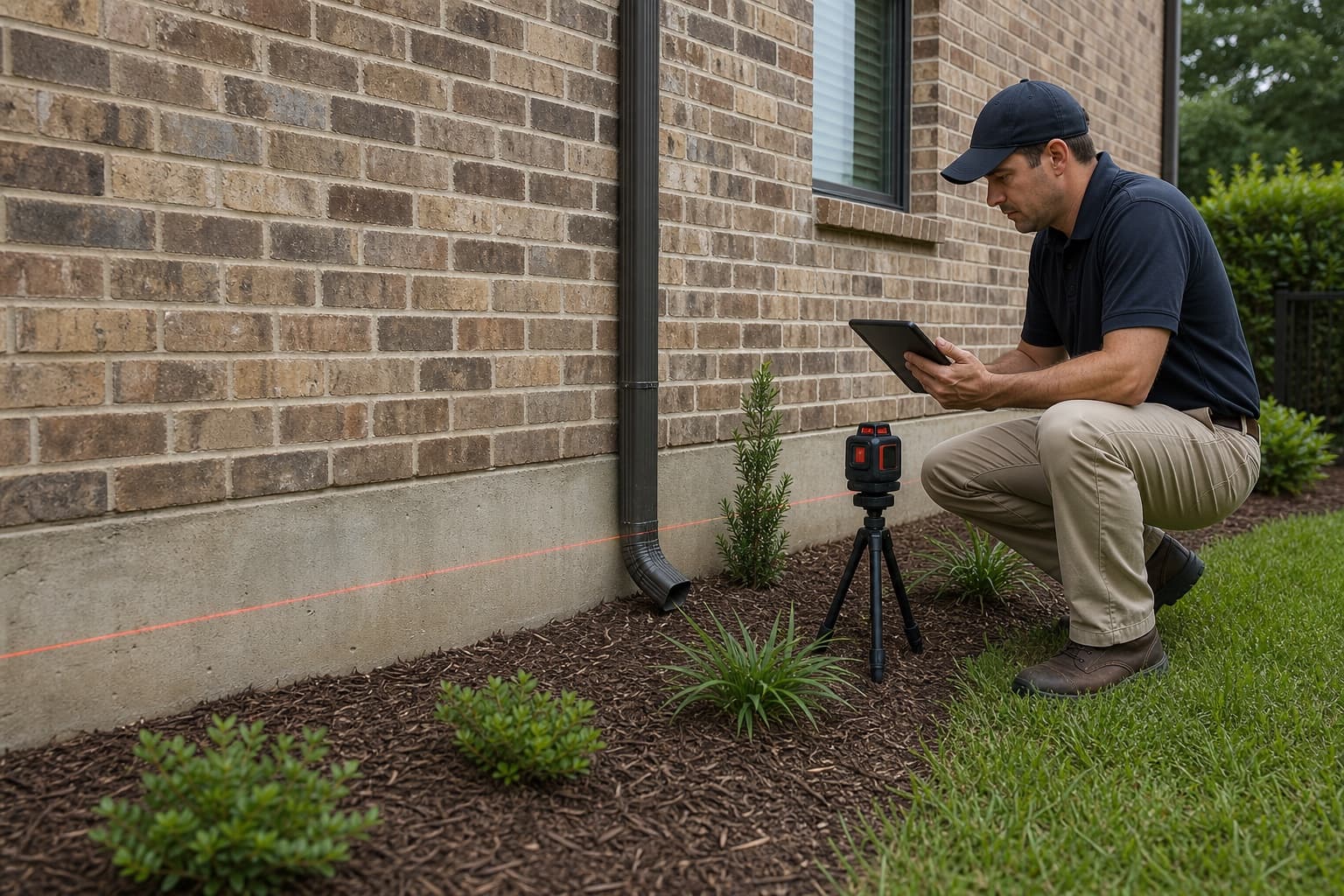
Kaufman County
Forney foundation inspections document cracks, floor readings, newer slab conditions, fresh grading, landscaping, irrigation, paving, roof runoff, and surrounding development context before maintenance, drainage, monitoring, or repair is considered.
Free contractor inspections consider measurements, foundation type, drainage, plumbing indicators, construction, access, and site conditions before next steps are discussed.
Forney is part of the East Dallas & Rockwall service area.
Explore foundation services throughout East Dallas & RockwallKnow what to watch for
A single change does not confirm that a Forney property needs foundation repair. An inspection can compare what you have noticed with measurements, the foundation system, drainage, and surrounding conditions.
Read the foundation warning-sign guide01
Standing water, poor runoff, or concentrated discharge can affect conditions near a foundation and should be evaluated.
Learn what to look for02
New, widening, or recurring cracks are worth documenting. Their location and pattern can help guide an inspection.
Learn what to look for03
Openings that suddenly drag, bind, or no longer latch can be reviewed alongside floor and wall conditions.
Learn what to look for04
A floor that feels different underfoot may call for measurements and a closer look at the foundation system.
Learn what to look for05
Separation near doors, windows, cabinets, or trim can be compared with other changes around the property.
06
Changes where brick, siding, walls, or rooflines meet may be useful clues during an exterior review.
A practical first step
Cracks, uneven floors, and sticking doors can have different causes. Start with a free foundation inspection so the conditions at your Forney property can be evaluated together.
Foundation and property solutions
Available options include inspection, structural support, leveling, drainage, and concrete services. The appropriate starting point depends on the foundation system and what is observed at the property.
Property-specific review
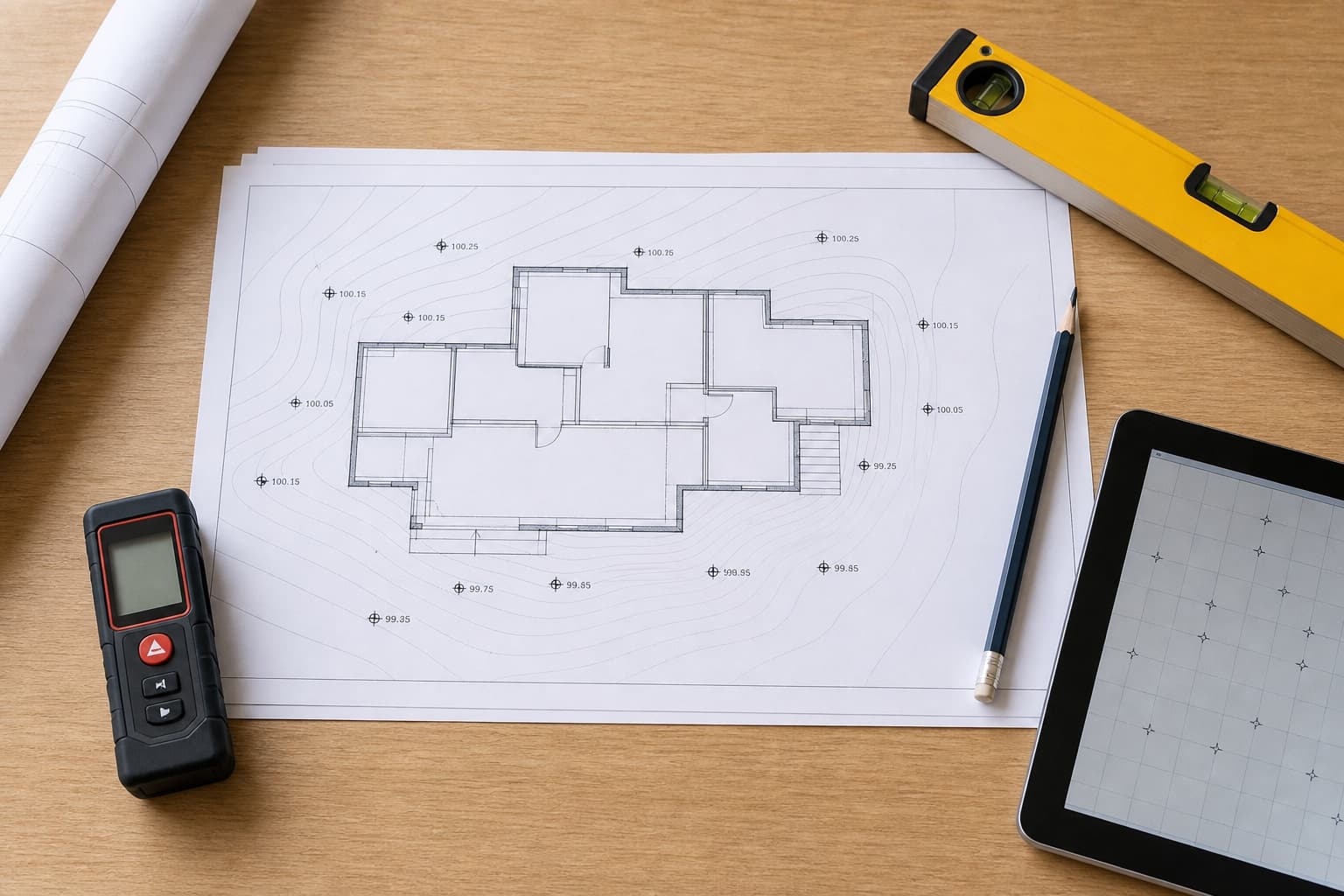
A Forney inspection may take place while landscaping, paving, adjacent construction, or subdivision drainage is still settling into its finished condition. The evaluation creates a current record of the slab and lot by pairing measurements and visible distress with grades, irrigation, swales, flatwork, and the route away from the home.
Elevation readings, cracks, sticking openings, trim gaps, slab edges, porches, garages, and dated homeowner observations document present conditions without claiming when movement began.
How newer slab conditions are evaluatedSod, bare areas, beds, irrigation, downspouts, settlement at walks, swales, and recently added retaining edges are checked for low areas, erosion, or interrupted slope.
Maintenance planning for a developing Forney lotDriveways, sidewalks, curbs, neighboring grades, active earthwork, storm evidence, and final outlets are recorded without assigning unsupported causation to nearby work.
Straightforward help
Foundation concerns rarely fit a one-size-fits-all answer. We focus on making the inspection findings and available choices easier to understand.
We explain what we observed, what it may mean, and which next steps fit the property.
The right direction may involve structural support, leveling, drainage, concrete work, monitoring, or additional evaluation.
We evaluate concerns involving both major residential foundation systems found across Dallas-Fort Worth.
Foundation inspection and repair services are available throughout the Dallas-Fort Worth Metroplex.
Simple from the start
Tell us what you have noticed and choose a time to evaluate the property.
We review visible warning signs, measurements, foundation type, drainage, and other relevant conditions.
We explain the findings and discuss whether repair, leveling, drainage, additional evaluation, or monitoring makes sense.
Forney's growing neighborhoods and recently improved lots
Foundation repair in Forney starts with a current baseline rather than an assumption about newer construction. Floor readings, cracks, openings, slab joints, recent grading, landscaping, irrigation, paving, drainage, adjacent development context, and plumbing indicators are documented before repair, maintenance, or monitoring is considered.
Forney's residential expansion means inspections may occur on established streets, in recently completed subdivisions, or beside active development. Fresh grades, young landscaping, new irrigation, broad paving, and recently installed drainage features can all be useful context, but none diagnoses the house by itself.
A visit creates a present-day record of floor elevations, cracks, openings, slab transitions, exterior finishes, and reported timing. The inspector then reviews downspouts, swales, driveways, beds, utilities, neighboring grades, and visible outlets before maintenance, monitoring, drainage, or repair is discussed.
Forney neighborhood context
Conditions can vary between nearby streets and neighboring lots, so area context helps frame useful inspection questions without determining what is happening at one property.
A rapidly growing Kaufman County community with established areas, newer subdivisions, recent grading, young landscaping, expanding paving, and residential sites at different stages of completion.
Earlier homes may combine mature improvements and remodeling with newer development or changed drainage beyond the original lot pattern.
New slabs, paving, sod, beds, irrigation, and shared drainage should be evaluated as they currently exist rather than assumed from plans.
Adjacent construction and unfinished parcels can change visible runoff context, while the inspection remains focused on evidence at the occupied property.
Broader grades, detached structures, longer drives, and open drainage require the house and each separate improvement to be considered individually.
Forney property context
The relevance of each condition depends on the building, measurements, drainage, grading, and changes observed at the property.
Coverage, leaks, new beds, bare soil, and young trees may create localized conditions while the yard is still becoming established.
Driveways, walks, patios, and curbs can settle independently, so joints and drainage edges are compared with the slab rather than treated as proof.
Temporary drainage or nearby earthwork can be documented without claiming it caused a foundation condition at the subject address.
Similar house designs may sit on different grades with different roof-water routes, landscaping, and maintenance histories.
Soil, water, and weather
Dry weather, heavy rain, runoff, leaks, and landscaping can influence a property differently depending on its construction and lot.
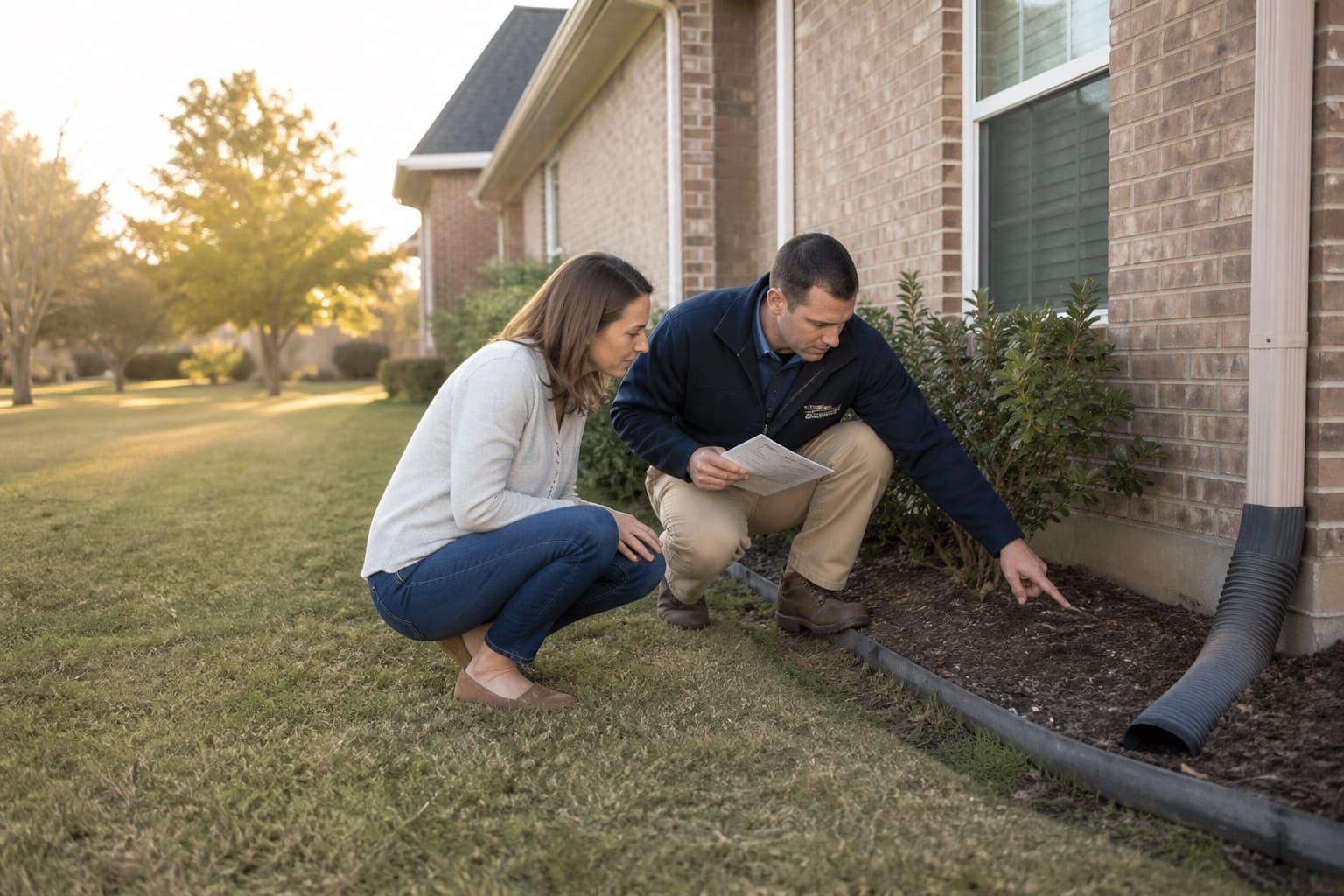
The review follows slope around porches, garages, beds, fences, and utility areas to determine whether the visible route remains continuous.
Swales, inlets, extensions, or channels are useful only when they reach a functioning discharge point and are not blocked by later improvements.
Measurements, photos, and dated homeowner notes can support monitoring when the evidence does not justify immediate structural work.
Helpful next steps
Continue with a relevant service, learn more about common foundation concerns, or view service coverage in nearby DFW communities.
Local questions
These answers provide general context. A free contractor inspection can evaluate conditions at an individual property; engineering, plumbing, or other third-party services may be separate when needed.
Yes. A free inspection can document current measurements, warning signs, grading, drainage, and construction details regardless of the home's age.
No. Adjacent work can be noted as context, but a connection should not be claimed without property-specific evidence supporting it.
They can be documented, but driveway movement may be independent. Joints, slope, drainage, and the house's measurements help keep the observations separate.
Photos of ponding, erosion, overflowing gutters, swale performance, and discharge points can provide useful context for a later dry-day inspection.
Yes. Measurements, photos, visible symptoms, and current site observations can document conditions for later comparison when monitoring is appropriate.
No. Settlement, landscaping, fencing, paving, or incomplete outlets may interrupt the route, so the visible slope and final connection should be checked.
Forney free inspection request
Describe when the changes appeared and note recent grading, construction, landscaping, irrigation, paving, or stormwater conditions around the Forney property.