
New ponding or erosion
Changes in runoff can develop as soil settles, landscaping matures, gutters clog, or neighboring grades change.
Foundation service
Practical property monitoring and water-management guidance intended to support informed maintenance—not promise that movement can be prevented.
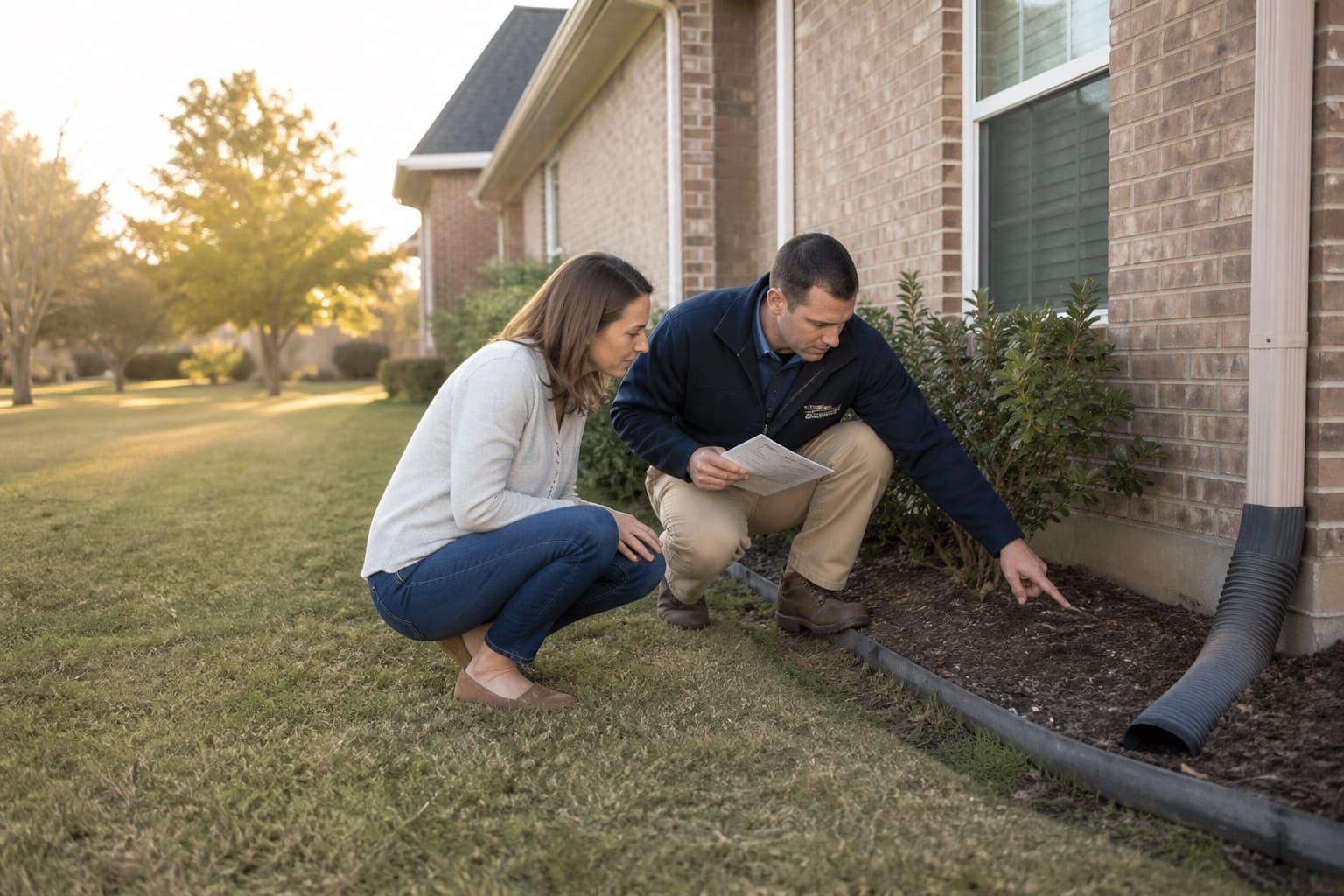
Foundation maintenance is less about a single product and more about paying attention to changing conditions around a property. Roof drainage, grading, plumbing, irrigation, vegetation, crawlspace moisture, and new cracks can be documented so owners have better information when questions arise.
No maintenance routine can guarantee that a foundation will not move. Soil, construction, weather, utilities, and site history remain property-specific. A sensible prevention plan focuses on observable water conditions, safe upkeep, and timely evaluation rather than unsupported rules or universal watering schedules.
The inspection should account for the property’s construction, observed changes, drainage, grading, and surrounding site conditions before a service path is selected.
Warning signs
These observations can have more than one explanation. Look for patterns, progression, and multiple signs in the same part of the property.
Changes in runoff can develop as soil settles, landscaping matures, gutters clog, or neighboring grades change.
Downspout extensions, surface inlets, drainage outlets, and gutters need periodic observation to remain useful.
Photos with dates and consistent reference points can help distinguish a recurring condition from a progressing one.
Unusual conditions near one foundation area may warrant checks for drainage, irrigation, plumbing, shade, or vegetation differences.
Possible contributors
North Texas soil and weather can be relevant, but construction, drainage, plumbing, and property history also belong in the evaluation.
North Texas periods of rain, heat, and drought can change soil moisture, but effects differ from one property to another.
Gutters, downspouts, extensions, drains, and outlets can shift, clog, separate, or become less effective over time.
Root systems, shade, new beds, removed plants, irrigation changes, and accumulated soil or mulch can affect perimeter conditions.
Leaks, repairs, additions, paving, remodeling, and neighboring construction can create new variables worth documenting.
Inspection process
The review notes grading, roof discharge, vegetation, visible foundation areas, hardscape, and water collection points.
Existing cracks, openings, floor observations, and known prior repairs can be photographed or listed for future comparison.
Maintenance items are distinguished from signs that call for foundation, drainage, plumbing, or other professional evaluation.
If service is recommended
01 / Address straightforward water pathways
Applicable steps may include gutter upkeep, downspout routing, inlet cleaning, or correcting small surface issues within the agreed scope.
02 / Plan larger corrections separately
Significant grading, drainage installation, plumbing work, or foundation repair should follow its own inspection and defined service plan.
03 / Set a realistic monitoring routine
Owners can use consistent photos, storm observations, and periodic checks without treating minor seasonal change as a diagnosis.
Keep exploring
Questions
No. Maintenance can address observable property conditions and improve monitoring, but it cannot control every soil, weather, construction, plumbing, or site variable.
No. Soil, landscaping, irrigation, shade, drainage, restrictions, and the structure itself vary. Avoid universal schedules that are not based on the property and current conditions.
Use dated photos from a consistent position and note related changes nearby. Seek an on-site evaluation if the crack progresses or appears with other movement indicators.
Gutters, downspouts, extensions, surface inlets, visible outlets, low areas, and erosion paths are useful places to observe, especially after rainfall.
Property-specific next steps
Share the drainage, landscaping, or foundation observations you want to document so a free contractor inspection can separate maintenance and repair questions.