
01
Cracks in walls or brick
New, widening, or recurring cracks are worth documenting. Their location and pattern can help guide an inspection.
Learn what to look for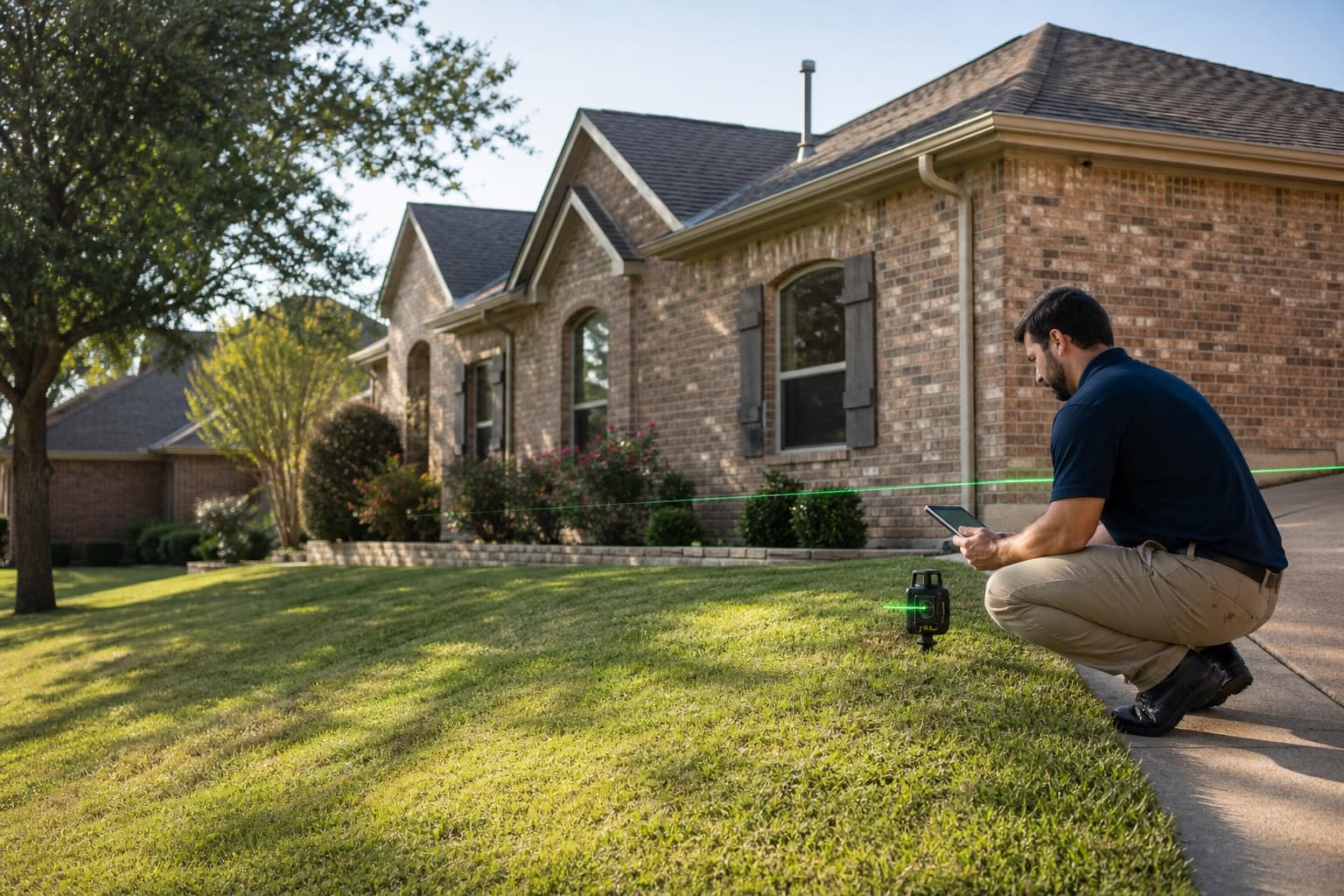
Dallas County
DeSoto foundation inspections help homeowners evaluate cracks, uneven floors, exterior separation, lot drainage, grading, and plumbing indicators, using measurements and construction details to determine whether repair, monitoring, or site work warrants consideration.
Free contractor inspections consider measurements, foundation type, drainage, plumbing indicators, construction, access, and site conditions before next steps are discussed.
DeSoto is part of the South Dallas & Ellis County service area.
Explore foundation services throughout South Dallas & Ellis CountyKnow what to watch for
A single change does not confirm that a DeSoto property needs foundation repair. An inspection can compare what you have noticed with measurements, the foundation system, drainage, and surrounding conditions.
Read the foundation warning-sign guide01
New, widening, or recurring cracks are worth documenting. Their location and pattern can help guide an inspection.
Learn what to look for02
Openings that suddenly drag, bind, or no longer latch can be reviewed alongside floor and wall conditions.
Learn what to look for03
A floor that feels different underfoot may call for measurements and a closer look at the foundation system.
Learn what to look for04
Separation near doors, windows, cabinets, or trim can be compared with other changes around the property.
A practical first step
Cracks, uneven floors, and sticking doors can have different causes. Start with a free foundation inspection so the conditions at your DeSoto property can be evaluated together.
Foundation and property solutions
Available options include inspection, structural support, leveling, drainage, and concrete services. The appropriate starting point depends on the foundation system and what is observed at the property.
Property-specific review
A DeSoto foundation review considers how a broad or graded lot changes from front to rear and how that geometry relates to the building. Floor measurements, cracks, openings, additions, paving, and concentrated roof runoff are evaluated together before structural or drainage work is proposed.
Elevation readings, floor slopes, interior distress, exterior cracks, and door or window changes are mapped across the footprint to define the observed pattern without assigning a cause prematurely.
Foundation inspection and measurement processLong driveways, expanded concrete, enclosed outdoor areas, and room additions are reviewed at joints and connection points where independent movement or altered drainage may appear.
Valleys, downspouts, low areas, erosion, neighboring grades, and the final water outlet are checked across the wider site rather than inferred from weather alone.
Drainage correction assessment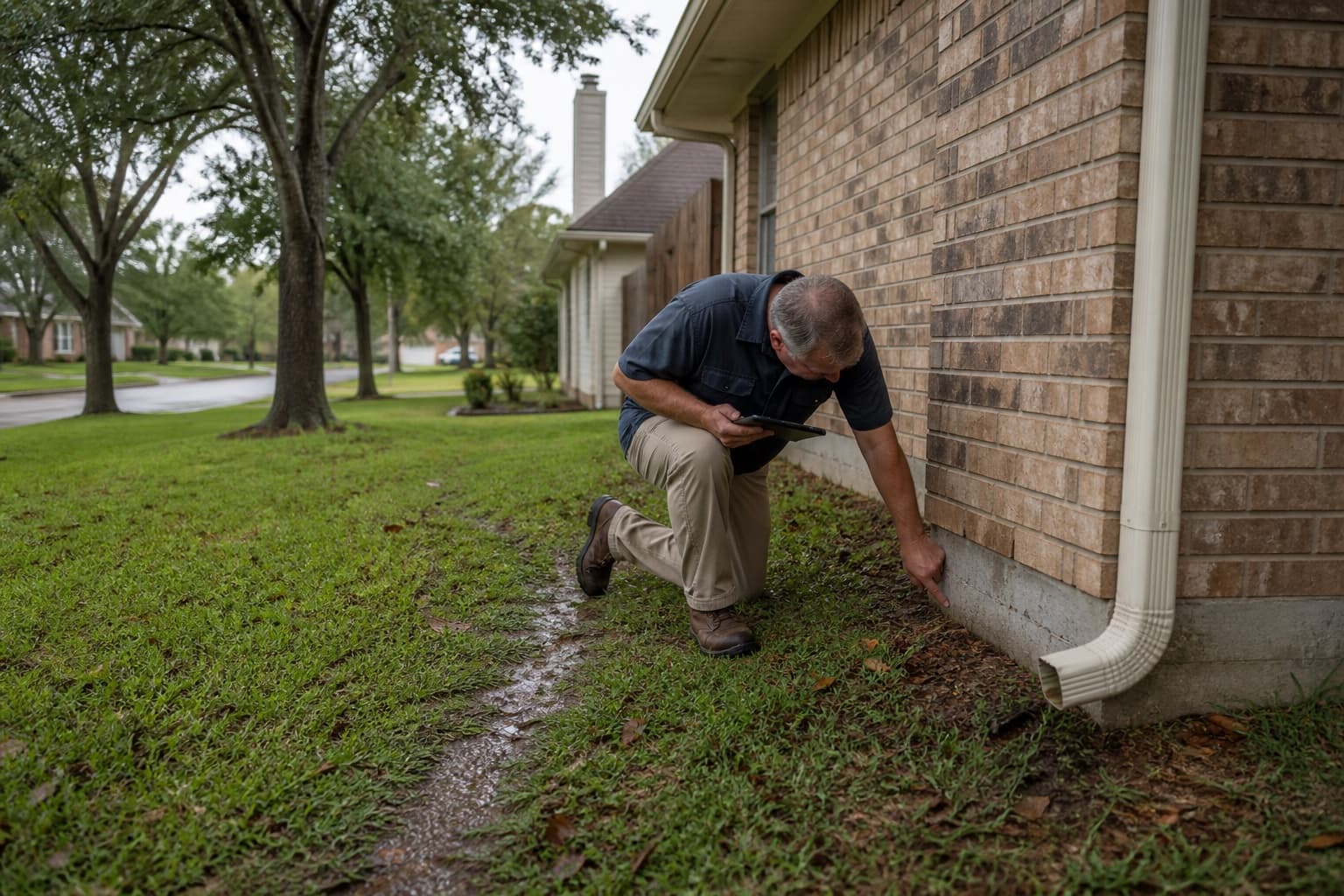
Straightforward help
Foundation concerns rarely fit a one-size-fits-all answer. We focus on making the inspection findings and available choices easier to understand.
We explain what we observed, what it may mean, and which next steps fit the property.
The right direction may involve structural support, leveling, drainage, concrete work, monitoring, or additional evaluation.
We evaluate concerns involving both major residential foundation systems found across Dallas-Fort Worth.
Foundation inspection and repair services are available throughout the Dallas-Fort Worth Metroplex.
Simple from the start
Tell us what you have noticed and choose a time to evaluate the property.
We review visible warning signs, measurements, foundation type, drainage, and other relevant conditions.
We explain the findings and discuss whether repair, leveling, drainage, additional evaluation, or monitoring makes sense.
DeSoto grade and building context
Foundation repair in DeSoto begins by confirming how the structure has changed and how water reaches the lot. The inspection compares floor readings, cracks, doors, exterior separations, slope, runoff, erosion, plumbing indicators, and construction details before defining a repair or drainage response.
DeSoto foundation questions often benefit from a long view across the lot. Roof runoff may travel past planting beds, driveways, fences, or graded lawn before reaching a low area, while the visible foundation exposure can change from the front of the home to the rear.
Inside, floor elevations, cracks, opening behavior, and construction transitions help define the pattern. Outside, the inspection compares that pattern with slab edges, additions, flatwork, downspouts, irrigation, plumbing clues, and the actual route water takes across the property.
DeSoto neighborhood context
Conditions can vary between nearby streets and neighboring lots, so area context helps frame useful inspection questions without determining what is happening at one property.
A southern Dallas County community with established residential streets, newer neighborhoods, broad lots, varied grades, mature landscaping, and commercial corridors along major north-south routes.
Central properties can combine established neighborhoods, varied lot coverage, mature trees, and incremental additions or paving changes.
Residential and commercial edges may have broader hardscape, altered runoff routes, utility constraints, and different access conditions.
Later development and open grades still require an address-level review of drainage, landscaping, slab observations, and property history.
DeSoto property context
The relevance of each condition depends on the building, measurements, drainage, grading, and changes observed at the property.
A lot's intended grade can affect drainage and foundation exposure without proving that the building has moved.
Concrete surfaces can redirect rainfall, settle independently, or limit access to portions of the foundation perimeter.
Original and later construction may use different support or drainage details that should be identified before readings are interpreted.
Large roof sections can discharge substantial water into one bed or side yard during a storm, depending on gutter and downspout routing.
Soil, water, and weather
Dry weather, heavy rain, runoff, leaks, and landscaping can influence a property differently depending on its construction and lot.
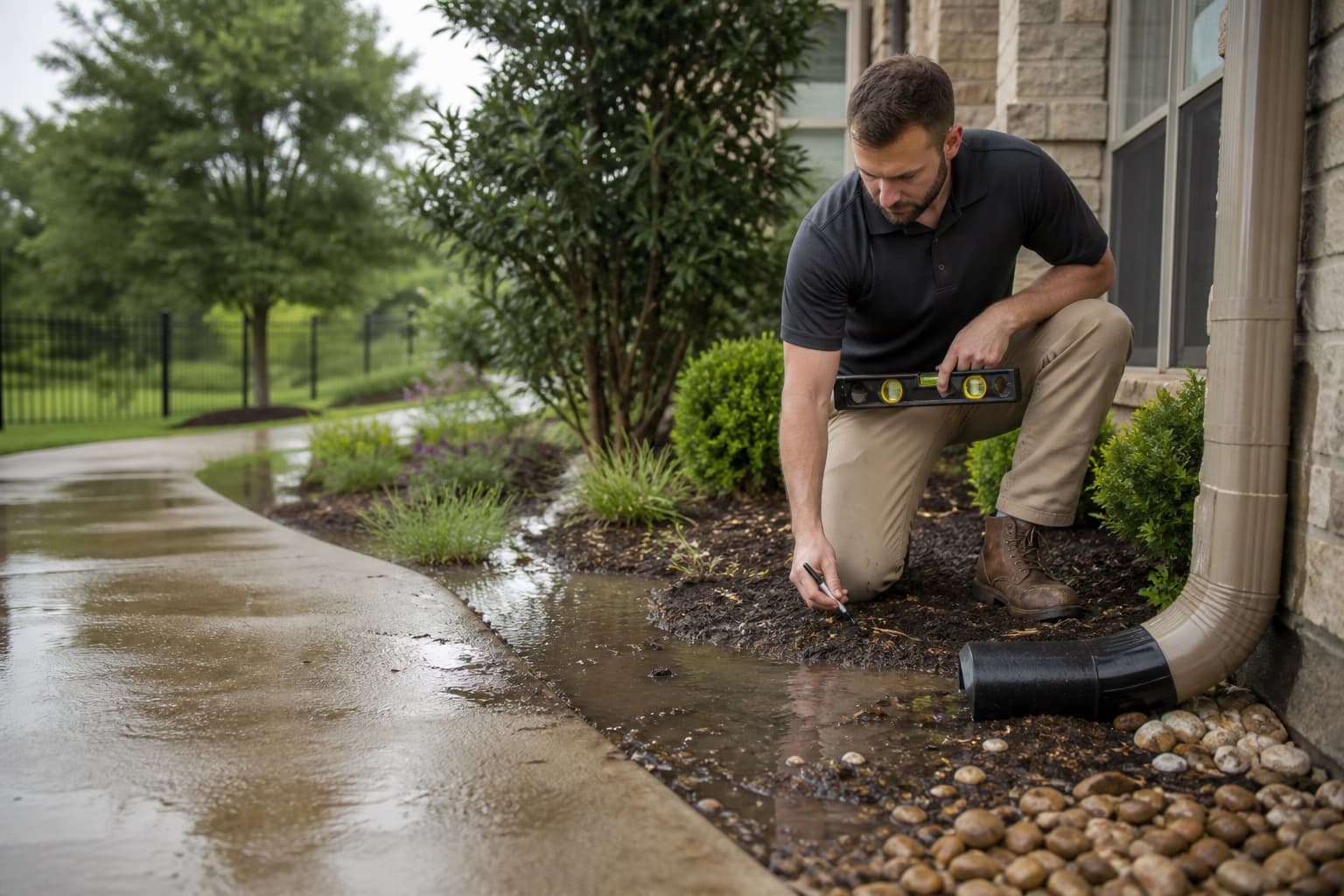
Shade, slope, roof water, irrigation, trees, and neighboring grades may create different conditions along separate walls.
Moved mulch, channels, or soil loss can help locate runoff, though the appropriate correction depends on source and outlet.
Localized moisture or movement may justify testing by an appropriate trade when property evidence points toward a possible leak.
Helpful next steps
Continue with a relevant service, learn more about common foundation concerns, or view service coverage in nearby DFW communities.
Related services
Local questions
These answers provide general context. A free contractor inspection can evaluate conditions at an individual property; engineering, plumbing, or other third-party services may be separate when needed.
Lot width does not determine foundation condition. Construction, supporting soil, grading, drainage, plumbing, vegetation, and observed movement still need to be evaluated at the property.
Yes, it can provide drainage and flatwork context. A settled driveway panel remains a separate condition unless the inspection finds evidence connecting it to the building.
It can create localized water conditions where valleys and downspouts concentrate discharge, but relevance to foundation movement depends on the complete pattern and site.
If inspection findings identify active ponding, erosion, or poor discharge, drainage questions may need attention as part of the broader plan. That does not replace a separate foundation evaluation.
Concentrated runoff can create uneven moisture or erosion near part of a structure. The route, volume, outlet, and relationship to observed movement need on-site review.
Prior repair documents, plumbing test results, surveys, addition records, dated photos, and notes about seasonal changes can help the inspector interpret current conditions.
DeSoto free inspection request
Share where the building has changed and how runoff crosses the yard so interior measurements and exterior grades can be considered together.