
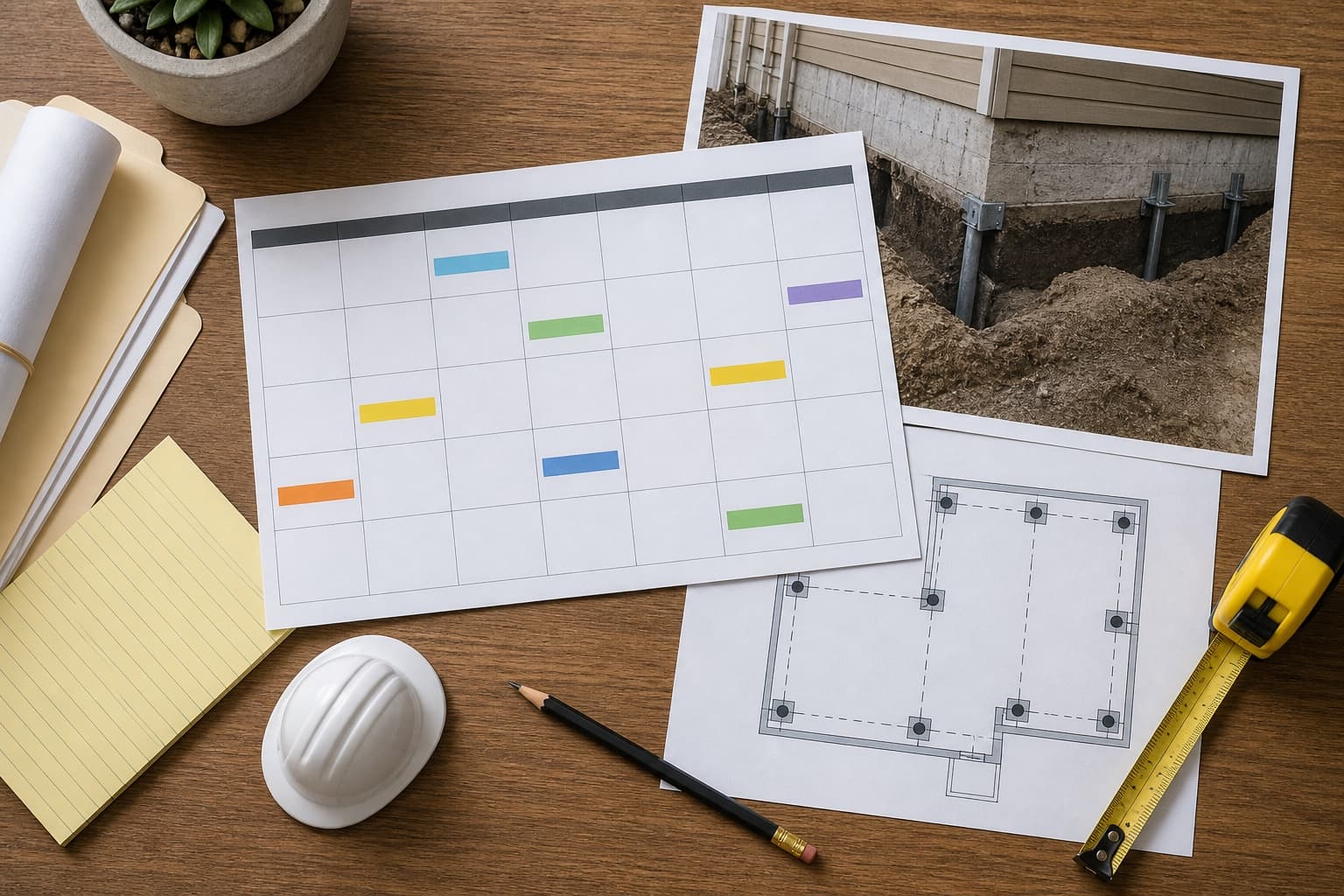
Foundation repair can take different amounts of time because the method, number and location of repair points, access, excavation, controlled adjustment, plumbing work, concrete restoration, engineering or inspections, weather, property size, and additional repairs vary. The crew’s active repair days are only one part of the calendar.
Ask for a written schedule tied to the actual scope. A useful proposal identifies work phases and conditions that could extend them instead of promising a universal completion time.
Pre-work decisions can take longer than installation
Before crews arrive, the property may need inspection, proposal review, engineering, permits, utility locating, plumbing testing, drainage planning, access preparation, or owner approvals. These tasks may involve different providers and schedules.
Resolve major scope differences before setting a start date. The estimate comparison guide can help identify missing dependencies.
Repair method affects production steps
Slab underpinning can involve excavation, support installation, controlled adjustment, verification, backfill, and concrete or landscape restoration. Interior points can require flooring removal, concrete access, dust control, and later finish work.
Pier and beam work may involve crawlspace access, temporary support, shimming, pier work, beam or joist repair, moisture conditions, and repeated measurements. Low clearance or unsafe conditions can slow or limit access.
Review what foundation underpinning involves for a clearer sequence.
Quantity and location change the pace
A small number of accessible exterior points has different logistics from work around multiple sides, interior rooms, a fireplace, an addition, or an occupied commercial space. The quantity alone does not predict duration because access and restoration vary by location.
Ask whether crews can work in several areas at once and whether occupants can remain in the building. Confirm how entrances, utilities, parking, pets, tenants, and security will be managed.
Excavation can reveal unknown conditions
Soil, roots, abandoned concrete, utilities, prior repairs, water, limited working space, or unexpected construction can affect excavation. The proposal should explain how discoveries are documented and whether a change order is required.
Weather also matters. Heavy rain can make excavation, access, soil handling, or backfill impractical. Extreme conditions may affect crews, equipment, concrete, and site protection.
Adjustment is controlled rather than rushed
When lifting or leveling is part of the scope, the team should monitor measurements and building response. Floors, framing, finishes, plumbing, brick, openings, and additions do not all respond the same way.
The repair objective should determine when adjustment stops. Faster movement is not automatically better, and a schedule should not override property response or safety.
Plumbing may add separate appointments
Plumbing testing or repair may occur before work, after adjustment, or both, depending on the property and recommendation. A foundation crew may not perform those services.
Ask who schedules the plumber, how results affect the scope, and whether a failed test changes completion. The guide to plumbing leaks and foundation movement explains why plumbing questions need their own evaluation.
Restoration extends the calendar
Structural work may finish before concrete patches, flooring, drywall, paint, landscaping, irrigation, paving, or other finishes are restored. Some materials require curing or separate trades. Cosmetic repairs may be delayed until building response can be observed.
Confirm which restoration is included and whether the quoted duration covers it. The repair proposal checklist identifies restoration details that belong in writing.
Engineering and inspections can affect closeout
If the project requires engineering review, municipal inspection, plumbing documentation, elevation records, or other closeout items, ask when those occur and who provides them. Requirements vary; do not assume they are included.
Keep final drawings, repair locations, measurements, photographs, test results, warranty documents, and receipts together.
Prepare for the work without overplanning
Before the start date, confirm:
- Crew access and parking
- Furniture, flooring, and landscape responsibilities
- Utility locating and private-line information
- Water, power, restroom, and security arrangements
- Pet and occupant plans
- Daily cleanup and open-excavation protection
- Weather communication
- Change-order contacts
- Final walkthrough and documentation
Avoid scheduling irreversible finish work immediately after repair unless the responsible professionals agree it is appropriate.
Get a scope-based timeline
Before authorizing foundation repair, ask for the expected work phases, active site days, dependencies, restoration window, and likely causes of delay. Compare those assumptions with foundation repair cost factors. A realistic timeline explains uncertainty and responsibilities rather than treating every property as the same project.