Drainage Company in Grapevine, TX | French Drain Installation
Work with a drainage company in Grapevine to evaluate standing water, downspout discharge, sloped lots, and saturated soil before French drain installation, grading, or surface collection is selected. Schedule a free drainage evaluation.
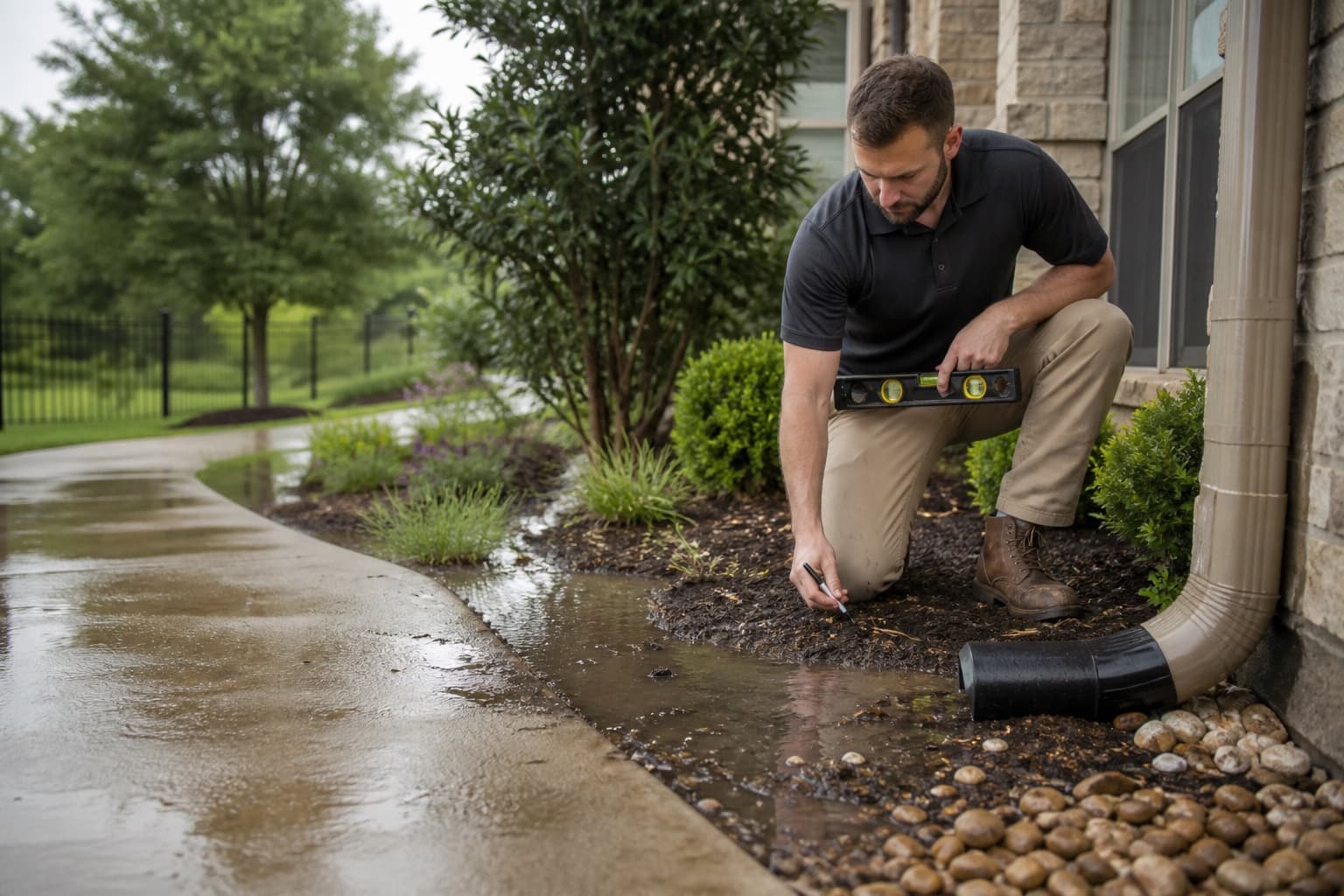
A drainage company in Grapevine should begin by separating water that moves across the surface from moisture that moves through saturated soil. A low side yard may receive roof discharge, uphill runoff, irrigation, or water redirected by patios and walks. French drain installation can collect subsurface water in the right setting, while visible runoff may call for grading, inlets, swales, or solid conveyance instead. The free drainage evaluation traces the source, route, low point, and outlet before a system is named.
Grapevine includes residential blocks near the Historic Downtown districts, neighborhoods around Dove Road and Silver Lake-area streets, homes toward Lake Grapevine, and established properties around Glade Road and Hall-Johnson Road. Those settings can differ in lot slope, tree cover, hardscape, roof area, and access. They help organize the inspection without suggesting that every property in an area shares a drainage defect.
Water management can overlap with foundation moisture and exterior concrete without replacing either evaluation. Ponding beside a wall is relevant context but does not prove structural movement. A settled patio can redirect runoff but may need concrete work in addition to drainage. The matching Grapevine foundation page and broad concrete leveling service provide separate paths when observations extend beyond water collection and conveyance.
Method follows the water path
Grapevine yard drainage solutions and drainage system installation
A useful system matches the water source and can be maintained. Some properties need one targeted correction; others require coordinated collection and conveyance.
01
Targeted grading and swales
Where space and fall allow, a limited surface adjustment can direct sheet flow away from the structure. Foundation clearances, historic site features, roots, utilities, neighboring grades, and a stable destination must remain protected.
Concentrated roof water may be conveyed in solid pipe when slope, pipe sizing, connections, cleanouts, and outlet conditions are suitable. A buried line still needs observable discharge and maintenance access.
Catch basins, area drains, or channels can intercept visible runoff at defined low points. Inlet elevation, debris exposure, pipe capacity, traffic, and cleaning needs determine whether the component can function reliably.
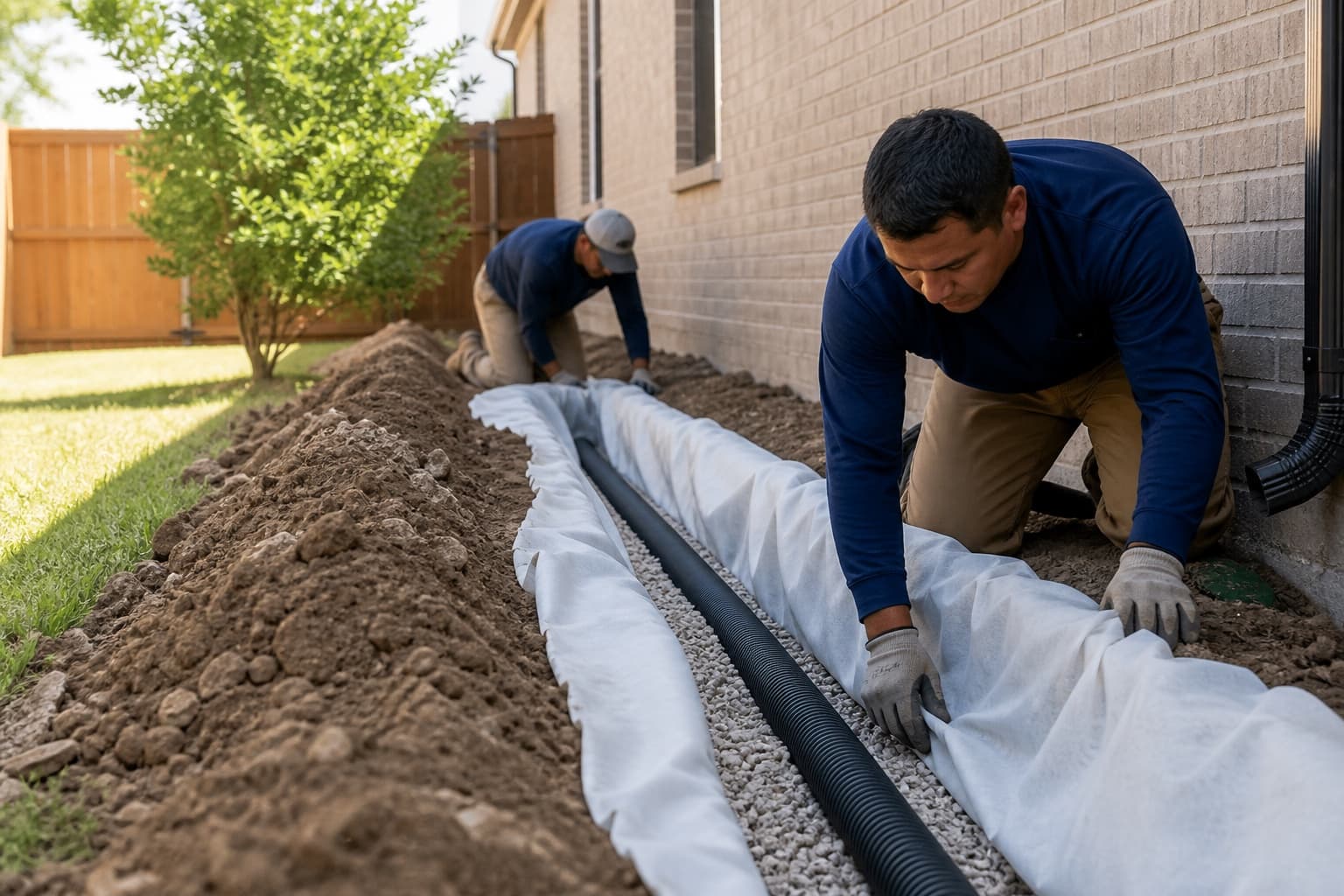
French drains are considered where water moves through saturated soil along a workable trench route. Soil behavior, filter materials, roots, utilities, available fall, outlet, restoration, and maintenance belong in the written scope.
A lowered drive, patio, or walk may interrupt surface flow or direct water toward a wall. The broad concrete leveling service can be evaluated separately so a drainage route and any future slab elevation do not conflict.
Grapevine drainage planning changes with slopes, historic lots, and lake-oriented terrain
Historic districts, Silver Lake-area streets, northern neighborhoods, and lake-oriented properties present different source-to-outlet questions. The individual lot still determines the recommendation.
01
Historic Downtown Grapevine residential areas
Older blocks may have mature trees, narrower side yards, raised entries, additions, and concrete installed over several periods. A drainage plan should protect foundation clearances and historic site features while identifying whether water is trapped by later paving, beds, or fences.
02
Silver Lake-area neighborhoods
Established residential streets can include sloped drives, backyard patios, tree canopies, and side-yard routes between closely spaced improvements. The inspection checks whether ponding comes from visible runoff, downspouts, or recurring saturation before choosing a collection method.
03
Lake Grapevine-area communities
Rolling grades, wooded edges, retaining features, and outdoor living areas can create several drainage zones on one property. Lake proximity does not establish the soil or water condition at a house; elevations and observed routes do.
04
Glade Road and Hall-Johnson surroundings
Residential lots may combine broad roofs, pools, long drives, irrigation, and landscaped boundaries. Multiple sources should not be sent into one route until pipe capacity, fall, ownership, outlet stability, and maintenance access are understood.
Subsurface drainage, evaluated in context
French drain installation in Grapevine: when subsurface collection fits
French drain installation in Grapevine is appropriate only when the evidence supports collecting water moving through soil. A complete design needs a collection zone, trench route, compatible filter system, reliable fall or another approved conveyance plan, a stable outlet, and access for maintenance.
Confirm the water is entering through soil
A side yard that stays saturated after visible runoff ends may justify subsurface collection review. A downspout, overwatering, blocked surface path, or leaking line can produce similar symptoms and should be separated first.
Locate the collection zone
The trench should intercept the actual wet band rather than follow the shortest path across the yard. Foundation clearance, roots, walls, irrigation, utilities, paving, and restoration all influence its alignment.
Specify filter, aggregate, and pipe details
A proposal should identify trench dimensions, compatible filter material, aggregate, perforated pipe placement, connections, cleanouts, and surface restoration. The name French drain is not a complete construction specification.
Verify fall and outlet stability
Collected water needs a dependable destination that does not create erosion, nuisance flow, or a property-line problem. Outlet elevation and any approval requirement should be established before excavation.
Keep the system maintainable
Leaves, sediment, roots, clogged connections, and damaged outlets can reduce performance. Accessible cleanouts and observable discharge make future inspection and maintenance more practical.
Grapevine drainage repair concerns to trace from source to outlet
The same wet area can result from several causes. Timing, weather, irrigation, and the sequence of property improvements help distinguish them.
Standing water below an uphill grade
Runoff may cross lawn, beds, paving, or neighboring elevations before reaching a low side yard. Surface flow should be distinguished from soil saturation so a visible-water problem is not automatically assigned to a French drain.
Downspouts discharging into confined areas
Roof water can overwhelm a narrow route or empty behind edging and walls. Gutters, downspout connections, solid pipe, cleanouts, capacity, and the final outlet should be evaluated as one conveyance system.
Ponding beside patios, walks, or drives
Hardscape can block shallow flow or shed water toward the home. Settlement, overlays, landscape buildup, and later additions may alter the original slope, making surface collection or concrete coordination more relevant than a subsurface trench alone.
Erosion on sloped landscape routes
Mulch displacement, channels, sediment, and exposed soil show where runoff gains speed. The plan should reduce concentration, stabilize the outlet, and avoid simply moving erosion farther downslope.
Persistent dampness near a foundation
Repeated moisture warrants investigation, but rainwater should be separated from irrigation, plumbing, pool equipment, condensate, and groundwater-like seepage. Drainage work addresses verified exterior water; it is not a structural diagnosis.
Related, not interchangeable
Foundation drainage and exterior-concrete connections in Grapevine
Drainage, foundation performance, and flatwork elevation can interact on one property while remaining different scopes with different evidence.
Moisture near a wall is relevant but not diagnostic
Repeated ponding or roof discharge may affect moisture near a foundation. It does not establish structural movement, cause, or repair need without building observations and measurements.
Sloped concrete can alter surface runoff
A settled patio or drive may hold water or send it toward the home. Drainage and concrete work can be planned together while keeping the intended result and limits of each service clear.
Pools and irrigation create separate water sources
Outdoor systems can resemble rainfall-related drainage. Timing, controls, testing, and specialist input may be needed before a yard system is treated as the full solution.
Repair sequence depends on measurements
Drainage may be addressed before, after, or alongside concrete or foundation work depending on the evidence. The proposal should explain how elevations and discharge will function through the sequence.
How a Grapevine drainage company plans drainage system installation
The free evaluation organizes the water history, elevations, constraints, and outlet before comparing installation options.
1
Document when the condition appears
Storm intensity, irrigation timing, how quickly water arrives, and how long it remains help separate surface runoff, roof discharge, and subsurface saturation. Safe photos can preserve evidence that is absent during dry weather.
2
Map roof, yard, and hardscape inputs
Gutters, downspouts, drives, patios, uphill grades, pools, irrigation, and visible neighboring flow are traced. Each source should have a defined collection and conveyance purpose.
3
Review slopes, low points, and obstacles
Foundation elevations, beds, walls, fences, trees, utilities, paving, historic features, and access are considered together. A conceptual route is not useful if it cannot be built or maintained.
4
Compare surface and subsurface strategies
Grading, swales, inlets, solid pipe, French drains, outlet protection, or a coordinated system are matched to the observed water rather than selected from habit.
5
Define scope, exclusions, and upkeep
The proposal should state what water is being managed, where it will go, what restoration is included, how the system can be serviced, and which concrete, structural, plumbing, municipal, or engineering questions remain separate.
Property-specific scope
Drainage repair and French drain cost factors in Grapevine
Cost depends on the verified system, route, access, and restoration—not a citywide price. The free evaluation identifies components and exclusions before a property-specific proposal is prepared.
One downspout line differs from multiple inlets, a long French drain, or a combined network. Pipe, aggregate, fittings, cleanouts, basins, trenching, and outlet work should be itemized by purpose.
Slope, outlet, and erosion protection
Gravity systems require adequate fall and a suitable destination. Outlet stabilization, daylight discharge, emitters, tie-in verification, pumping, or a redesigned route can change both cost and maintenance.
Access and excavation conditions
Narrow gates, slopes, roots, utilities, walls, historic features, paving, and occupied landscapes may require protected or hand access. Restoration needs should be defined rather than assumed.
Separate property services
Gutter work, irrigation changes, concrete repair, plumbing investigation, pool service, electrical work, permits, or engineering are separate unless explicitly included. A drainage estimate should not imply those scopes automatically.
Before the visit
Prepare for a Grapevine drainage evaluation
Homeowners can help by showing when water appears and which routes have changed. No trenching or diagnosis is needed before the visit.
01
Collect safe photos or video of downspouts, ponding, runoff, erosion, and visible outlets during and after rain.
02
Note whether irrigation, pool use, condensate, or dry-weather plumbing activity produces similar moisture.
03
Identify known underground drains, cleanouts, utility work, irrigation, patios, additions, retaining features, or prior grading changes.
04
Clear ordinary debris from accessible inlets only when safe; do not enter flooded areas or disturb buried systems.
05
List related foundation or concrete concerns so each can be evaluated with its own evidence and coordinated where useful.
Continue your research
Grapevine drainage guides and nearby service areas
Use educational resources to prepare questions, then rely on property observations and measurements for the recommendation.
Does every wet Grapevine yard need a French drain?+
No. Surface runoff, downspouts, grading, irrigation, plumbing, or blocked outlets can create wetness. French drain installation is considered when subsurface collection fits the evidence and a workable route and outlet exist.
What is the difference between a surface drain and French drain?+
A surface inlet captures visible runoff at a low point. A French drain intercepts water moving through soil with a filtered aggregate trench and perforated pipe. Some sites need one, a coordinated system, or another correction.
Does a sloped Grapevine lot always need more drainage pipe?+
No. Slope may help or hinder depending on barriers, erosion, outlets, and where water begins. Grading, source control, surface collection, conveyance, or stabilization should be compared before pipe is added.
Can drainage work guarantee foundation stability?+
No. Drainage can manage identified exterior water, but it cannot guarantee how soil or a foundation will respond. Structural concerns require their own observations and measurements.
Where can a Grapevine drainage system discharge?+
The outlet must suit the property's elevations and proposed system. Erosion, boundaries, public requirements, shared features, and maintenance matter, and any required approval should be verified before installation.
What affects French drain installation cost in Grapevine?+
Trench length and depth, filter and aggregate needs, utilities, roots, slope, access, hardscape crossings, cleanouts, outlet work, and restoration affect cost. The evaluation also determines whether a French drain is appropriate.
Free drainage evaluation
Schedule a Free Drainage Evaluation in Grapevine
Tell us where water appears, what roof or uphill areas feed it, how long it remains, and which landscaping, paving, or outlet constraints affect the route.