
Runoff from several roof sections
Gutters and downspouts may discharge to separate landscape zones with different slopes. Each route should be checked for capacity, erosion, ponding, and a stable destination before lines are combined.
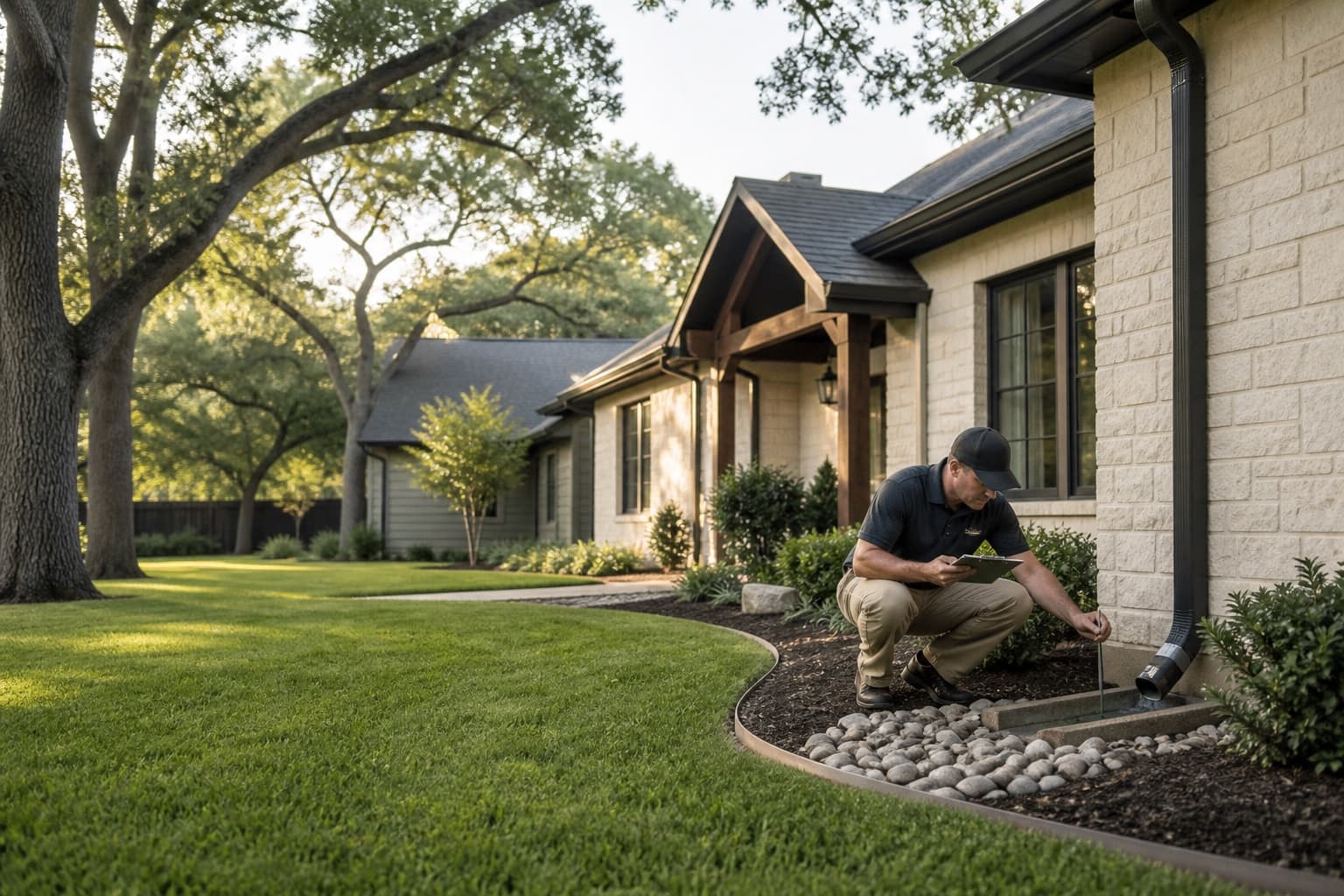
Colleyville drainage planning for larger and established residential lots
Choose a drainage company in Colleyville that traces roof water, landscape runoff, and saturated soil across the full property before French drain installation or another yard drainage solution is proposed. Schedule a free drainage evaluation.
Free contractor drainage evaluation
Source-to-outlet planning
Property-specific recommendations
A drainage company in Colleyville may need to evaluate more than one water zone on the same property. Larger roofs can discharge to several sides, long drives and patios can divide surface flow, and mature landscaping can conceal low areas or older drainage components. French drain installation may fit a persistently saturated route, but roof runoff, surface ponding, or erosion can require different collection and conveyance strategies.
Residential areas along Colleyville Boulevard, Glade Road, Pleasant Run Road, and Bransford Road include established neighborhoods and properties with varied lot sizes. Some homes have pools, detached structures, long irrigation zones, retaining features, and hardscape installed over multiple projects. These are planning considerations, not claims about conditions at every address.
The free evaluation follows water from each source to an appropriate outlet and separates drainage from structural or concrete conclusions. Moisture beside a foundation can be important without proving foundation damage. A low patio or drive may need its own concrete review. When several systems interact, the proposal should define which condition the drainage work is intended to manage.
What homeowners observe
A large property can have more than one independent drainage concern. The inspection avoids treating every wet area as part of a single system.
Gutters and downspouts may discharge to separate landscape zones with different slopes. Each route should be checked for capacity, erosion, ponding, and a stable destination before lines are combined.
Walls, edging, raised beds, and dense plantings can interrupt sheet flow. Surface water trapped by a barrier may call for grading or inlets rather than a French drain intended for subsurface moisture.
Persistent wetness may reflect uphill seepage, irrigation, roof discharge, or limited fall. A French drain is considered only after those sources and the available outlet are separated.
Deck drains, equipment discharge, patio slopes, roofs, and landscape grades can overlap. Pool or plumbing systems may need specialist evaluation while the drainage scope focuses on verified exterior water.
Concentrated flow can scour soil at paving edges or outlet points. The plan should reduce velocity, stabilize discharge, and avoid transferring water or sediment to an adjoining property.
City-specific context
Established corridors and larger residential lots can contain several roofs, landscape zones, and hardscape boundaries. Each route should be understood before systems are combined.
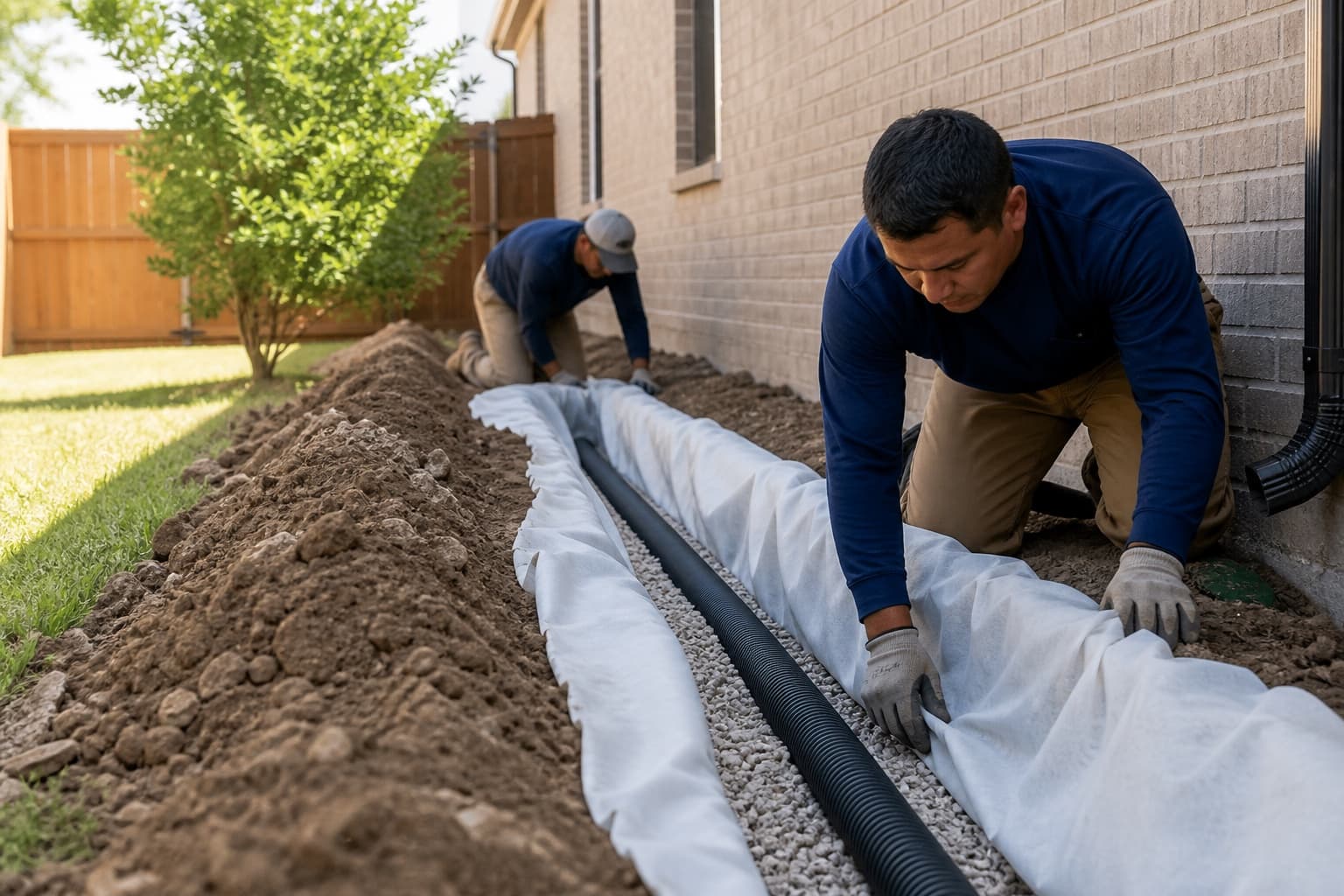
Residential properties near the central corridor may combine mature frontage, side-yard constraints, driveways, walls, and drainage paths affected by later improvements. The inspection distinguishes private lot concerns from street or public-system questions.
Larger roofs, broad lawns, pools, and long drive approaches can create multiple collection zones. Sending all water into one pipe is not assumed to be appropriate until capacity, fall, outlet, and maintenance are reviewed.
Rolling grades and mature trees can make both high-side interception and low-side discharge relevant. Roots, utilities, fences, landscape walls, and access may influence whether grading, surface collection, or a French drain is feasible.
Properties improved over time may include older drains, patio additions, outdoor structures, and changed beds. Existing components should be located and evaluated before a new route is layered onto the site.
Method follows the water path
The system should be divided into understandable collection zones and maintainable routes rather than oversized by assumption.
Targeted reshaping may restore positive surface flow where space and clearances permit. Weep openings, foundations, roots, walls, utilities, pools, neighboring grades, and stable discharge must remain protected.
Review drainage correction optionsSolid pipe can carry concentrated roof water when routes, capacities, cleanouts, and outlets are suitable. Dividing a large roof into serviceable zones may be more practical than relying on one long, inaccessible line.
Understand roof-runoff planningVisible runoff near patios, drives, and defined low points may be collected with a surface drain inlet or channel. Debris, grate location, traffic, pipe slope, and cleaning access should be part of the design.
Compare drainage collection typesA French drain may intercept subsurface water along a saturated band when trench access and a suitable outlet exist. Filter compatibility, roots, utilities, restoration, and future service are essential on landscaped properties.
Review French drain installationLong drives, pool decks, walks, and patios can redirect water when panels settle. Concrete leveling remains a separate scope, but proposed elevations should be considered while drainage routes are planned.
Explore concrete levelingSubsurface drainage, evaluated in context
French drain installation in Colleyville should address a verified subsurface-water route. Larger properties do not automatically need longer drains; they need correctly located collection, buildable alignment, adequate conveyance, appropriate discharge, and practical maintenance.
Water visible on top of the yard during a storm may need surface collection. Soil that remains wet after runoff passes may support a subsurface approach, once irrigation, plumbing, and roof discharge are ruled out or coordinated.
Mature trees, beds, walls, lighting, irrigation, and outdoor structures can constrain the trench. The route should balance collection performance, constructability, restoration, and future access.
Trench width and depth, filter material, aggregate, perforated pipe, connections, cleanouts, and finish restoration should be specified. Different soil and site conditions may call for different assemblies.
A French drain must carry collected water to a stable outlet with sufficient fall or an appropriate alternative. It should not be overloaded with unrelated roof or surface water unless the system is designed for those inputs.
Long routes benefit from observable outlets and accessible cleanouts. Landscaping should not permanently conceal components that may need flushing, clearing, or condition checks.
Related, not interchangeable
Drainage can be one site-management factor without serving as proof of a foundation, pool, plumbing, or concrete diagnosis.
Conditions at one wall may differ from another because roofs, shade, irrigation, paving, and grade vary around a long perimeter. The water source should be matched to the specific area of concern.
Driveways, walks, patios, and pool decks can block shallow routes or collect water at joints. Their condition should be reviewed without assuming every low panel needs structural repair.
Dry-weather moisture may come from irrigation, plumbing, or pool equipment. Testing by the appropriate trade may be needed before stormwater work is treated as the answer.
Drainage, concrete, foundation, and landscape work can be sequenced together, but each proposal should identify its evidence, purpose, limitations, and exclusions.
Source-to-outlet inspection
The evaluation divides the property into water zones, then tests practical collection, conveyance, and outlet options for each concern.
Roof sections, downspouts, irrigation, pools, uphill grades, drives, patios, and visible neighboring flow are documented. Timing and safe rain photos help show which sources act together.
High points, low points, walls, beds, fences, paving, foundation clearances, and potential outlets are compared. A long distance alone does not justify connecting every zone.
Utilities, roots, irrigation, pool systems, gates, slopes, equipment access, and restoration can rule out otherwise appealing routes. The selected alignment must remain serviceable after landscaping is restored.
Grading, swales, basins, channels, solid pipe, French drains, and outlet protection are compared according to whether water is moving on the surface, through soil, or from a concentrated source.
The scope should state intended inputs, pipe or trench route, outlet, restoration, maintenance, and which gutter, irrigation, pool, concrete, structural, municipal, or engineering work is excluded.

Property-specific scope
Cost reflects the number of water zones, route length, excavation, components, outlet, access, and restoration. The free evaluation is used to prepare a site-specific proposal rather than a generalized larger-lot price.
Request a Free EvaluationSeparate roof areas, low lawns, patios, and saturated side yards may require different components. The estimate should show which source each basin, pipe, or trench is intended to manage.
Long routes require verified fall, cleanouts, pipe sizing, and a dependable outlet. Pumps or alternative alignments may add equipment and maintenance considerations when gravity is unavailable.
Mature beds, irrigation, lighting, roots, walls, lawns, and outdoor features can affect excavation and restoration. These costs should be identified rather than hidden in a generic linear-foot assumption.
Gutters, pool service, plumbing, electrical, concrete, irrigation, municipal review, permits, or engineering are separate unless listed in the scope. Their possible need does not mean they are included.
Before the visit
A map of where and when water appears can help distinguish independent concerns across a larger property.
Collect safe storm photos by side of the home, roof section, patio, driveway, or landscape zone rather than grouping every wet area together.
Note irrigation schedules, pool activity, condensate, and dry-weather moisture that may point to a source other than rainfall.
Identify known drains, outlets, utilities, septic components if applicable, irrigation, pool lines, retaining work, and prior grading.
Clear accessible inlets and outlets only when safe; do not excavate, enter flooded areas, or disturb roots and buried systems.
List any foundation or exterior-concrete concerns so coordination can occur without combining separate diagnoses.
Continue your research
Use educational resources to prepare questions, then rely on property observations and measurements for the recommendation.
Questions from homeowners
Not necessarily. Separate roof, landscape, patio, and side-yard zones may have different sources and outlets. The evaluation determines which areas should remain independent and which can be coordinated safely.
A French drain may fit a verified saturated-soil route when a buildable trench, compatible filter assembly, adequate conveyance, stable outlet, and maintenance access are available. It is not the default for visible surface runoff.
Concentrated roof water is commonly handled by solid conveyance rather than automatically entering a perforated collection trench. Any combined system needs deliberate capacity, connection, and maintenance design.
Drainage may manage some exterior water, but irrigation, plumbing, or pool sources should be verified and repaired by the appropriate service when indicated. A stormwater system should not mask an active leak.
Collection zones, route length, trench depth, utilities, roots, access, filter and pipe details, outlet work, controls, restoration, and separately scoped services affect cost. The site evaluation defines those items.
No. Drainage can address identified water-management conditions but cannot guarantee soil or foundation performance. Structural concerns require a separate property-specific foundation evaluation.
Free drainage evaluation
Show us where water appears across the property, which roofs or landscape zones feed it, and how pools, hardscape, slopes, or access affect possible routes.