
Targeted grading and swale restoration
Surface shaping can restore shallow flow where enough elevation and foundation clearance exist. Beds, fences, utilities, paving, and the outlet may limit how much grade can change.
Review drainage correction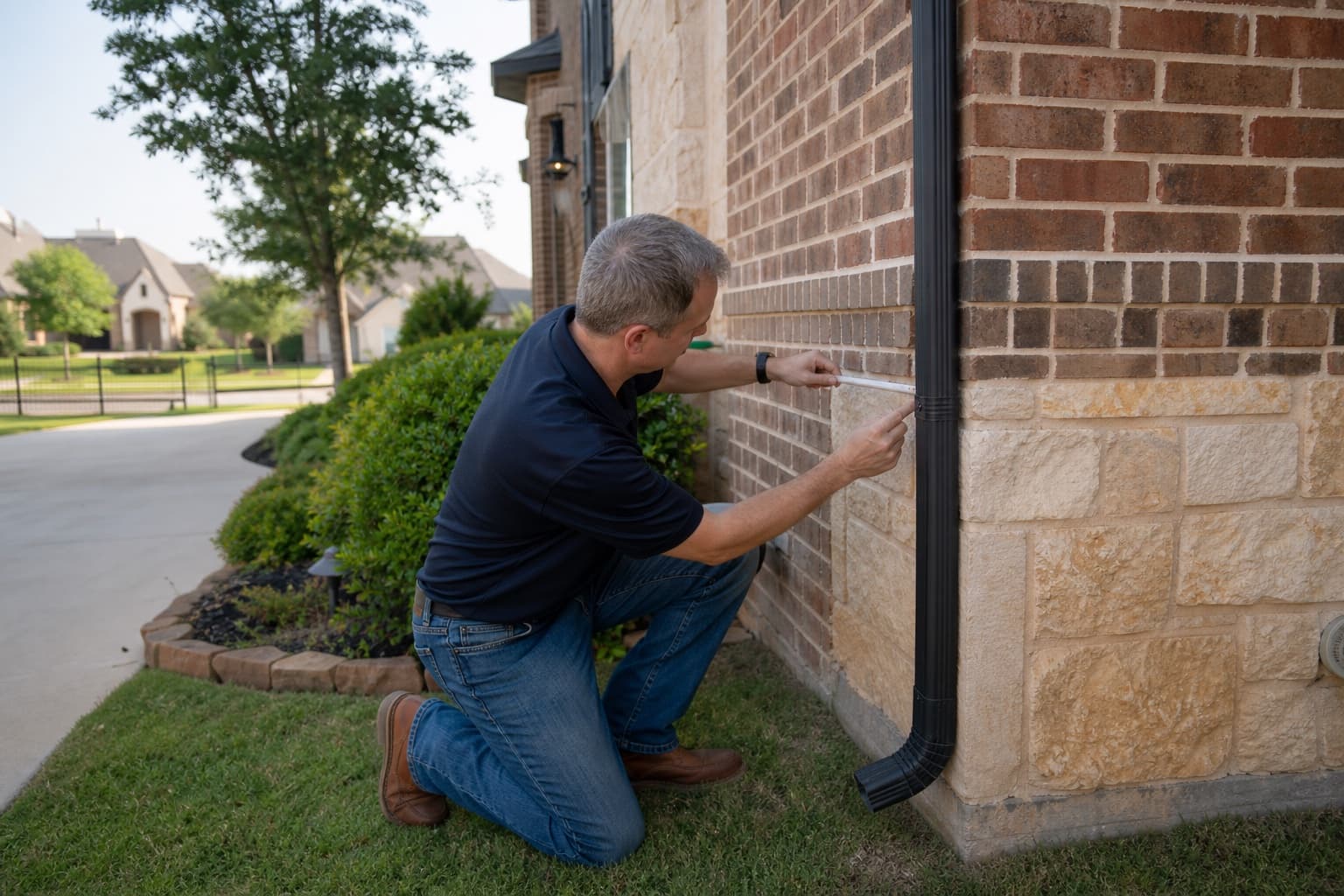
Carrollton yard drainage and French drain planning
Work with a drainage company in Carrollton to trace standing water, roof runoff, grading, and saturated soil before French drain installation or another yard drainage solution is selected. Schedule a free drainage evaluation.
Free contractor drainage evaluation
Source-to-outlet planning
Property-specific recommendations
A drainage company in Carrollton should start with the water source and final outlet rather than a preferred product. Ponding between homes may come from roof discharge, surface runoff, irrigation, or a route blocked by landscaping and hardscape. French drain installation is appropriate for particular subsurface-water conditions, while visible flow may need grading, surface inlets, swales, or solid conveyance. The free drainage evaluation separates those conditions before recommending work.
Historic Downtown Carrollton surroundings, Indian Creek-area streets, neighborhoods along Frankford Road, and properties near the Lewisville boundary can differ in lot width, alley configuration, tree cover, roof area, and development period. Castle Hills is within Lewisville rather than Carrollton, so boundary references must remain accurate. These settings guide the site review without implying that every property shares a drainage defect.
Drainage can influence moisture near a foundation and support beneath exterior concrete, but it does not diagnose either system. The matching Carrollton foundation and concrete leveling pages provide separate guidance when observations include building movement, sunken walks, driveway settlement, or changed patio slope. A drainage proposal should state the water source it is intended to manage and the conditions left outside its scope.
Method follows the water path
A maintainable design matches the verified source, captures water at the right elevation, and conveys it to a stable and permitted destination.
Surface shaping can restore shallow flow where enough elevation and foundation clearance exist. Beds, fences, utilities, paving, and the outlet may limit how much grade can change.
Review drainage correctionClosed pipe can move collected roof water past a confined area when capacity, cleanouts, fittings, fall, and discharge are planned together. It should not be confused with a perforated French drain.
Learn about roof-water routingInlets can capture visible ponding at patios, drives, or low lawn areas when debris management and an outlet are available. Placement should follow measured low points rather than convenience.
Compare French and surface drainsA perforated aggregate trench may collect subsurface water along a verified saturated route. Filter design, trench elevation, utilities, outlet fall, and maintenance determine whether it fits the property.
Explore French drain installationIf a lowered driveway, walk, or patio is creating a barrier or directing runoff, drainage components and concrete leveling should be evaluated as separate but coordinated scopes.
Review Carrollton concrete levelingCity-specific context
The useful local distinction is not neighborhood reputation; it is how roofs, yards, paving, lot boundaries, and available outlets connect at the individual address.
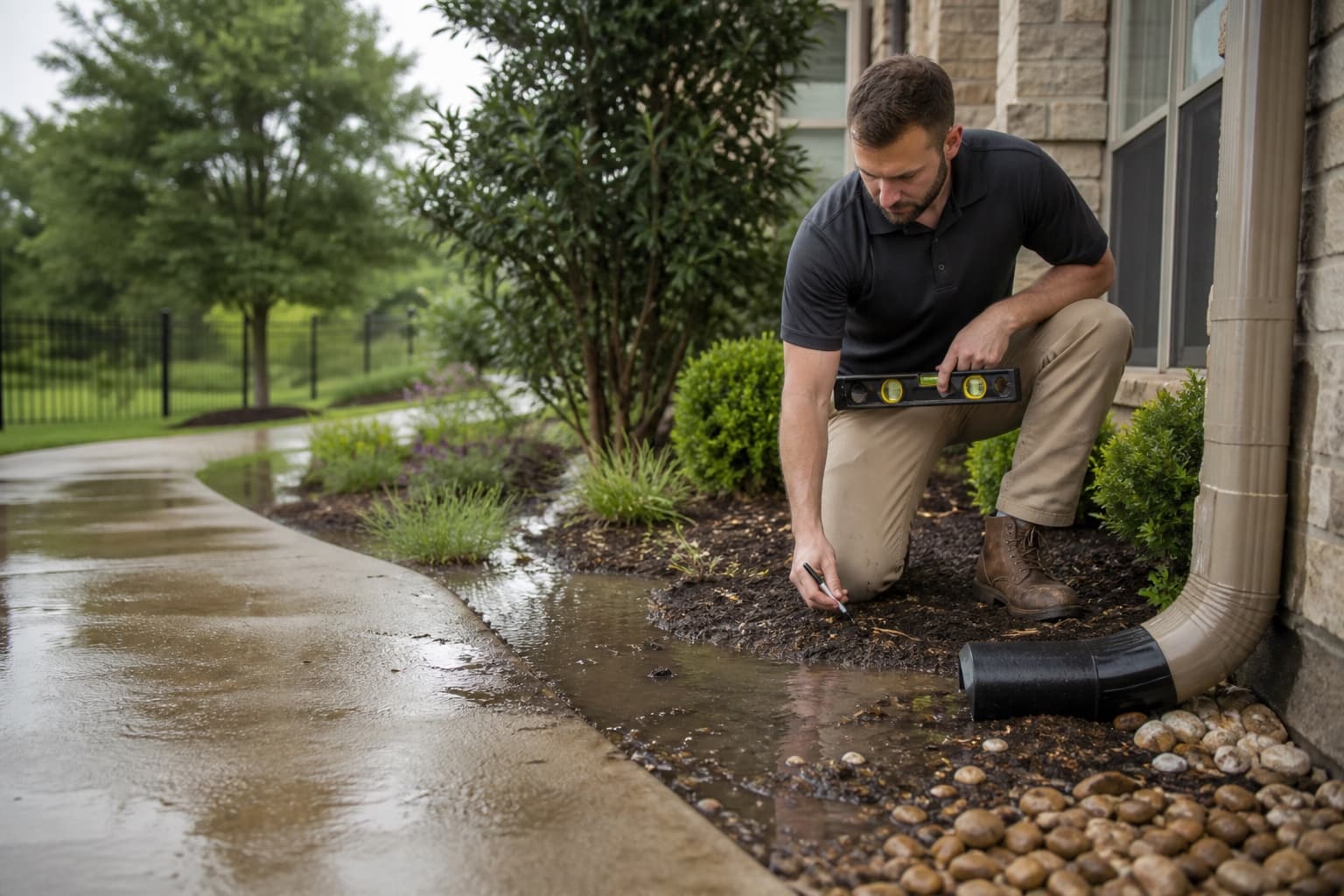
Established residential blocks can include mature trees, older walks and drives, alley drainage, additions, and narrow routes beside homes. The evaluation checks whether later paving, beds, fences, or downspout changes interrupted an earlier surface path.
Homes may include rear-entry drives, patios, side-yard walks, and landscaped boundaries. A nearby creek or public drainage feature does not establish that private runoff can reach it, so the route and authorized outlet must be confirmed on the lot.
Closely spaced homes, broad roofs, fences, air-conditioning equipment, and multiple downspouts can concentrate water in narrow side yards. Capacity, fall, utilities, and maintenance access influence whether separate sources can share a conveyance line.
Properties close to Castle Hills may be described by nearby destinations even though Castle Hills is part of Lewisville. Municipal identity, association responsibility, easements, and downstream ownership should be verified before a drainage route crosses beyond the private work area.
Subsurface drainage, evaluated in context
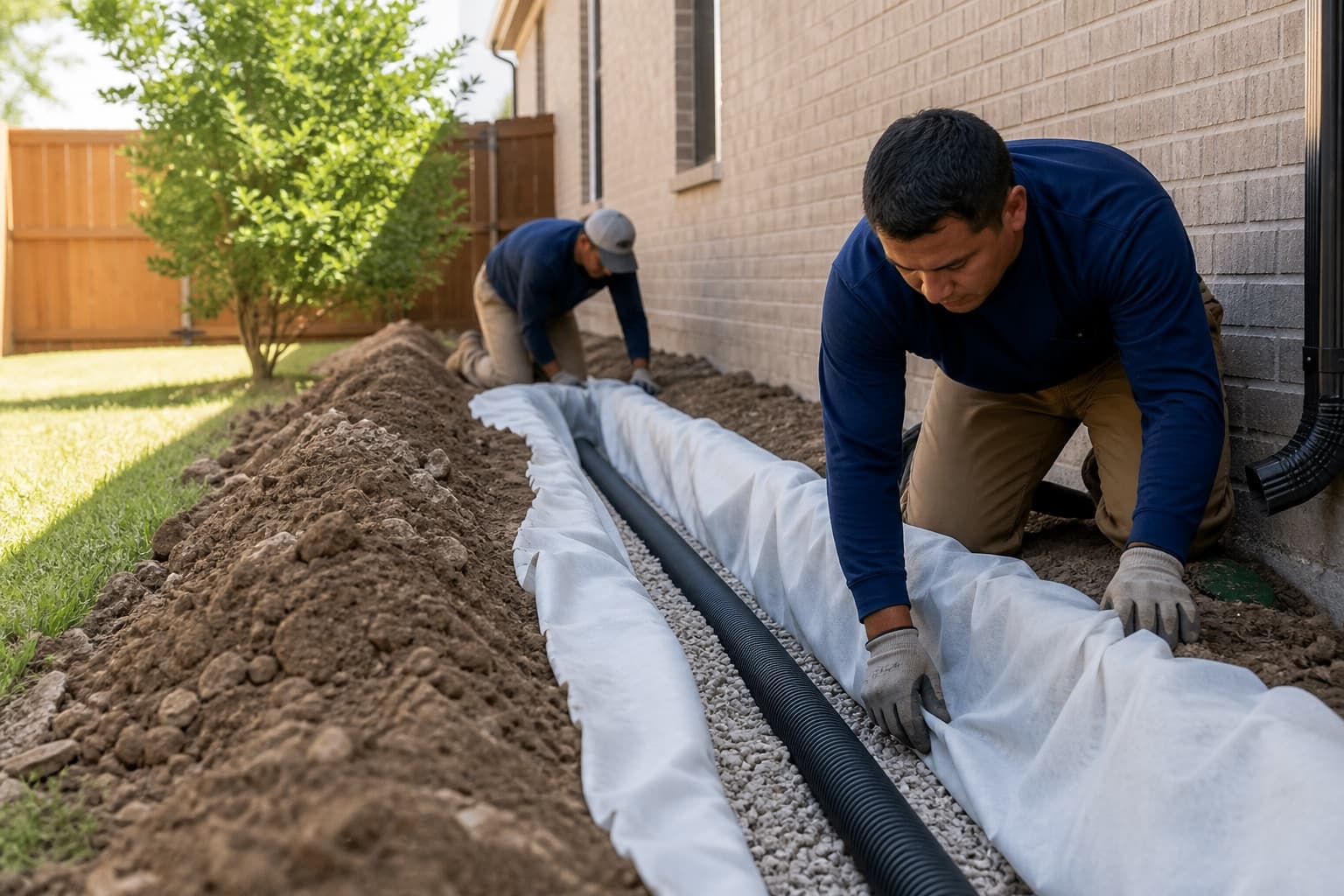
A French drain is not a general name for every buried pipe. It is evaluated when soil remains saturated along a defined route and collected water can leave through a workable outlet.
The inspection distinguishes recurring saturation from roof runoff, visible sheet flow, irrigation, plumbing, and a blocked surface route. A perforated trench should not be used simply because the yard is wet.
Trench depth, alignment, aggregate, filter material, and perforated pipe orientation should respond to the observed wet zone while protecting foundations, roots, utilities, and nearby improvements.
Collected water needs enough elevation to move to a stable outlet. Streets, alleys, easements, association features, and neighboring property cannot be assumed to be available destinations.
Downspouts may require solid conveyance so roof water is not released into saturated soil. Whether systems can share a downstream route depends on capacity, elevations, and cleanout design.
Cleanouts, visible outlets, debris control, sediment observation, and landscape restoration help keep the system understandable after installation. A concealed line without service access is difficult to evaluate later.
What homeowners observe
Timing and location help distinguish rainfall runoff from irrigation, plumbing, condensate, or recurring soil saturation. Similar wet areas can require different responses.
A confined side yard may receive water from roofs, neighboring grades, and the rear yard while fences or edging restrict the exit. The inspection identifies the dominant sources before choosing surface or subsurface collection.
Short extensions, disconnected underground lines, blocked emitters, and overloaded routes can leave roof water near walls. Gutters, roof area, fittings, cleanouts, capacity, and discharge are reviewed as one system.
Settled soil, raised beds, edging, patios, and later fill can create low pockets. Regrading may be useful where surface flow has a stable destination and foundation clearances can be preserved.
Exterior concrete can act as a barrier or redirect runoff toward a door, wall, or neighboring low point. The slab slope and downstream path should be considered with surface drains or concrete work.
Moisture unrelated to rain can involve irrigation, plumbing, pool equipment, condensate, or seepage. Those sources may require testing or another specialist before stormwater drainage work is designed.
Related, not interchangeable
Managing verified exterior water can be useful, but drainage work does not prove a foundation cause or guarantee structural performance.
One consistently wet side and one dry side may guide drainage questions, while floor elevations, cracks, doors, and structural joints provide the separate evidence needed for a foundation review.
Downspout flow, surface runoff, irrigation, plumbing, and subsurface moisture can reach the same location. The proposed system should address the verified source rather than all moisture generically.
Driveways, walks, and patios may shed or trap water. The matching Carrollton concrete page helps evaluate slab elevations when drainage improvements alone cannot restore a useful surface path.
After drainage work, observe inlet capture, ponding, outlet flow, erosion, and maintenance. Track structural observations independently so water-management performance is not presented as a foundation guarantee.
Source-to-outlet inspection
The evaluation defines when water appears, what feeds it, which route is available, and what must remain accessible before a bounded scope is prepared.
Storm photos, irrigation timing, ponding duration, emitter behavior, and dry-weather observations help distinguish intermittent runoff from a persistent source.
Each contributing area is considered with downspouts, drives, patios, alleys, fences, beds, and low points. Sources that should remain separate are identified early.
Foundation clearance, available fall, gates, utilities, roots, air-conditioning equipment, paving, easements, and property boundaries affect system alignment.
Grading, swales, surface inlets, solid conveyance, French drains, and concrete coordination are compared according to the observed water rather than selected by name first.
The recommendation states the collection point, pipe or grade route, discharge, restoration, cleanouts, maintenance, exclusions, and unresolved third-party requirements.
Property-specific scope
A Carrollton drainage estimate follows the source-to-outlet design. A free evaluation defines the route and scope; it does not promise a fixed citywide price or include engineering, plumbing, concrete, permits, or outside approvals unless stated.
Request a Free EvaluationThe number of inlets, downspout connections, trench length, depth, aggregate, filter material, pipe size, and fittings influence labor and materials.
Fences, gates, equipment, roots, public and private utilities, irrigation, and neighboring improvements can require hand work, protection, or route changes.
Walks, drives, patios, walls, sod, beds, and irrigation may affect removal and restoration. The proposal should state what will be disturbed or excluded.
Emitters, erosion protection, pumps, electrical needs, public or association questions, and limited fall can change the design and remain separate when outside the contractor scope.
Before the visit
A few observations can help identify the source more efficiently without asking the homeowner to design the solution.
Photograph standing water, downspouts, inlets, alleys, patios, driveways, and the visible outlet during and after safe rain conditions.
Note whether moisture appears only with rain or also during irrigation, condensate discharge, plumbing use, or dry weather.
Gather dates for additions, patios, replacement concrete, fencing, landscaping, utilities, or drainage changes.
Mark known irrigation, private utility, or concealed drainage lines and identify inaccessible areas.
Confirm private, public, association, or neighboring responsibility before relying on any feature beyond the lot.
Continue your research
Use educational resources to prepare questions, then rely on property observations and measurements for the recommendation.
Questions from homeowners
No. Roof runoff, surface grading, irrigation, a blocked outlet, plumbing, or subsurface saturation can look similar. French drain installation fits particular soil-water conditions and still requires a workable discharge route.
Roof water is generally conveyed in solid pipe rather than released through perforated collection. Systems may share a downstream route only when capacity, elevations, cleanouts, and outlet conditions support that design.
Surface inlets or grading may help when the patio creates a low point, while a settled slab may also need concrete evaluation. The source, patio slope, thresholds, and outlet should be reviewed together.
No. Castle Hills is within Lewisville. Properties near the boundary may use it as a nearby reference, but municipal, association, easement, and maintenance responsibilities should remain accurate.
No guarantee is appropriate. Drainage work can manage an identified water source or route. Foundation performance depends on additional property-specific factors and requires separate structural observations.
Water source, trench length and depth, aggregate and filter design, utilities, access, hardscape, outlet construction, restoration, and maintenance features all affect the proposal.
The visit reviews reported water behavior, visible roofs, downspouts, grades, hardscape, low points, route constraints, outlets, and related property observations. Testing, engineering, permits, and repair work remain separate when required.
The outlet must have usable elevation, resist erosion, remain maintainable, and comply with applicable property, public, and association limits. Water should not simply be transferred to an adjoining lot.
Free drainage evaluation
Tell us where water collects, when it appears, which roof or yard areas feed it, and what paving, fencing, utilities, or boundaries affect the route.