

Southlake properties may contain a main residence, attached garage, pool deck, courtyard, detached building, long drive, and several roof or drainage zones. When something changes, first identify which structure or surface is involved. A crack in pool decking and a sticking interior door may be unrelated; they become more meaningful only when measurements and surrounding evidence connect them.
This guide supports homeowners reviewing foundation services in the Southlake area by organizing observations before an inspector arrives. It does not turn a symptom into a repair recommendation.
Draw a simple property map before making assumptions
Mark the main house, additions, garages, detached structures, pool, courtyards, retaining features, and major paving. Place each crack, opening change, or floor concern on that sketch. A map helps prevent observations from separate construction systems from being combined simply because they appeared during the same season.
For each item, record the date noticed, whether it is changing, and any nearby plumbing, drainage, remodeling, or landscaping event. The general foundation monitoring guide provides a consistent photograph and note-taking method.
Interior openings can show a route through the home
One rubbing door can be a hinge, paint, humidity, or frame issue. Several doors or windows changing along the same side of the home deserve a closer look, especially when they align with floor variation or wall cracks. Note the contact point and whether the latch, reveal, or operation changed.
Do not plane a door or adjust every hinge before documenting the condition if the change is recent and part of a broader concern. Repairs can erase useful evidence without addressing the reason for the change.
Cracks need material and location context
Drywall joints, masonry veneer, mortar, concrete, tile, and stone can crack for different reasons. Record whether the crack starts near an opening, crosses a material transition, continues around a corner, or returns after patching.
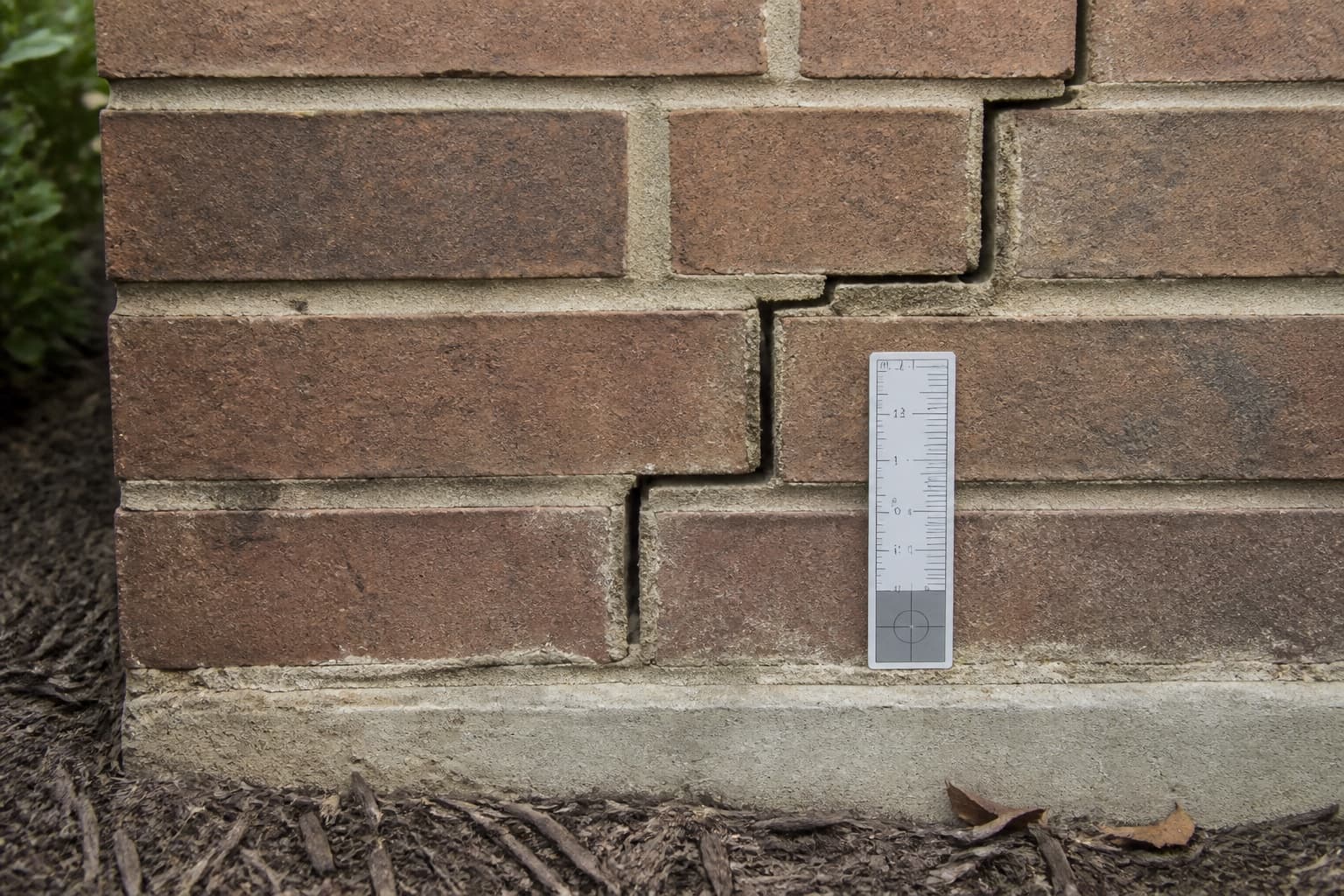
The guide Do All Foundation Cracks Mean Structural Damage? explains why direction, continuity, and change over time are more useful than width alone. A foundation inspection can compare that visible condition with measurements and construction.
Floor changes should be assigned to the correct structure
A slope inside the main home, a low point in a detached room, and a settled exterior slab are not automatically one event. Describe whether the floor feels gradually sloped, locally dipped, springy, or different at an addition. Note transitions between original and later construction.
Where multiple structures are present, each needs its own reference. The objective is to understand the pattern within a foundation system before comparing it with another.
Outdoor concrete can move separately
Pool decking, patios, courtyards, and driveways are exposed to water, joints, fill, tree roots, and independent support conditions. Their movement can affect drainage or safety without proving that the house foundation requires repair.

Document where water collects, whether a joint has opened, and whether a panel directs runoff toward the residence. The related guide to pools, hardscape, irrigation, and drainage in a Southlake evaluation explains how those site systems fit into the inspection.
Look for related observations, not a dramatic single symptom
A group of changes in one area is usually more useful than an isolated cosmetic condition. Examples include a sticking opening, nearby wall crack, exterior separation on the same side, and a floor-elevation pattern that supports the same location. Even then, the group defines an inspection question rather than a diagnosis.
Prepare to explain what changed and what did not
Bring dated photographs, prior repair records, addition information, plumbing reports, and notes about irrigation or drainage changes. Point out structures or surfaces that appear stable as well as those that concern you; comparison helps define the pattern.
If repair becomes a consideration, foundation repair planning should follow the measured evidence and identify which structure and area the scope addresses. Review how to prepare for a Southlake foundation inspection before scheduling access across the property.
Separate urgent maintenance from foundation questions
Some observations need prompt practical attention even though they do not diagnose foundation movement. Active water entering occupied space, a door that no longer provides safe exit, loose masonry, a trip hazard at a walk, or an unsafe pool-deck edge should be addressed by the appropriate professional. Photograph and document the condition first when it is safe, then prioritize safety and damage control.
Other conditions may be appropriate for planned observation: a stable finish crack, an isolated opening adjustment, or a longstanding exterior joint with no related pattern. Ask what location and interval would make monitoring meaningful rather than repeatedly checking the entire property.
The distinction keeps the foundation inspection focused. Immediate maintenance can proceed where needed, while measurements and structure-specific evidence determine whether the main residence, an addition, a detached structure, or only an exterior improvement requires further evaluation.