
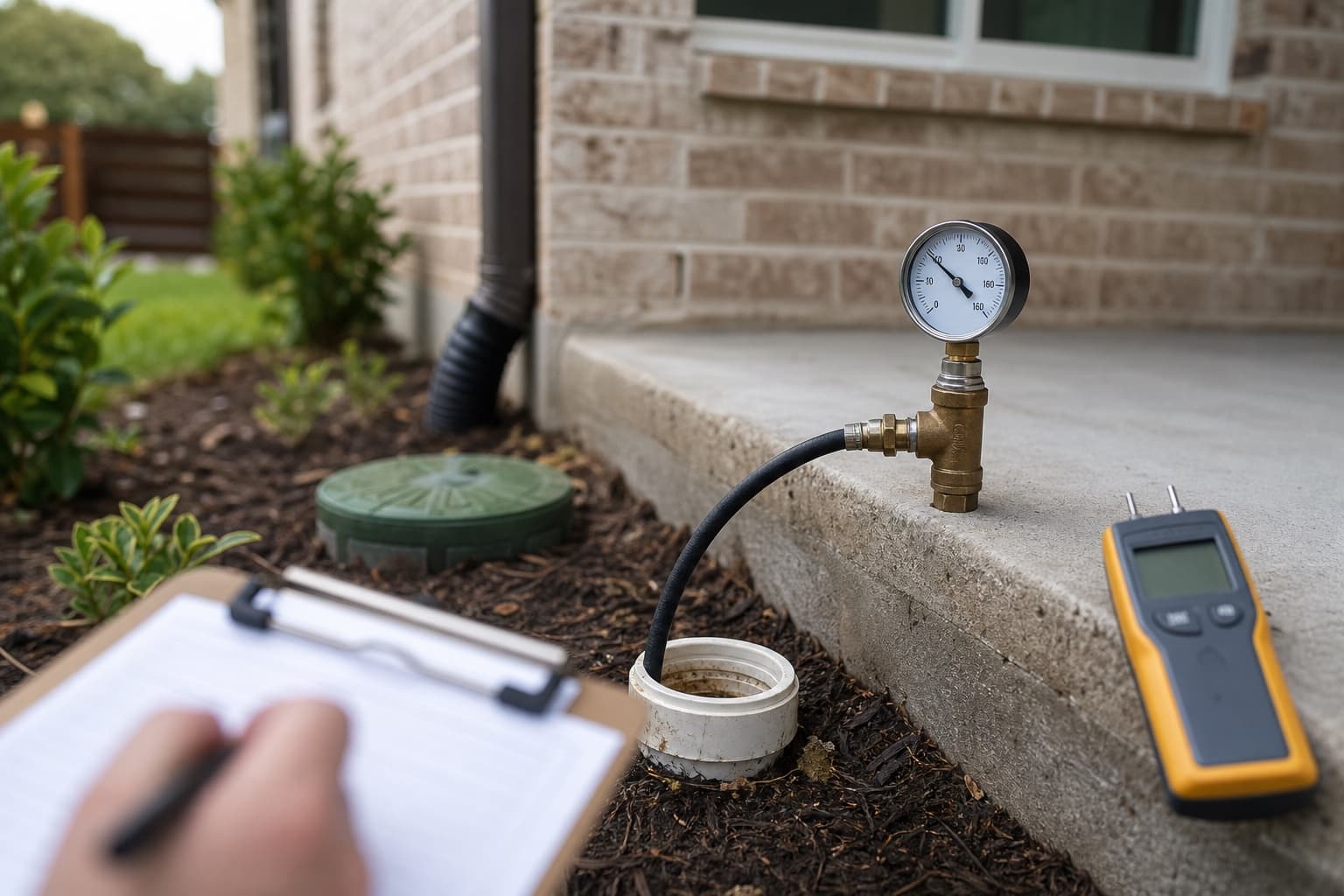
A slab leak and a foundation problem can exist separately, influence one another, or appear at the same time. Cracks, flooring changes, damp areas, unusual water use, or sticking doors do not prove which condition is present. Plumbing testing and foundation evaluation answer different questions, so one should not be used as a substitute for the other.
If water is actively surfacing, electrical conditions are unsafe, or the property is experiencing rapid water damage, contact the appropriate emergency or plumbing professional rather than waiting for a routine foundation appointment.
What homeowners mean by a slab leak
The phrase “slab leak” generally refers to a leak in water supply or drain piping located below or within a concrete slab. The visible symptom may appear away from the damaged pipe because water can travel through soil, fill, joints, or finish materials.
A foundation contractor may observe moisture indicators, but confirming a concealed plumbing leak requires the appropriate plumbing evaluation. The Texas State Board of Plumbing Examiners provides consumer guidance for selecting a plumbing contractor, including license and written-estimate considerations.
Possible plumbing indicators
Conditions that can justify plumbing follow-up include:
- Unexplained water use or a water meter that continues moving when fixtures are off
- A new damp, warm, or discolored area at flooring or baseboards
- The sound of water when no fixture is operating
- Reduced water pressure or recurring supply-line concerns
- Drain odors, slow drainage, or a history of below-slab drain problems
- Localized soil moisture or water appearing near the slab edge
These observations are not a diagnosis. Appliances, irrigation, fixtures, condensate, roof leaks, exterior drainage, and other sources can create similar symptoms. EPA WaterSense notes that monitoring devices can help identify irregular water use, but follow-up is still needed to locate and confirm a leak.
Possible foundation-movement indicators
Foundation movement is evaluated as a pattern rather than a single crack. Relevant observations can include:
- Measurable floor-elevation differences
- Several changed doors or windows in a related area
- Repeated diagonal finish cracks near openings
- Exterior masonry rotation or separation
- Gaps where walls, trim, cabinets, or finishes meet
- Changes that progress or align across interior and exterior areas
The North Texas foundation warning-sign guide explains how to document these changes without assuming their cause.
Why the symptoms can overlap
Water from a plumbing leak can change localized moisture below a slab. Foundation movement can also affect rigid or aging piping. Neither sequence should be assumed from timing alone.
A crack noticed near a plumbing concern does not establish that the leak moved the foundation. Likewise, a suspected foundation problem does not prove that a concealed line has failed. Both conditions may need independent evidence.
Start with the most urgent active condition
If there is active water, continuing meter use, or visible damage, plumbing evaluation generally deserves prompt attention. Controlling the water source can limit additional damage and provide information for the foundation review.
If the main concern is cracks, uneven floors, or changed openings without an active water symptom, a foundation inspection can document the movement pattern and identify whether plumbing follow-up should be considered.
When both sets of clues are present, ask the plumber and foundation contractor what each test can and cannot establish. Avoid asking one provider to certify the other provider's specialty.
What a plumbing evaluation may address
The plumbing professional determines the appropriate testing based on the supply, drain, access, and observed symptoms. Testing may be limited by system configuration, shutoff condition, cleanouts, prior repairs, or the risk of damage.
Ask for written results that identify:
- The system or line tested
- Test conditions and limitations
- Whether a leak was indicated
- The area requiring further access or repair
- Recommended next steps
Do not assume that a normal test answers every plumbing question or that one failed test identifies the exact repair location.
What a foundation inspection may address
A foundation inspection can compare accessible elevations, crack and opening patterns, foundation type, exterior conditions, grading, drainage, additions, and property history. It should not present visual moisture as a confirmed concealed leak.
The foundation inspection guide explains the difference between observations, measurements, and specialist follow-up.
How the findings affect repair planning
If a plumbing issue is confirmed, the parties should discuss whether plumbing repair occurs before foundation work, after adjustment, or in stages. The answer depends on the line, access, repair plan, and responsible professionals.
If foundation repair is proposed, ask whether the scope could affect piping and whether pre- or post-work plumbing testing is recommended. These details belong in the written plan rather than being assumed.
Published foundation repair pricing separates contractor inspection from third-party plumbing, engineering, permits, and repair work. Obtain property-specific proposals for each required service.
Keep a shared record
Save water bills, meter observations, photographs, plumbing reports, repair invoices, foundation measurements, and dates when symptoms changed. A timeline can help separate an active water event from long-standing finish or elevation variation.
Request the right evaluation
For movement concerns involving a concrete slab, schedule a free foundation inspection. For suspected leaks, contact an appropriately licensed plumbing professional. Coordinated records are useful, but each provider should remain within the scope of the evaluation being performed.