
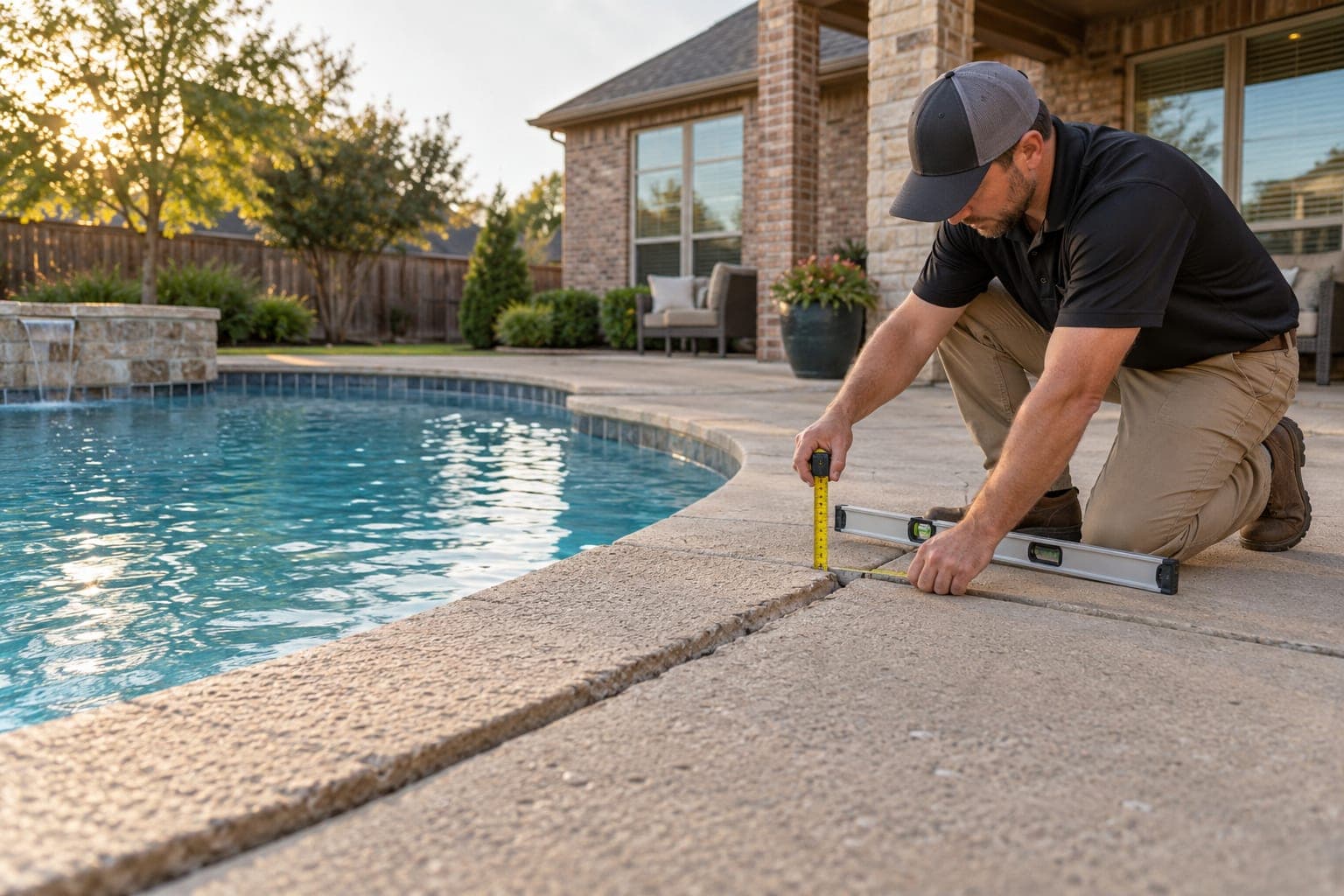
Concrete leveling does not have one dependable lifespan that applies to every driveway, sidewalk, patio, or pool deck. A repair may continue to perform when the slab is sound, the support is appropriate, water is managed, and the site remains relatively stable. It may change sooner when erosion, soil movement, drainage, use, or another active condition continues.
Any exact promise should be tied to a written company warranty and defined scope, not a general internet estimate. A useful conversation focuses on what can be evaluated now, what remains uncertain, and what the owner should monitor.
Slab condition affects future performance
Leveling works with the existing concrete. A substantially intact panel can respond differently from one with extensive cracking, deterioration, corroded reinforcement, or several independent pieces. Raising a damaged slab does not restore it to new construction.
Before service, ask how crack pattern and surface condition affect eligibility. After service, distinguish old damage from new or changing conditions so monitoring stays meaningful.
Support conditions matter after the lift
A slab needs useful support at its adjusted elevation. The selected process may fill some accessible space beneath the panel, but the site can contain varying fill, soil zones, trenches, erosion, or concealed conditions beyond the repair area.
Ask how the scope addresses suspected support loss and what documentation is provided. Avoid assuming that a material name proves every void was reached or that future soil movement is impossible.
Water management can influence recurrence
Runoff along a slab edge, open joints, ponding, irrigation, leaking lines, and poor outlets can continue to affect supporting soil. Leveling may improve a panel slope, but it does not automatically correct the source or destination of water.
Review how drainage can contribute to sinking concrete. If drainage correction is recommended, the scopes should explain their separate objectives and sequence.
Repair method and installation details count
Polyurethane injection, cementitious mudjacking mixtures, mechanical approaches, and other concrete-lifting methods do not behave identically. Product selection, access layout, installer controls, material placement, target movement, slab response, and site preparation all affect the work.
The method should be documented in the proposal. TX Foundation Pros does not use this article to claim one specific lifting material. Compare the questions in the concrete leveling methods guide and ask why the proposed approach fits the property.
Continued soil movement remains possible
North Texas wet and dry cycles, changing irrigation, drought, heavy rain, roots, landscaping, new paving, and construction can alter site conditions after repair. A repaired panel is still part of an outdoor property exposed to weather and use.
That uncertainty does not make leveling inappropriate. It means the recommendation and expectations should account for the site rather than promise permanent immobility.
Use and connected surfaces create different demands
A driveway carries vehicle loads and connects to a garage or street. A sidewalk follows a pedestrian route past steps and landscaping. A patio may support covers, furniture, or outdoor improvements. A pool deck sits beside drains, coping, utilities, and pool systems.
Those applications have different constraints. The driveway leveling, sidewalk leveling, patio leveling, and pool deck leveling pages explain what belongs in each evaluation.
Drainage maintenance should follow the full route
Keep gutters and known outlets functional, observe where downspouts discharge, avoid allowing soil or mulch to bury slab edges and drains, and note new ponding. Do not make major grade or root changes solely from a general article.
If a drainage system exists, understand its collection points and discharge location. A blocked inlet or outlet can change the water pattern even when the leveled slab has not moved.
Monitor with repeatable observations
Photograph important joints from the same position, note ponding after comparable rain, and watch for changing gaps or rocking panels. Record dates and conditions rather than relying on memory. A straightedge or simple reference point can help, but do not treat informal measurements as a structural diagnosis.
The goal is to identify meaningful change. Cosmetic variation that stays stable is different from a transition that continues to grow.
Read warranty terms as a defined contract
If a warranty is offered, review the responsible company, covered condition, term, exclusions, transfer rules, inspection requirements, owner maintenance duties, and remedy. A warranty on movement may not cover cracks, drainage, adjacent panels, finishes, or work by other trades.
Do not substitute the word “lifetime” for the actual document. Ask what happens if the slab changes and which evidence is required.
A realistic answer starts with inspection
The longevity question is best answered as a risk discussion, not a year count. A concrete leveling evaluation should review slab integrity, settlement pattern, water, support, access, fixed elevations, and the proposed objective. It should also explain why replacement or monitoring may be more appropriate for some sections.
Schedule an evaluation when you want a property-specific scope. Then compare the method, limits, drainage dependencies, documentation, and warranty terms before deciding.