
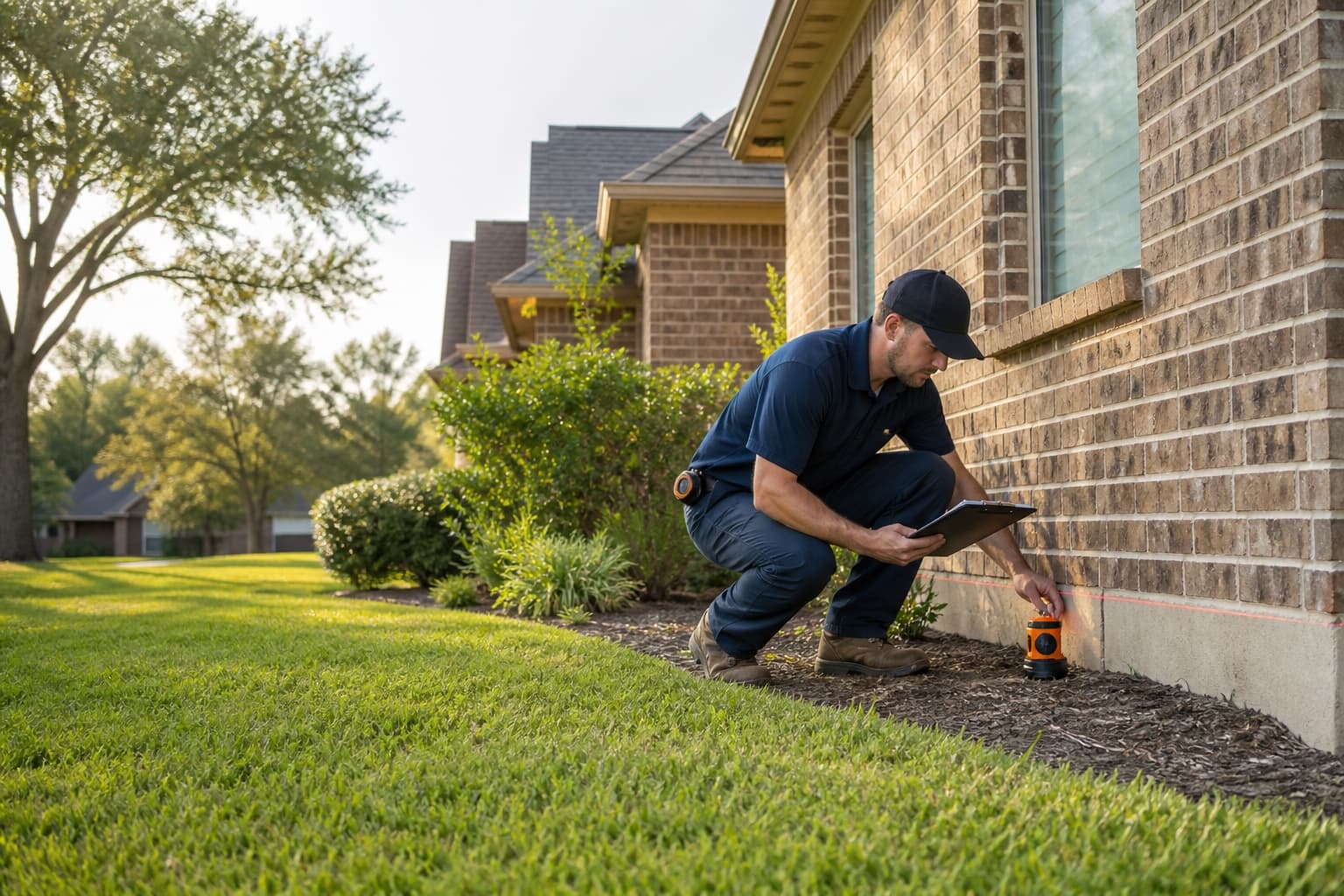
Previous foundation repair does not automatically mean a house is a poor purchase, and a warranty does not automatically prove that the current foundation is performing as expected. Buyers should evaluate the property as it exists today and use the prior repair file to understand what was done, where it was done, and what was excluded.
Start early enough to review documents and arrange appropriate inspections within the deadlines of the purchase contract.
Separate current condition from repair history
A house may have performed well after repair, changed in another area, or undergone work that addressed only part of the foundation. Current cracks or floor differences may be old, cosmetic, active, unrelated, or connected to an unaddressed condition.
Compare present observations with repair locations and earlier records. Do not assume that every elevation difference should have been eliminated or that every future movement concern belongs to the prior contractor.
Request the complete repair file
Ask for available copies of:
- The original inspection or engineering report
- Elevation measurements and repair-location diagrams
- Signed proposal and contract
- Change orders
- Plumbing test results
- Permits or inspection records, when applicable
- Completion documentation and photographs
- Warranty terms and transfer records
- Invoices for drainage, plumbing, or related work
- Later inspections or warranty visits
Missing records do not prove the repair was improper, but they increase uncertainty. Note which facts are documented and which remain statements that need verification.
Understand what the repair was meant to accomplish
Read the scope for its objective. Was the work intended to stabilize selected slab areas, adjust elevations, repair pier and beam components, address framing, or complete another defined task? Which sides, rooms, supports, or repair points were included?
The foundation repair process guide explains common project stages, while the actual contract should identify what occurred at this property.
Verify warranty terms directly
Warranty documents can contain transfer deadlines, fees, exclusions, maintenance obligations, inspection requirements, geographic limits, and coverage tied only to listed repair points. Company status and ownership may also have changed.
Contact the named warranty provider using independently verified information. Ask whether the warranty is valid, transferable, and current, then request the answer in writing. Review the foundation repair warranty guide for questions to ask.
Do not describe a warranty as “lifetime” or “transferable” without reading the complete terms.
Arrange an independent home inspection
The Consumer Financial Protection Bureau advises buyers to schedule an independent home inspection promptly and explains that an appraisal is different from an inspection. A general home inspection can identify visible structural, plumbing, drainage, and other concerns that may justify further evaluation.
Texas real-estate inspection standards define a limited visual survey and basic performance evaluation; they also identify visible foundation indicators that inspectors generally report. Specialized measurements, plumbing testing, engineering analysis, or destructive investigation may fall outside a standard inspection.
Ask the inspector what is included and whether a separate foundation, plumbing, drainage, or engineering review is appropriate.
Compare the current foundation pattern
A current foundation evaluation can review accessible floor elevations, openings, cracks, exterior conditions, foundation type, additions, drainage, and known repair locations. Useful questions include:
- Do current observations align with the repaired areas?
- Are there concerns outside the previous scope?
- Are older measurements comparable to today's measurements?
- Do drainage or plumbing indicators deserve separate follow-up?
- Is monitoring reasonable, or is a repair discussion appropriate?
The result should be a current property assessment, not a guarantee about the old work.
Review drainage and plumbing separately
Prior structural work does not resolve every water-management or plumbing question. Look for roof runoff, low grading, ponding, irrigation, plumbing history, and records of supply or drain testing.
If concealed plumbing is a concern, use an appropriately licensed plumbing professional. A foundation inspection should not be presented as a substitute for a plumbing diagnosis.
Compare estimates carefully if more work is proposed
If current repair is recommended, ask whether it involves the original repair points, different parts of the foundation, connected framing, drainage, or plumbing. Compare methods and quantities only after confirming that the proposals address the same objective.
The foundation repair cost page and second-opinion guide can help organize the decision without predicting the property's value or negotiation outcome.
Coordinate findings with the transaction
Inspection results can affect option periods, negotiation, lender requirements, appraisal conditions, insurance, and closing schedules. Discuss those consequences with the appropriate real-estate, lending, insurance, legal, and inspection professionals.
TX Foundation Pros does not determine whether a buyer should purchase a property. The role of the foundation evaluation is to provide useful property-specific information for the buyer and advisers to consider.
Request a foundation inspection before closing
For a Dallas-Fort Worth property with prior foundation work, a free contractor foundation inspection can document current observations and measurements. Bring the repair diagram, warranty, earlier reports, plumbing records, and any questions raised by the general home inspection so the available evidence can be compared.