
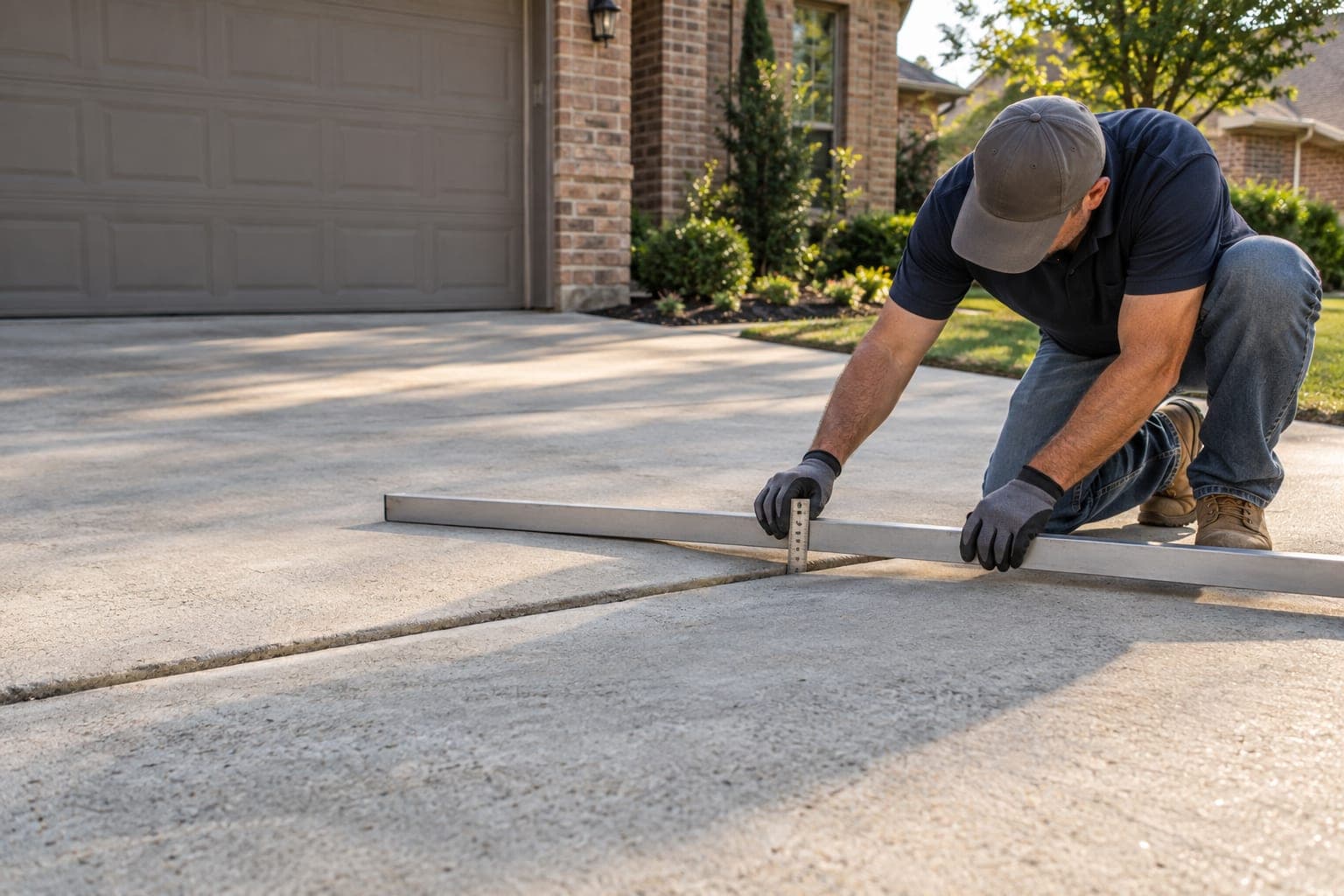
Concrete Leveling in Dallas, TX
Evaluate sunken concrete in driveways, sidewalks, patios, and other residential flatwork with the surrounding grade, drainage, mature landscaping, and fixed elevations in view.
Explore Dallas concrete levelingLocal concrete leveling evaluations
Local, property-specific guidance for settled driveways, sidewalks, patios, walkways, pool decks, and other residential flatwork.
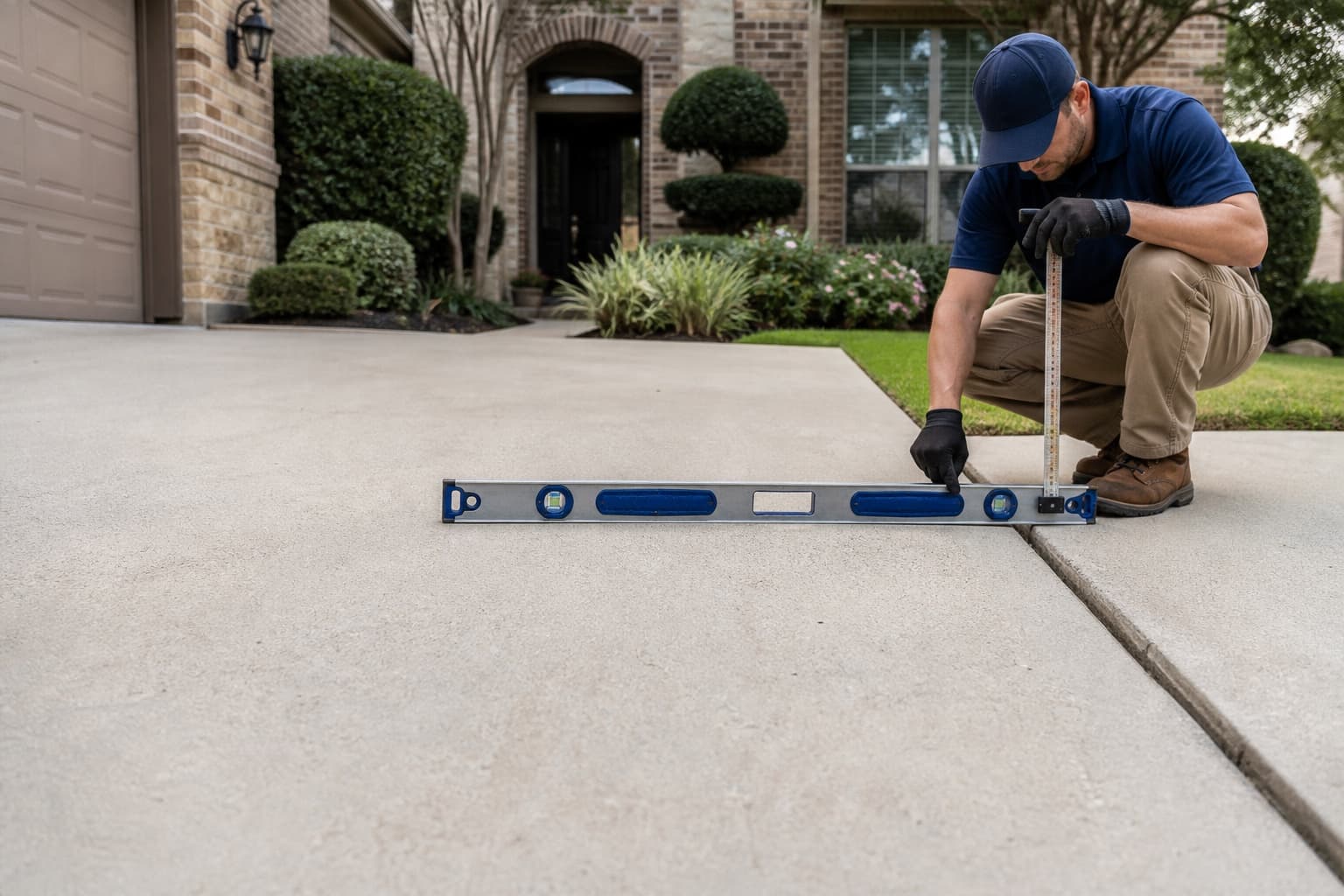
Settled concrete does not present the same way on every North Texas property. A driveway can drop at a garage threshold, a walkway can develop an uneven joint beside mature landscaping, or a patio can hold water after its original slope changes. The useful starting point is an on-site review of the affected slabs, fixed elevations, drainage route, access, and concrete condition.
This service-area hub connects the broad Concrete Leveling service with detailed city guidance for Dallas, Fort Worth, Arlington, and Frisco. Each city page addresses local property context without treating neighborhood age, soil, weather, or drainage as a diagnosis for an individual home.
Published local pages
Each page has independent neighborhood research, a distinct content emphasis, and direct links to the relevant flatwork services and homeowner resources.
Evaluate sunken concrete in driveways, sidewalks, patios, and other residential flatwork with the surrounding grade, drainage, mature landscaping, and fixed elevations in view.
Explore Dallas concrete leveling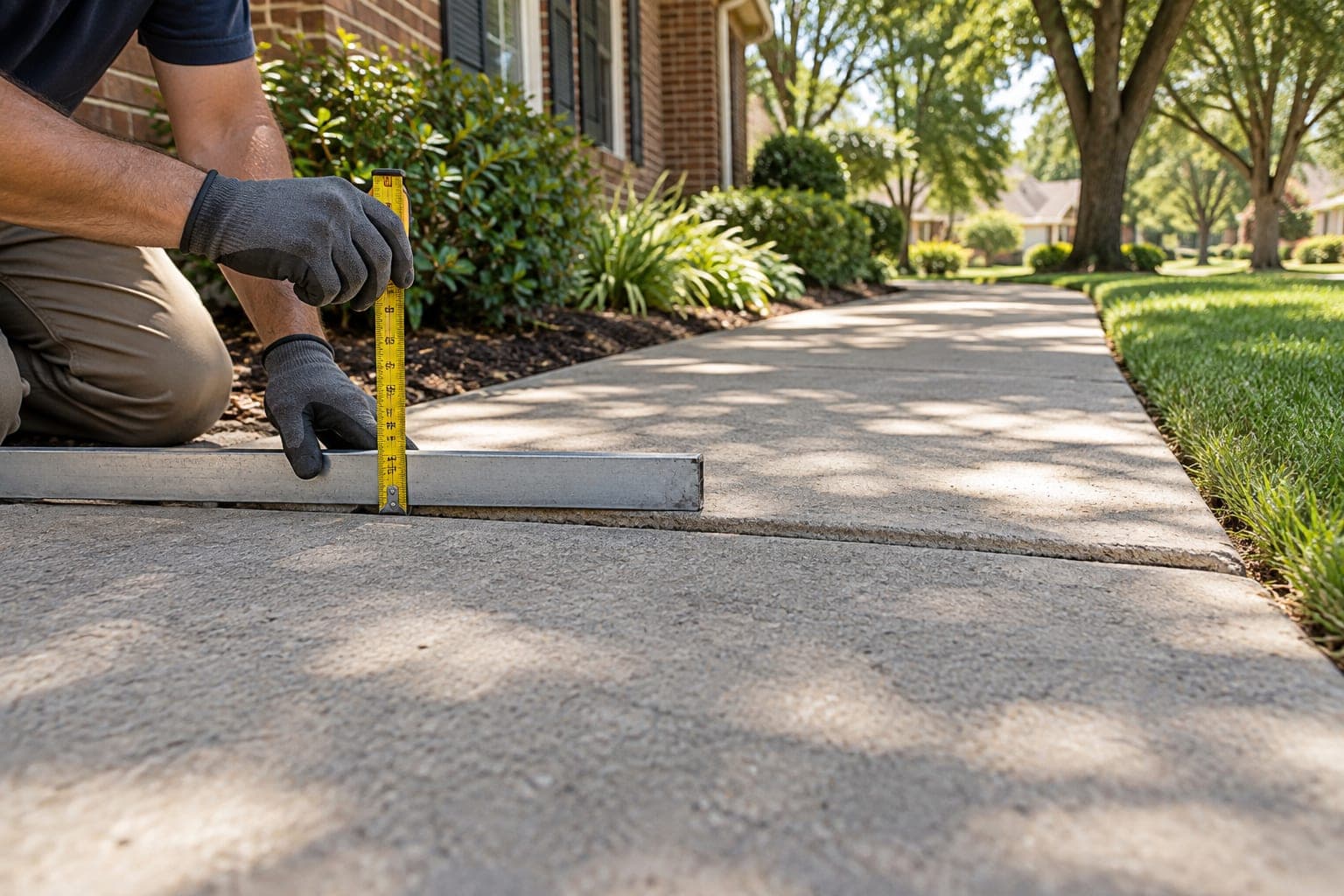
Compare settled concrete across older and newer residential settings with attention to slab condition, site grade, drainage, access, and practical lift targets.
Explore Fort Worth concrete leveling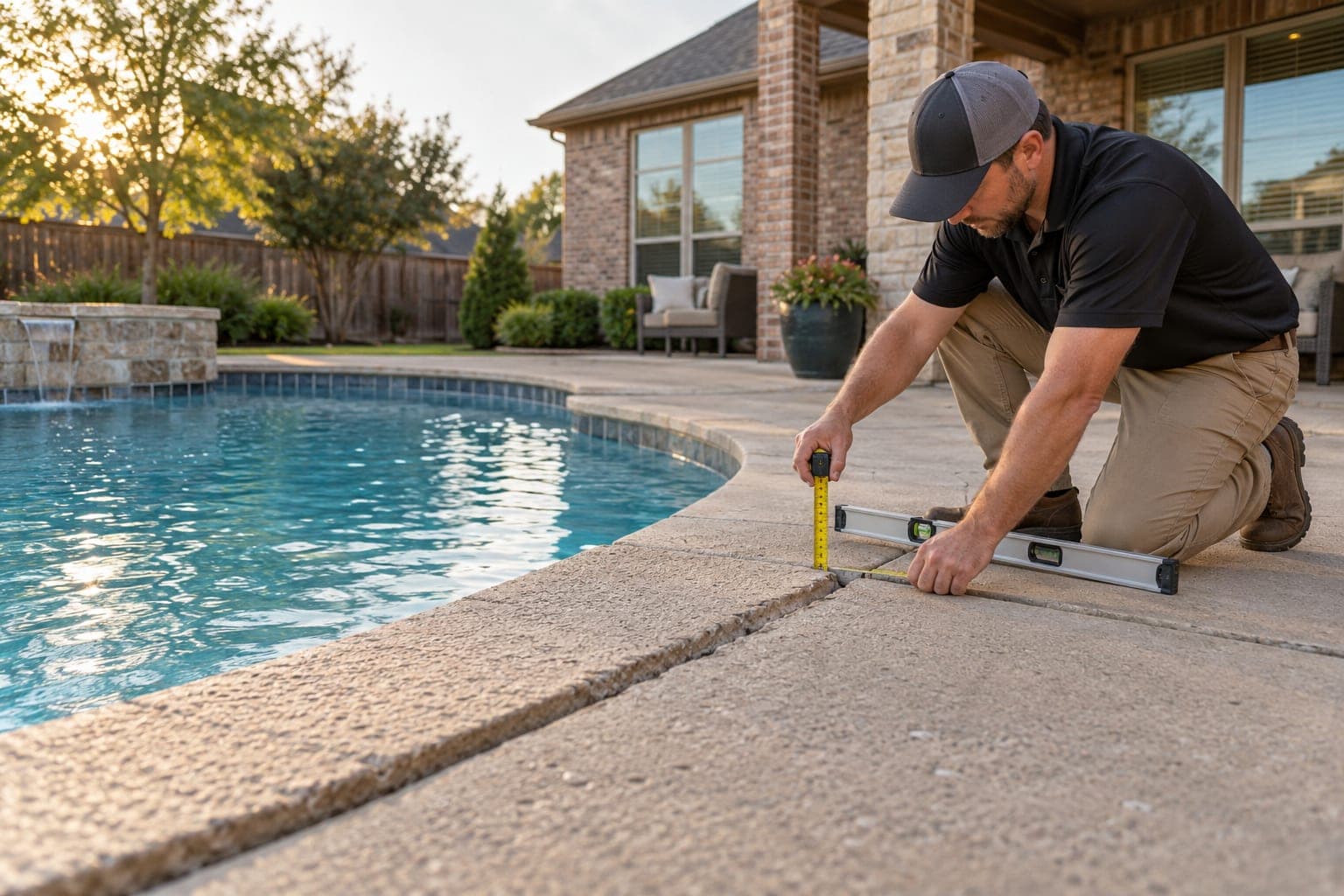
Review driveway panels, sidewalks, patios, poolside concrete, and drainage relationships before deciding whether leveling or replacement fits the property.
Explore Arlington concrete leveling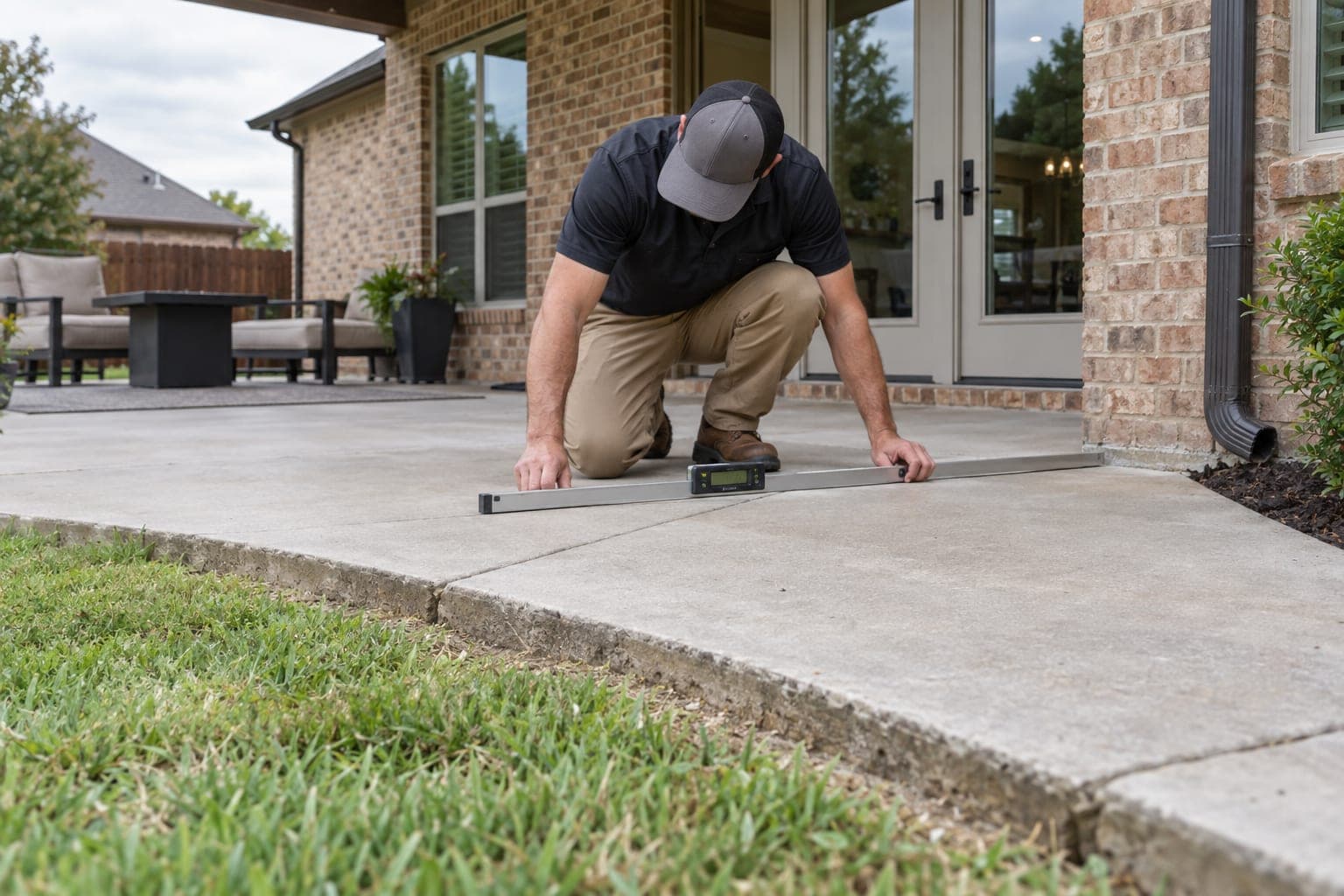
Evaluate driveway transitions, sidewalk displacement, patio settlement, and drainage around both established and growing Frisco communities.
Explore Frisco concrete levelingInspection scope
The city identifies the service area. The slab, surrounding site, and intended use determine the recommendation.
Cracking, deterioration, panel dimensions, joints, rocking, prior patches, and accessible support conditions help determine whether lifting deserves consideration.
Garage slabs, curbs, steps, walls, doors, coping, drains, and neighboring panels establish the relationships a repair should respect.
Roof discharge, grading, irrigation, paved runoff, inlets, and downstream outlets are reviewed so an adjustment does not simply move water to another problem area.
Fences, landscaping, utilities, pool systems, shared walks, public surfaces, and association responsibilities can affect scope or call for another specialist.
Plan before pricing
An intact slab with a practical target may be evaluated for lifting. A badly fractured or deteriorated panel, a slab requiring a new design, or a surface constrained by utilities and fixed construction may be better suited to selective replacement. The decision is property specific.
Service-area questions
The evaluation may include driveways, sidewalks, entry walks, patios, pool-deck sections, garage approaches, and other residential flatwork. Whether a slab is a practical leveling candidate depends on its integrity, movement pattern, target elevation, access, drainage, and surrounding fixed surfaces.
No. Flatwork and a building foundation are separate systems. They can be influenced by some of the same site-water or soil conditions, but an uneven driveway, patio, or sidewalk does not diagnose the home's foundation.
No single material or process should be assumed from this page. The property evaluation considers the slab, support conditions, access, intended lift, surrounding features, and practical limitations before a method-specific scope is discussed.
Start with the property
Tell us which concrete sections have changed, how they meet nearby surfaces, and what happens after rain or irrigation.